CNC Machining Metal Parts +86-18169936698
Introduction
Industrial plastic materials have become essential in modern manufacturing due to their excellent mechanical properties, chemical resistance, lightweight structure, and cost-effectiveness. Among the most widely used engineering plastics, High-Density Polyethylene (HDPE) and Polycarbonate (PC) sheets are preferred across industries ranging from semiconductor manufacturing and electronics to medical equipment, chemical processing, construction, transportation, and industrial automation.
To transform these materials into precise components, CNC routing technology has emerged as one of the most reliable and efficient fabrication methods. Industrial-grade CNC routing services enable manufacturers to produce highly accurate plastic parts with tight tolerances, smooth edges, and consistent repeatability.
This article explores the characteristics of HDPE and polycarbonate boards, the advantages of CNC routing, processing considerations, applications, and how professional CNC machining services help customers achieve superior product performance and production efficiency.
Understanding HDPE Sheets
High-Density Polyethylene (HDPE) is a thermoplastic polymer produced from petroleum-based raw materials. It is known for its excellent strength-to-density ratio, outstanding chemical resistance, and exceptional durability.
Key Properties of HDPE
HDPE offers numerous advantages that make it suitable for industrial applications:
- Excellent chemical resistance
- High impact strength
- Low moisture absorption
- Good wear resistance
- Lightweight construction
- FDA-compliant grades available
- Easy machinability
- Cost-effective material solution
HDPE sheets are available in various thicknesses, colors, and grades to meet different application requirements. Their non-toxic and corrosion-resistant properties make them ideal for food processing, water treatment, and chemical handling environments.
Common Industrial Uses of HDPE
Industries utilize HDPE sheets for:
- Chemical storage tank components
- Water treatment equipment
- Food processing machinery parts
- Conveyor guides
- Wear strips
- Machine guards
- Marine components
- Agricultural equipment
- Semiconductor processing fixtures
- Industrial containers
The versatility of HDPE makes it one of the most commonly machined plastics in CNC routing applications.
Understanding Polycarbonate Sheets
Polycarbonate (PC) is a transparent engineering thermoplastic known for its exceptional impact resistance, dimensional stability, and optical clarity.
Compared to many plastics, polycarbonate offers a unique combination of toughness and transparency, making it suitable for demanding industrial environments.
Key Properties of Polycarbonate
Important advantages include:
- Extremely high impact resistance
- Excellent transparency
- Good dimensional stability
- High heat resistance
- Superior mechanical strength
- Flame-retardant grades available
- Good electrical insulation properties
- UV-resistant options available
Polycarbonate can withstand significantly greater impact forces than acrylic while maintaining transparency, making it a preferred material for safety and protective applications.
Common Industrial Uses of Polycarbonate
Polycarbonate sheets are widely used for:
- Machine safety guards
- Equipment covers
- Electrical enclosures
- Medical device components
- Aerospace interior parts
- Automotive components
- Protective barriers
- Transparent industrial windows
- Electronic equipment housings
- Security glazing systems
Its combination of durability and optical performance makes polycarbonate one of the most valuable engineering plastics available today.
What Is CNC Routing?
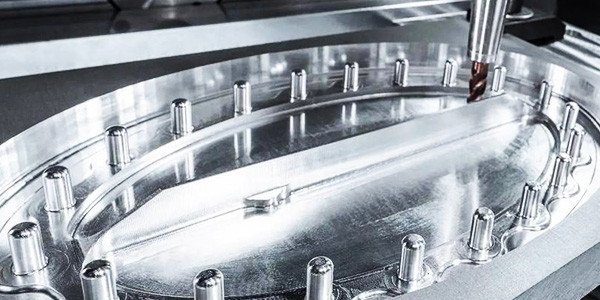
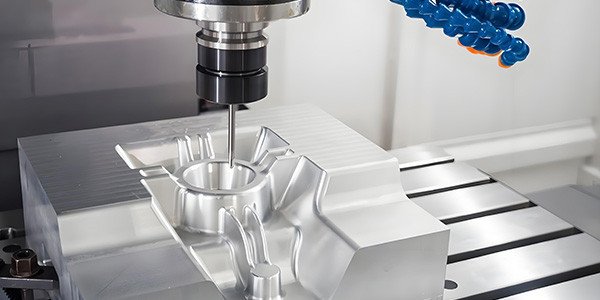
Computer Numerical Control (CNC) routing service is a subtractive manufacturing process that uses computer-programmed cutting tools to remove material from a workpiece.
The process converts CAD designs into highly precise finished components through automated machining operations.
CNC Routing Process Overview
The typical workflow includes:
- CAD design creation
- CAM programming
- Material preparation
- CNC machine setup
- Routing and cutting
- Quality inspection
- Finishing and packaging
Modern CNC routers utilize advanced motion control systems capable of achieving high levels of precision while maintaining production efficiency.
Advantages of CNC Routing for HDPE and Polycarbonate
Exceptional Precision
Industrial CNC routers can achieve tight tolerances and repeatable accuracy across large production runs.
Benefits include:
- Consistent dimensions
- High repeatability
- Reduced human error
- Improved product quality
Precision is particularly important for components used in automation systems, electronics manufacturing, and semiconductor equipment.
Complex Geometry Capability
CNC routing enables manufacturers to create intricate designs that would be difficult or impossible using conventional fabrication methods.
Capabilities include:
- Internal cutouts
- Slots and grooves
- Countersinks
- Engraving
- Pocket machining
- Curved profiles
- Custom shapes
This flexibility allows engineers to optimize product performance while reducing assembly requirements.
Faster Production
Automated CNC routing significantly reduces production time compared to manual machining methods.
Advantages include:
- Reduced setup times
- Faster cycle times
- Minimal operator intervention
- Improved throughput
These efficiencies translate into lower manufacturing costs and shorter lead times.
Material Efficiency
Advanced nesting software maximizes sheet utilization and minimizes waste.
Benefits include:
- Reduced material consumption
- Lower production costs
- Improved sustainability
- Better inventory management
Efficient material usage is especially valuable when machining high-performance engineering plastics.
CNC Routing Considerations for HDPE
Although HDPE is relatively easy to machine, achieving optimal results requires careful process control.
Tool Selection
Sharp cutting tools are essential for preventing excessive heat generation and material deformation.
Common tooling options include:
- Single-flute end mills
- O-flute cutters
- Carbide routing tools
- Specialized plastic-cutting bits
Proper tool geometry improves chip evacuation and surface finish quality.
Heat Management
HDPE has a relatively low melting temperature.
Excessive cutting speeds may lead to:
- Edge melting
- Surface distortion
- Dimensional inaccuracies
Professional CNC operators carefully balance feed rates and spindle speeds to maintain clean cuts.
Chip Removal
Efficient chip extraction prevents re-cutting and improves machining quality.
Industrial CNC systems often incorporate:
- Vacuum hold-down systems
- Dust collection equipment
- Air blast cooling systems
These features help maintain production consistency and component accuracy.
CNC Routing Considerations for Polycarbonate
Polycarbonate machining presents unique challenges due to its toughness and thermal characteristics.
Preventing Stress Cracking
Improper machining conditions can create internal stresses that lead to cracking.
Best practices include:
- Optimized cutting parameters
- Sharp tooling
- Controlled feed rates
- Proper material support
Professional process control significantly reduces the risk of stress-related defects.
Surface Finish Optimization
Polycarbonate components often require excellent visual appearance.
To achieve smooth finishes, CNC operators focus on:
- Tool sharpness
- Feed rate optimization
- Vibration reduction
- Precision toolpaths
These techniques help maintain optical clarity and professional aesthetics.
Temperature Control
Excessive heat can cause:
- Material discoloration
- Surface melting
- Dimensional instability
Industrial-grade CNC equipment provides stable machining conditions that protect material integrity.
Industrial Applications of CNC-Routed HDPE Components
Chemical Processing Industry
HDPE’s chemical resistance makes it ideal for:
- Tank liners
- Chemical handling systems
- Pump components
- Corrosion-resistant fixtures
CNC machining enables custom solutions tailored to specific chemical environments.
Water Treatment Systems
Common applications include:
- Flow control components
- Filter supports
- Pipe system accessories
- Custom fabrication parts
HDPE’s moisture resistance ensures long-term reliability.
Food Processing Equipment
FDA-compliant HDPE grades are frequently used for:
- Cutting surfaces
- Guide rails
- Wear strips
- Processing fixtures
The material’s hygienic properties support food safety requirements.
Semiconductor Manufacturing
HDPE components are used in:
- Process equipment fixtures
- Chemical containment systems
- Equipment supports
- Cleanroom applications
Precision CNC machining ensures compatibility with demanding production environments.
Industrial Applications of CNC-Routed Polycarbonate Components
Safety and Machine Guarding
Polycarbonate’s impact resistance makes it an ideal choice for:
- Safety shields
- Machine guards
- Protective enclosures
- Industrial barriers
These components enhance workplace safety while maintaining visibility.
Electronics Industry
Applications include:
- Control panel covers
- Electrical housings
- Insulating components
- Display protection panels
Polycarbonate provides both durability and electrical insulation.
Medical Equipment
Medical device manufacturers often use CNC-machined polycarbonate for:
- Protective covers
- Equipment housings
- Instrument panels
- Transparent viewing windows
The material’s toughness and clarity are highly valued in healthcare environments.
Transportation and Aerospace
Polycarbonate components are utilized for:
- Interior panels
- Instrument covers
- Protective glazing
- Lightweight structural parts
Its high strength-to-weight ratio contributes to improved system efficiency.
Quality Control in Industrial CNC Routing
Professional CNC routing services implement rigorous quality assurance procedures.
Dimensional Inspection
Inspection methods may include:
- Digital calipers
- Coordinate Measuring Machines (CMM)
- Optical measurement systems
- Precision gauges
These tools verify compliance with engineering specifications.
Material Verification
Quality manufacturers ensure:
- Correct material grade
- Material traceability
- Certification documentation
- Compliance with customer requirements
Material verification reduces production risks and improves consistency.
Surface Quality Evaluation
Inspection criteria include:
- Edge smoothness
- Surface finish
- Burr-free machining
- Visual appearance
High-quality finishing contributes to product performance and customer satisfaction.
Benefits of Choosing Professional CNC Routing Services
Partnering with an experienced CNC machining provider offers numerous advantages.
Engineering Expertise
Professional teams provide:
- Design optimization
- Material recommendations
- Manufacturing consultation
- Cost reduction strategies
This expertise improves both product quality and production efficiency.
Advanced Equipment
Industrial-grade CNC routers deliver:
- Higher precision
- Faster production
- Better repeatability
- Enhanced reliability
Modern machinery supports both prototype and volume production requirements.
Flexible Production Capability
Professional CNC facilities can accommodate:
- Rapid prototypes
- Small batch production
- Medium-volume manufacturing
- Large-scale production runs
This flexibility supports evolving customer needs.
Consistent Product Quality
Standardized manufacturing processes ensure:
- Repeatable accuracy
- Reliable performance
- Reduced defect rates
- Improved customer confidence
Quality consistency is critical for industrial and mission-critical applications.
Conclusion
HDPE and polycarbonate sheets are among the most versatile engineering plastics used in modern industrial manufacturing. Their unique properties—including chemical resistance, impact strength, lightweight performance, transparency, and durability—make them ideal for a wide range of applications across chemical processing, electronics, medical equipment, food processing, automation, transportation, and semiconductor industries.
Industrial-grade CNC routing services provide the precision, flexibility, and efficiency required to transform these materials into high-performance custom components. By utilizing advanced CNC technology, optimized machining parameters, and strict quality control procedures, manufacturers can achieve exceptional dimensional accuracy, superior surface finishes, and cost-effective production outcomes.
Whether producing prototypes, custom-engineered parts, or large-scale production components, professional CNC routing solutions for HDPE and polycarbonate boards offer a reliable pathway to improved product performance, reduced manufacturing costs, and long-term operational success.
Choose Gazfull CNC Routing Services
At Gazfull, we specialize in providing machining services that go beyond traditional manufacturing. We aim to optimize your processes and reduce production expenses while delivering high-quality results. Our expertise and state-of-the-art 3-axis cutting systems also enable us to handle all your custom needs efficiently and precisely.
For more about HDPE and polycarbonate board industrial grade CNC routing processing services, you can pay a visit to Gazfull at https://www.gazfull.com/services/ for more info.