CNC Machining Metal Parts +86-18169936698
The aerospace industry is continuously evolving toward lighter, stronger, and more efficient aircraft and spacecraft systems. From commercial aviation and military defense to satellites and unmanned aerial vehicles (UAVs), manufacturers are under constant pressure to reduce structural weight while maintaining exceptional mechanical strength, dimensional accuracy, and reliability. One of the most effective manufacturing solutions supporting this transformation is CNC routing service for lightweight aerospace structural components.
CNC routing technology has become an essential part of aerospace precision manufacturing due to its ability to process advanced lightweight materials with high efficiency, repeatability, and complex geometries. Aerospace structural parts often require intricate machining, tight tolerances, and excellent surface finishes, making CNC routing an ideal solution for modern aerospace applications.
This article explores the importance of CNC routing services in aerospace lightweight structure manufacturing, including materials, machining advantages, processing capabilities, applications, and future industry trends.

The Importance of Lightweight Structures in Aerospace Engineering
Weight reduction has always been one of the primary objectives in aerospace engineering. Every kilogram removed from an aircraft or spacecraft contributes directly to:
- Lower fuel consumption
- Increased payload capacity
- Improved flight performance
- Reduced carbon emissions
- Extended operational range
- Lower operating costs
In commercial aviation, lightweight structural components help airlines reduce fuel expenses significantly over the lifetime of an aircraft. In spacecraft and satellite applications, minimizing weight is even more critical because launch costs are directly tied to payload mass.
To achieve these goals, aerospace manufacturers increasingly rely on lightweight materials such as:
- Aluminum alloys
- Titanium alloys
- Carbon fiber reinforced polymers (CFRP)
- Honeycomb sandwich panels
- Engineering plastics
- Composite laminates
These advanced materials require specialized machining technologies capable of maintaining structural integrity while producing highly precise geometries. CNC routing services are specifically designed to meet these demanding requirements.
What Is Aerospace CNC Routing Service?
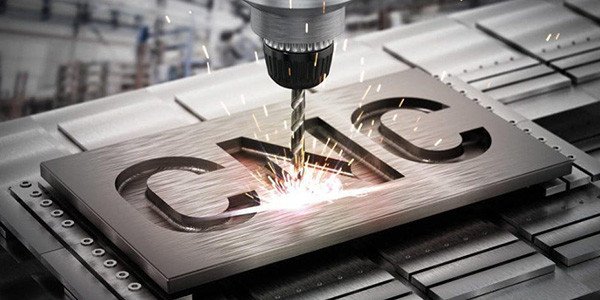
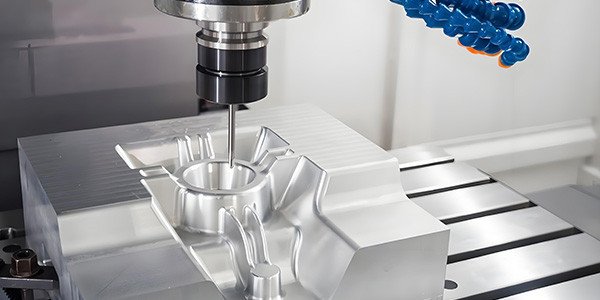
CNC routing is a computer-controlled machining process that uses rotating cutting tools to remove material from a workpiece. Unlike conventional manual machining, CNC routing systems operate based on digital CAD/CAM programs, enabling precise and repeatable manufacturing of complex aerospace parts.
Aerospace CNC routing services typically involve:
- High-speed machining
- Multi-axis routing
- Precision contour cutting
- Pocket milling
- Edge trimming
- Drilling and slotting
- Composite material machining
- Large-format panel processing
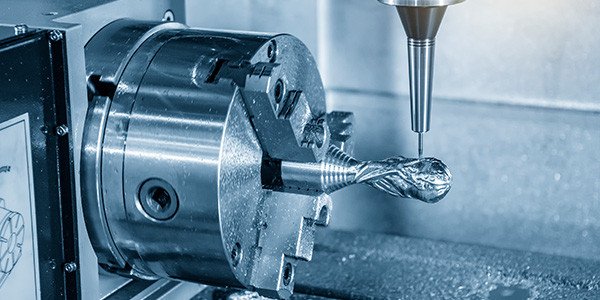
Modern aerospace CNC routers often feature 3-axis, 4-axis, or 5-axis configurations, allowing manufacturers to process highly complex geometries with minimal setup changes.
The technology is widely used for manufacturing:
- Aircraft interior panels
- Structural brackets
- Composite fuselage sections
- Wing components
- Radomes
- UAV structures
- Honeycomb panels
- Satellite support structures
Key Materials Used in Aerospace CNC Routing
Aluminum Alloys
Aluminum remains one of the most widely used aerospace materials because of its excellent strength-to-weight ratio, corrosion resistance, and machinability.
Common aerospace grades include:
- 2024 aluminum
- 6061 aluminum
- 7075 aluminum
CNC routing provides clean edge quality and accurate dimensional control when machining aluminum structural components.
Applications include:
- Aircraft frames
- Mounting brackets
- Interior support structures
- Avionics housings
Titanium Alloys
Titanium offers superior strength, heat resistance, and corrosion protection while remaining lighter than steel.
However, titanium machining is challenging due to:
- High cutting temperatures
- Tool wear
- Material hardness
Advanced CNC routing systems equipped with optimized spindle speeds and coolant strategies can efficiently process titanium aerospace parts while maintaining precision and surface quality.
Typical applications include:
- Engine components
- Aerospace fasteners
- Structural reinforcements
- Landing gear elements
Carbon Fiber Reinforced Polymer (CFRP)
Carbon fiber composites are increasingly replacing traditional metals in aerospace structures because they combine exceptional strength with extremely low weight.
CNC routing is ideal for CFRP machining because it offers:
- Precision trimming
- Delamination control
- Smooth edge finishing
- Reduced material waste
Specialized cutting tools and vacuum extraction systems are commonly used to manage carbon fiber dust and maintain machining quality.
Applications include:
- Aircraft fuselage panels
- Wing skins
- UAV frames
- Satellite structures
Honeycomb Sandwich Panels
Honeycomb panels consist of lightweight core materials bonded between thin composite or metal skins. These structures provide excellent stiffness while minimizing weight.
CNC routing enables accurate cutting and shaping of honeycomb materials without damaging delicate internal structures.
Common aerospace applications include:
- Aircraft flooring
- Cabin partitions
- Interior wall panels
- Cargo compartment structures
Advantages of CNC Routing for Aerospace Lightweight Components
High Precision and Tight Tolerances
Aerospace components demand exceptional dimensional accuracy. Even small deviations can affect structural performance, aerodynamic efficiency, or assembly compatibility.
Modern CNC routing systems can achieve tolerances within microns, ensuring consistent quality across production batches.
Precision advantages include:
- Accurate hole positioning
- Consistent edge quality
- Repeatable geometries
- Minimal human error
Complex Geometry Machining
Aerospace structural components often feature highly complex shapes, including:
- Curved contours
- Thin-wall structures
- Lightweight pockets
- Multi-surface profiles
Multi-axis CNC routing systems can machine these geometries efficiently while maintaining structural integrity.
This capability is especially important for:
- Aerodynamic optimization
- Weight reduction designs
- Integrated structural assemblies
Reduced Material Waste
Advanced aerospace materials such as titanium and carbon fiber are expensive. CNC routing minimizes waste through optimized tool paths and efficient nesting strategies.
Benefits include:
- Lower raw material costs
- Improved production efficiency
- Sustainable manufacturing
- Better resource utilization
Material optimization is especially valuable in high-volume aerospace production environments.
Excellent Surface Finish
Surface quality is critical in aerospace manufacturing because rough surfaces can affect:
- Aerodynamics
- Bonding performance
- Fatigue resistance
- Corrosion protection
CNC routing delivers smooth finishes that reduce the need for secondary processing operations.
Automation and Production Efficiency
CNC routing systems support automated production workflows, including:
- Automatic tool changing
- Robotic material handling
- Real-time process monitoring
- CAD/CAM integration
Automation improves:
- Production speed
- Repeatability
- Labor efficiency
- Manufacturing scalability
This makes CNC routing highly suitable for both prototype development and mass aerospace production.
CNC Routing Technologies in Aerospace Manufacturing
3-Axis CNC Routing
3-axis routers move along the X, Y, and Z axes and are commonly used for:
- Flat panel cutting
- Basic contour machining
- Drilling operations
These systems are cost-effective for simpler aerospace structures.
5-Axis CNC Routing
5-axis routing provides simultaneous movement along multiple rotational axes, enabling highly complex machining operations.
Advantages include:
- Machining complex curved surfaces
- Reduced repositioning
- Improved accuracy
- Shorter production cycles
5-axis CNC routing is widely used in advanced aerospace structural manufacturing.
High-Speed CNC Routing
High-speed machining technology increases spindle speeds and feed rates to improve productivity while maintaining precision.
Benefits include:
- Faster material removal
- Improved edge quality
- Reduced heat generation
- Longer tool life
High-speed routing is especially beneficial for composite materials and aluminum alloys.
Aerospace Applications of CNC Routing Services
Aircraft Interior Components
Aircraft interiors require lightweight, durable, and aesthetically refined structures.
CNC routing is used for manufacturing:
- Cabin panels
- Seat structures
- Overhead storage compartments
- Galley components
- Lavatory modules
These components must comply with strict aerospace safety and fire-resistance standards.
Composite Fuselage Structures
Modern aircraft increasingly utilize composite fuselage sections to reduce weight and improve fuel efficiency.
CNC routing supports:
- Composite trimming
- Window cutouts
- Structural openings
- Precision edge finishing
The process ensures dimensional consistency during large-scale aerospace assembly.
UAV and Drone Manufacturing
Unmanned aerial vehicles rely heavily on lightweight composite structures to maximize endurance and maneuverability.
CNC routing enables efficient production of:
- Drone frames
- Wing structures
- Sensor housings
- Lightweight brackets
Rapid prototyping capabilities also accelerate UAV development cycles.
Satellite and Space Structures
Space applications require extremely lightweight and high-strength components capable of withstanding harsh environments.
CNC routing is commonly used for:
- Satellite panels
- Structural supports
- Thermal shielding components
- Lightweight mounting systems
Precision machining is critical for maintaining alignment and reliability in space systems.
Challenges in Aerospace CNC Routing
Despite its advantages, aerospace CNC routing presents several technical challenges.
Composite Material Delamination
Improper machining parameters may cause:
- Fiber pull-out
- Delamination
- Surface defects
Manufacturers must optimize:
- Cutting speeds
- Tool geometry
- Feed rates
- Vacuum extraction systems
Tool Wear
Advanced aerospace materials can accelerate cutting tool wear, especially when machining:
- Titanium
- Carbon fiber composites
- Abrasive laminates
Tool condition monitoring and advanced coatings help extend tool life.
Thermal Management
Excessive heat during machining may damage materials or reduce dimensional accuracy.
Cooling strategies include:
- Air cooling
- Mist cooling
- Cryogenic cooling
- Optimized cutting paths
Quality Standards in Aerospace CNC Routing
Aerospace manufacturing is governed by strict international standards to ensure safety and reliability.
Key certifications include:
- AS9100 aerospace quality management
- ISO 9001
- NADCAP special process certification
Quality control procedures often involve:
- Coordinate measuring machine (CMM) inspection
- Laser scanning
- Surface roughness testing
- Non-destructive testing (NDT)
Comprehensive inspection ensures that every aerospace component meets rigorous engineering specifications.
Future Trends in Aerospace CNC Routing
Smart Manufacturing and Industry 4.0
Modern aerospace factories increasingly integrate CNC routing systems with smart manufacturing technologies such as:
- IoT monitoring
- Artificial intelligence
- Predictive maintenance
- Digital twin simulation
These technologies improve production efficiency and reduce downtime.
Advanced Composite Machining
As aerospace composites continue evolving, CNC routing technologies are also advancing to support:
- Thermoplastic composites
- Hybrid laminates
- Ultra-lightweight structures
New cutting tools and machining strategies are improving precision and reducing defects.
Sustainable Aerospace Manufacturing
Environmental sustainability is becoming a major focus in aerospace production.
CNC routing contributes through:
- Reduced material waste
- Energy-efficient machining
- Lightweight aircraft design
- Lower carbon emissions
Manufacturers are increasingly adopting environmentally friendly production practices.
Conclusion
Aerospace lightweight structural component manufacturing demands exceptional precision, advanced materials expertise, and highly efficient machining technologies. CNC routing services have become an indispensable solution for producing lightweight aerospace structures with superior accuracy, repeatability, and performance.
From aluminum and titanium alloys to carbon fiber composites and honeycomb panels, CNC routing enables manufacturers to process a wide range of aerospace materials while meeting strict industry standards. Its ability to handle complex geometries, reduce material waste, and support automated production makes it a critical technology for modern aerospace engineering.
As the aerospace industry continues pursuing lighter, more fuel-efficient, and environmentally sustainable aircraft and spacecraft, advanced CNC routing services will play an increasingly important role in shaping the future of aerospace manufacturing.
Choose Gazfull CNC Routing Services
At Gazfull, we specialize in providing machining services that go beyond traditional manufacturing. We aim to optimize your processes and reduce production expenses while delivering high-quality results. Our expertise and state-of-the-art 3-axis cutting systems also enable us to handle all your custom needs efficiently and precisely.
For more about aerospace lightweight structural components CNC routing service, you can pay a visit to Gazfull at https://www.gazfull.com/services/ for more info.