CNC Machining Metal Parts +86-18169936698
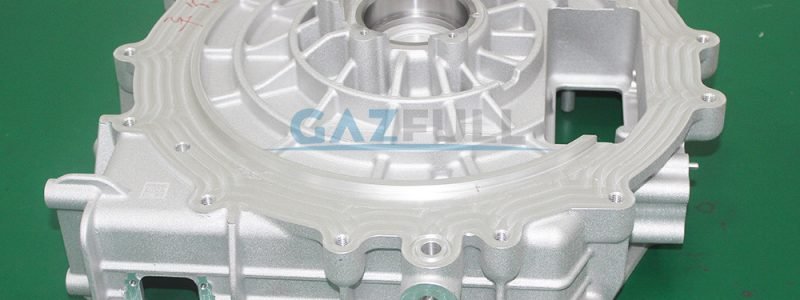
The aerospace industry demands nothing less than perfection. Every component, from structural airframe parts to complex engine housings, must withstand extreme temperatures, immense mechanical stresses, and unforgiving operating conditions. That is why CNC milling services for aerospace parts have become the backbone of modern aircraft and spacecraft manufacturing. With the global aerospace market projected to grow at over 4% annually, the need for high-precision, certified, and reliable CNC milling has never been greater.
In this comprehensive guide, we will explore everything you need to know about CNC milling for aerospace applications—materials, capabilities, certifications, quality control, and how to select the right service provider. Whether you are a procurement engineer, a supply chain manager, or a startup in the aerospace sector, this article will help you understand why precision milling is critical for flight safety and mission success.

Why Aerospace Parts Require Specialized CNC Milling
Aerospace components are not ordinary mechanical parts. They often feature thin walls, complex freeform surfaces, deep cavities, and tight tolerances measured in microns. Standard milling processes cannot reliably achieve these requirements without advanced equipment and expertise. Specialized CNC milling services for aerospace parts combine multi‑axis machining, high‑speed spindles, and rigorous process controls to produce components that meet or exceed industry standards.
Key challenges that dedicated aerospace CNC milling solves:
-
Extreme tolerances: Many flight‑critical parts require tolerances of ±0.0002 inches (±5 microns) or tighter.
-
Difficult‑to‑cut materials: Titanium alloys, Inconel, Waspaloy, and hardened stainless steels are common.
-
Complex geometries: Five‑axis contouring, undercuts, and deep pockets are routine, not exceptions.
-
Surface integrity requirements: No recast layer, micro‑cracks, or residual stress that could lead to premature failure.
General machine shops often lack the necessary spindle torque, coolant systems, or environmental controls to handle these demands. By contrast, a CNC milling provider focused on aerospace invests in high‑rigidity machine tools, advanced toolpath strategies, and metrology labs that guarantee first‑part success.
Core CNC Milling Capabilities for Aerospace Components
To produce certified flight hardware, a milling service must offer more than basic 3‑axis machining. Here are the essential capabilities that top‑tier suppliers bring to the table.
Multi‑Axis Milling (3‑Axis, 4‑Axis, 5‑Axis)
-
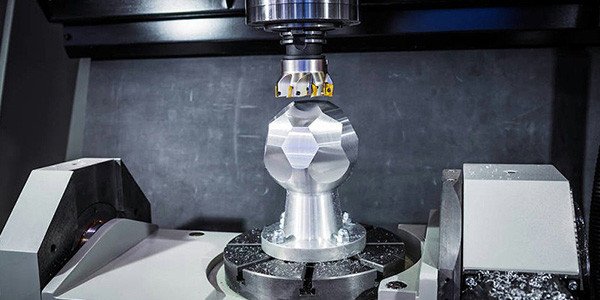
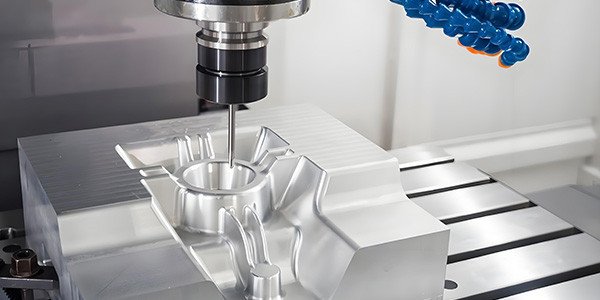
3‑axis milling is sufficient for simple brackets, spacers, and non‑critical housings. However, most aerospace parts require simultaneous 4‑axis or 5‑axis milling. With 5‑axis, the cutting tool can approach the workpiece from any direction, eliminating multiple setups, improving accuracy, and allowing complex contouring on impellers, blisks, and structural ribs.
High‑Speed Machining (HSM)
Aerospace alloys like titanium and Inconel generate enormous heat during cutting. High‑speed machining with light chip loads and high spindle speeds (up to 30,000 RPM or more) reduces heat transfer to the part, prolongs tool life, and produces better surface finishes. HSM is especially valuable for thin‑wall aircraft components that would otherwise deform under cutting forces.
Hard Milling
Some aerospace parts are machined in the hardened state (45‑62 HRC) to avoid distortion after heat treatment. Hard milling using cubic boron nitride (CBN) or ceramic tools eliminates the need for wire EDM or grinding in many cases, reducing lead times and cost.
Cryogenic and Minimum Quantity Lubrication (MQL) Milling
Heat accumulation during milling of titanium and nickel alloys can degrade tool life and part integrity. Advanced CNC milling services for aerospace parts employ cryogenic cooling (liquid nitrogen through the tool) or MQL to keep the cutting zone cool, improve chip evacuation, and achieve higher material removal rates without thermal damage.
Aerospace Materials That Require Expert CNC Milling
Choosing the right material is only half the battle; machining it correctly is the other half. Below are the most common aerospace alloys and the milling considerations for each.
| Material | Key Properties | CNC Milling Challenges |
|---|---|---|
| Aluminum 7075‑T6 | High strength‑to‑weight ratio, good fatigue resistance | Prone to burr formation; requires sharp tools and proper chip evacuation. |
| Titanium Ti‑6Al‑4V | Exceptional corrosion resistance, strength at high temperatures | Work hardens rapidly; demands low cutting speeds, high feed rates, and rigid setups. |
| Inconel 718 | Excellent creep resistance up to 700°C | Very abrasive; requires carbide tools with advanced coatings (AlTiN or TiSiN) and constant tool engagement. |
| Stainless Steel 17‑4 PH | High strength, good fracture toughness | Moderate work hardening; needs robust chip control and heat‑resistant tooling. |
| Maraging Steel (C300) | Ultra‑high strength, used in landing gear | Requires hard milling strategies; sensitive to surface damage. |
| Carbon Fiber Reinforced Polymer (CFRP) | Lightweight, used in fuselage and wings | Abrasive and delamination‑prone; requires diamond‑coated tools and specialized milling parameters. |
A supplier with proven experience in these materials will be able to recommend optimal toolpaths, feeds, speeds, and coolants for each specific alloy‑part combination.
Critical Certifications for Aerospace CNC Milling Services
Certifications are not optional in aerospace—they are the price of entry. When evaluating CNC milling services for aerospace parts, look for the following credentials.
AS9100D (or AS9100 Rev D)
This is the quality management system standard specifically for aviation, space, and defense. It builds on ISO 9001:2015 but adds additional requirements for safety, traceability, risk management, and counterfeit part prevention. Every reputable aerospace milling service must be AS9100D certified.
NADCAP (National Aerospace and Defense Contractors Accreditation Program)
NADCAP accreditation is often required for special processes, including non‑destructive testing (NDT), heat treating, and machining (specifically AC7102 for conventional machining). While not all shops hold NADCAP for milling, those that do have demonstrated superior process controls and audit compliance—critical for prime contractors like Boeing, Airbus, Lockheed Martin, and SpaceX.
ITAR Registration (If serving US defense programs)
If you manufacture parts for military aircraft, missiles, or space vehicles, your CNC milling provider must be ITAR‑registered and compliant with export control regulations.
Customer Specific Approvals
Many large aerospace OEMs maintain approved supplier lists. Certifications such as Boeing BQMS, GE Aviation S‑1000, or Rolls‑Royce RRP 58000 indicate that the milling service has passed rigorous on‑site audits.
Quality Control and Inspection in Aerospace CNC Milling
Even the best CNC milling process can produce non‑conforming parts if inspection is insufficient. Aerospace parts require 100% verification of critical dimensions and attributes. A reliable service provider will implement:
-
First Article Inspection (FAI) per AS9102, documenting every feature on the drawing.
-
In‑process probing on the CNC machine to verify critical dimensions while the part is still fixtured.
-
Coordinate Measuring Machines (CMM) with scanning capability for complex profiles like airfoils and blisks.
-
Surface finish measurement (Ra, Rz, Rmax) using profilometers.
-
Non‑destructive testing (when required): dye penetrant, eddy current, or X‑ray for subsurface defects.
-
Full material traceability from mill certificates to finished part, maintained through bar coding or RFID.
Every inspection record is stored in a quality management database for the required retention period (often 10+ years for flight‑critical components).
Common Aerospace Parts Produced by CNC Milling
To give you a concrete idea of the scope, here are typical components that depend on high‑quality CNC milling services for aerospace parts:
-
Engine mounts and brackets – Complex contoured shapes that attach engines to the airframe.
-
Wing ribs and spars – Large aluminum structures with lightening holes and integral stiffeners.
-
Landing gear trunnions and yokes – High‑strength steel or titanium parts requiring deep hole drilling and precision milling of bearing surfaces.
-
Turbine engine casings and housings – Thin‑wall Inconel or titanium rings with machined flanges and mounting bosses.
-
Actuator housings for flight controls – Aluminum or stainless steel boxes with tight internal geometries.
-
Avionics chassis and heat sinks – Complex milled pockets for circuit boards and cooling fins.
-
Fuel system manifolds – Leak‑tight components with cross‑drilled passages and O‑ring grooves.
-
Structural gussets and clevises – Small but critical parts where fatigue life is paramount.
Each of these parts has unique geometry, tolerance, and surface finish requirements. A generalized machine shop might quote them, but an aerospace‑focused CNC milling provider understands the “why” behind each note on the drawing and will proactively suggest refinements to improve manufacturability without compromising functionality.
How to Choose the Right CNC Milling Service for Your Aerospace Project
With dozens of shops claiming aerospace expertise, how do you separate true partners from order‑takers? Use this checklist.
1. Verify Certifications First
Ask for their AS9100D certificate and any NADCAP approvals. If they hesitate to share, move on.
2. Assess Machine Inventory
Do they have 5‑axis mills? High‑pressure coolant systems through the spindle? Temperature‑controlled shop floors? Machines from respected brands like DMG Mori, Okuma, Mazak, or Hermle?
3. Request a Material‑Specific Case Study
Ask them to describe a previous project using your target material (e.g., Inconel 718). What tooling strategy did they use? How did they manage heat and chip control? What tolerances were achieved?
4. Evaluate Lead Times and Scalability
Prototypes may require 2‑week turnarounds, but production orders of 500+ parts need different planning. Ensure they have capacity for both low‑volume, high‑mix aerospace work and potential rate increases.
5. Review Their Non‑Conformance and Rework Rates
A top‑tier shop will have a first‑pass yield above 98% for aerospace parts. Ask for their internal quality metrics (many will share them under NDA).
6. Communication and Technical Support
Do they offer Design for Manufacturability (DFM) feedback? Will they help you convert a design from a solid model into a millable part with proper draft angles, corner radii, and accessible features? Strong early collaboration reduces cost and risk.
Cost Reduction Strategies Without Sacrificing Quality
Aerospace parts are expensive to mill, but you can control costs intelligently.
-
Optimize corner radii: Specifying end mill diameter‑friendly radii (e.g., 0.125” or 3 mm instead of 0.123”) reduces special tooling and cycle time.
-
Reduce tight tolerance features: Limit ±0.0005” tolerances to only truly critical surfaces. Looser tolerances (±0.002”) on non‑interfacing features cut machining time by 20‑30%.
-
Use near‑net shape blanks: For large titanium or Inconel parts, start with a forging or investment casting, then finish machine only the critical surfaces. This saves material cost and machining hours.
-
Combine operations: If your part can be milled and then turned or ground, consider one supplier that offers multi‑process capabilities to avoid shipping and second‑setup costs.
Future Trends in Aerospace CNC Milling
The field is evolving rapidly. Staying ahead gives you access to better lead times and capabilities.
-
Digital twins and process simulation: Leading shops simulate the entire milling process offline, detecting collisions, vibration, and thermal issues before cutting metal.
-
Automated tool presetting and tool life monitoring: Real‑time data from CNC machines predicts when an end mill will fail, preventing scrap and unplanned downtime.
-
Hybrid manufacturing (milling + additive): Some service bureaus now offer laser cladding or direct energy deposition (DED) followed by finish milling, ideal for repairing expensive aerospace parts or producing near‑net shapes with internal features impossible to mill conventionally.
-
In‑machine metrology with closed‑loop adjustments: Modern CNCs can measure a feature, compare to CAD, and automatically adjust tool offsets for the next part, achieving CMM‑level accuracy on the machine.
Frequently Asked Questions (FAQ)
Q1: What is the typical tolerance for aerospace CNC milling?
For most structural parts, ±0.005” is common. For bearing surfaces and interfaces, ±0.0005” to ±0.001”. Critical rotating components may require ±0.0002” or less.
Q2: Can you mill titanium aerospace parts without special equipment?
Technically yes, but economically and reliably no. Titanium demands high‑torque spindles, rigid fixturing, advanced coolants, and toolpath strategies that prevent work hardening. A shop without these will have high tool wear, poor finishes, and potential part rejection.
Q3: How long does it take to get a first article inspection report?
For a complex milled part (50+ dimensions), expect 1‑3 days for FAI generation after machining. Simpler parts may be done in 24 hours.
Q4: Do all aerospace CNC milling providers need to be ITAR registered?
Only if you are manufacturing parts for US defense or space programs (ITAR controlled). Commercial aerospace (e.g., Boeing 787, Airbus A320) does not require ITAR compliance unless the part contains export‑restricted technology.
Q5: What is the difference between CNC milling and CNC turning for aerospace parts?
Milling uses a rotating tool against a stationary workpiece to create flat surfaces, slots, pockets, and complex 3D shapes. Turning rotates the workpiece against a stationary tool to produce cylindrical features. Many aerospace parts require both (mill‑turn centers).
Q6: How do I verify a CNC milling service’s quality before placing a production order?
Start with a prototype order (1‑5 pieces). Perform your own inspection or use a third‑party lab. If the prototype meets all drawing and FAI requirements, proceed to a low‑rate initial production (LRIP) lot, then scale up.
Conclusion: Partnering with the Right CNC Milling Service Makes All the Difference
The margin between a safe, reliable aircraft and a catastrophic failure often comes down to the quality of a single machined component. CNC milling services for aerospace parts are not a commodity—they are a specialized discipline combining metallurgy, advanced machine tools, rigorous quality systems, and deep regulatory knowledge. Whether you are developing a new drone, a business jet, or a next‑generation rocket engine, choosing a supplier that lives and breathes aerospace requirements will save you time, money, and risk.
Look for AS9100D certification, multi‑axis capability, material expertise across titanium, Inconel, and aluminum, and a proven track record of delivering first‑article inspections with perfect compliance. When you find that partner, you gain more than a vendor—you gain a collaborative ally in flight safety and mission success.
Choose Gazfull CNC Milling Services
At Gazfull, we specialize in providing machining services that go beyond traditional manufacturing. We aim to optimize your processes and reduce production expenses while delivering high-quality results. Our expertise and state-of-the-art 3-axis cutting systems also enable us to handle all your custom needs efficiently and precisely.
For more about the ultimate guide to CNC milling services for aerospace parts: precision, compliance, and performance, efficiency, and cost savings, you can pay a visit to Gazfull at https://www.gazfull.com/services/ for more info.