CNC Machining Metal Parts +86-18169936698

Introduction
In today’s highly competitive manufacturing environment, companies are under constant pressure to shorten product development cycles, reduce production costs, and improve product quality. Whether in aerospace, semiconductor, medical, automotive, robotics, or industrial automation industries, manufacturers increasingly rely on precision CNC machining to produce complex components quickly and accurately.
Prototype development and low volume production are two critical stages in modern manufacturing. During these stages, flexibility, speed, dimensional accuracy, and cost control become more important than mass production efficiency. Precision CNC machining offers an ideal solution because it combines high accuracy with rapid turnaround and material versatility.
Compared with traditional manufacturing methods, CNC machining enables engineers to transform digital CAD designs into physical components with exceptional consistency and repeatability. It is especially suitable for custom parts, functional prototypes, engineering validation units, and bridge production before full-scale manufacturing begins.
This article explores the principles, advantages, applications, materials, machining processes, and future trends of precision CNC machining for prototype and low volume production.
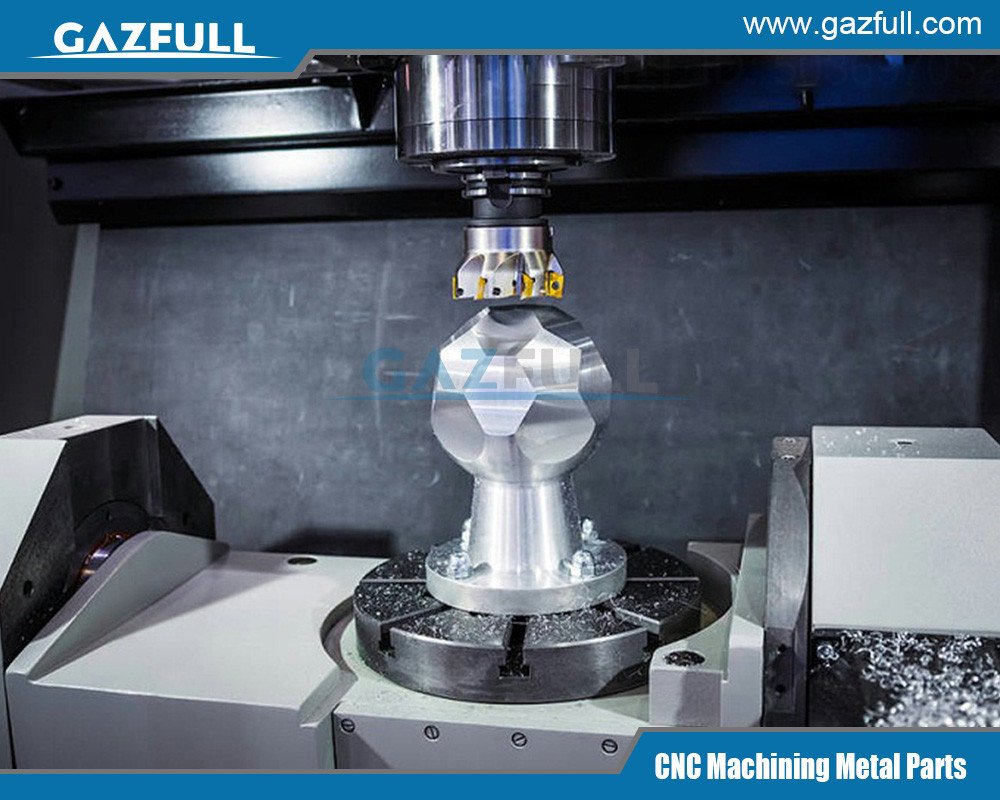
What Is Precision CNC Machining?
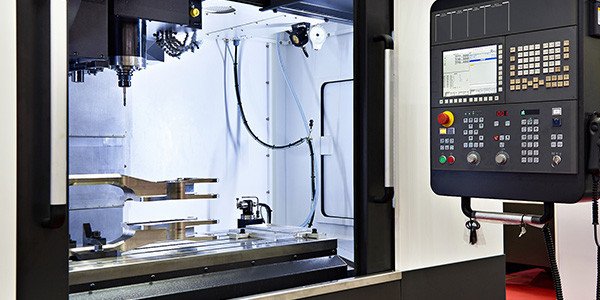
Precision CNC machining refers to a computer-controlled manufacturing process that removes material from a workpiece to create highly accurate parts according to digital specifications. CNC stands for Computer Numerical Control, meaning the machine operates automatically based on programmed instructions.
Modern CNC machining systems include:
- CNC milling machines
- CNC turning lathes
- Multi-axis machining centers
- Swiss-type lathes
- CNC grinding machines
- EDM (Electrical Discharge Machining)
Using advanced CAD/CAM software, engineers can generate machining programs that guide cutting tools with micron-level precision. This allows manufacturers to produce parts with tight tolerances, complex geometries, and superior surface finishes.
Precision CNC machining is widely used for:
- Functional prototypes
- Mechanical assemblies
- Semiconductor equipment components
- Aerospace structural parts
- Medical devices
- Fluid control systems
- Robotics components
- High-purity gas and chemical delivery systems
Importance of CNC Machining in Prototype Development
Prototype manufacturing is an essential step before commercial production. Engineers use prototypes to verify product functionality, evaluate assembly compatibility, and perform testing under real operating conditions.
Precision CNC machining plays a major role in prototype development because it offers several key advantages.
Rapid Design Verification
CNC machining allows manufacturers to quickly convert 3D models into physical components. Design changes can be implemented directly in the CAD file without expensive tooling modifications.
This flexibility helps engineers:
- Accelerate product development
- Reduce engineering risks
- Improve product performance
- Validate design concepts efficiently
Unlike injection molding or die casting, CNC machining does not require molds or dedicated tooling, making it ideal for small production quantities.
High Dimensional Accuracy
Functional prototypes often require precise tolerances to ensure proper fit and performance. CNC machining can achieve tolerances as tight as ±0.001 mm depending on material and geometry.
High precision is particularly important in industries such as:
- Semiconductor manufacturing
- Medical instrumentation
- Aerospace engineering
- Optical systems
- Vacuum equipment
Real Production Materials
3D printing is useful for conceptual models, but CNC machining allows prototypes to be manufactured from actual production-grade materials.
Common materials include:
- Stainless steel
- Aluminum alloys
- Titanium
- Brass
- Copper
- PEEK
- PTFE
- Delrin
- Engineering plastics
This enables engineers to evaluate:
- Mechanical strength
- Thermal resistance
- Chemical compatibility
- Surface finish
- Wear resistance
under real operating conditions.
Advantages of CNC Machining for Low Volume Production
Low volume production typically refers to manufacturing quantities ranging from a few units to several thousand pieces. Many industries prefer low volume manufacturing to reduce inventory costs and respond faster to market demand.
Precision CNC machining offers significant benefits for low volume production.
Reduced Tooling Investment
Traditional manufacturing methods such as injection molding require expensive molds and tooling. For small production quantities, tooling costs can be economically impractical.
CNC machining eliminates the need for dedicated molds, significantly reducing initial investment costs.
This is especially beneficial for:
- Startups
- R&D departments
- Customized products
- Specialized industrial equipment
- Market testing projects
Faster Production Cycles
CNC machining supports rapid production with minimal setup time. Once the machining program is prepared, manufacturers can begin production immediately.
This shortens lead times and enables faster delivery to customers.
Benefits include:
- Faster market entry
- Reduced product development time
- Improved supply chain flexibility
- Rapid engineering changes
Excellent Consistency
Modern CNC machines provide highly repeatable machining performance. Even for low production quantities, manufacturers can maintain consistent quality across all parts.
Consistency is critical for:
- Precision assemblies
- Fluid systems
- Semiconductor equipment
- Medical devices
- Aerospace applications
Scalability
CNC machining allows manufacturers to scale production gradually. Companies can begin with prototype quantities and increase output as market demand grows.
This approach reduces financial risks while maintaining production flexibility.
CNC Machining Processes for Precision Components
Several CNC machining technologies are commonly used for prototype and low volume production.
CNC Milling
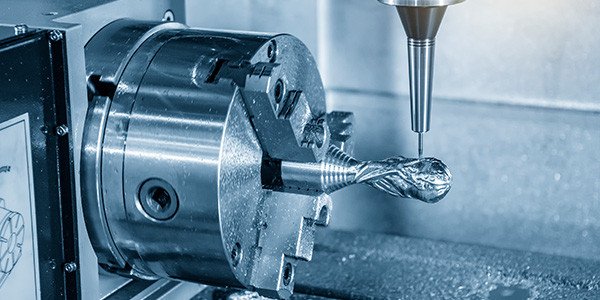
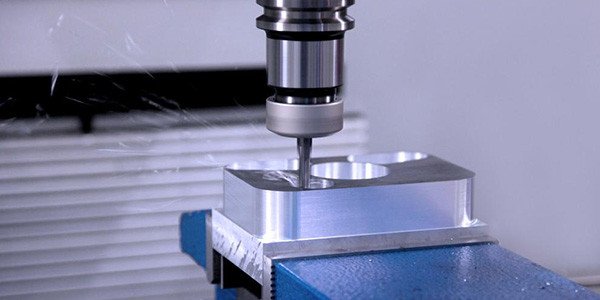
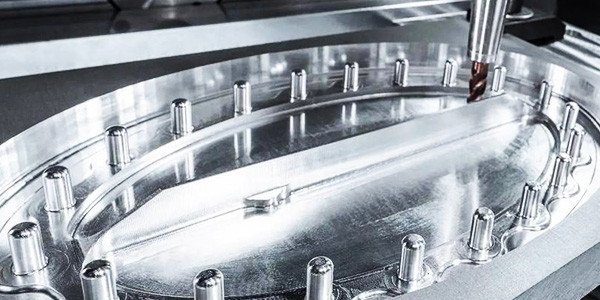
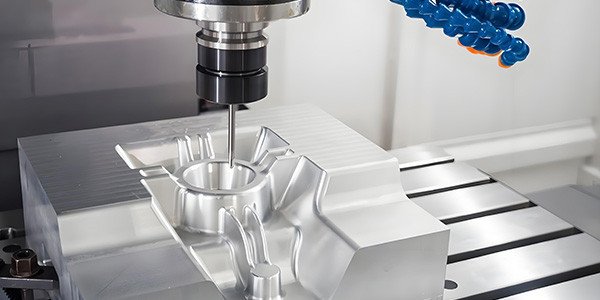
CNC milling uses rotating cutting tools to remove material from a stationary workpiece.
It is suitable for producing:
- Complex 3D geometries
- Precision housings
- Valve bodies
- Mounting brackets
- Semiconductor manifolds
- Custom mechanical parts
Modern 3-axis, 4-axis, and 5-axis milling machines can manufacture highly complex components with exceptional accuracy.
5-Axis CNC Machining
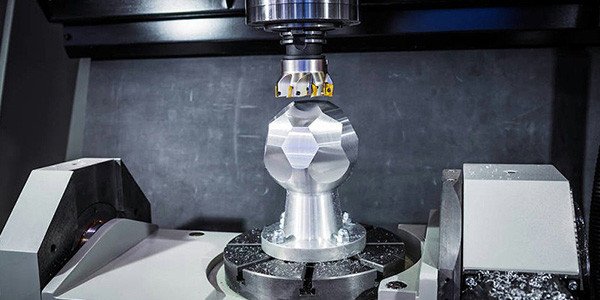
5-axis machining allows simultaneous movement along five different axes, enabling the production of highly complex geometries in a single setup.
Advantages include:
- Reduced setup errors
- Improved surface finish
- Faster machining
- Greater geometric flexibility
- Better dimensional accuracy
5-axis machining is widely used in aerospace, medical, and semiconductor industries.
CNC Turning
CNC turning rotates the workpiece while cutting tools remove material to create cylindrical components.
Typical applications include:
- Precision fittings
- Gas delivery components
- Valve stems
- Shafts
- Connectors
- Instrumentation parts
Swiss-type CNC lathes are especially effective for producing small, high-precision components with tight tolerances.
EDM Machining
Electrical Discharge Machining (EDM) uses electrical sparks to remove material from conductive workpieces.
EDM is suitable for:
- Hardened materials
- Intricate geometries
- Sharp internal corners
- Precision molds
- Micro components
Wire EDM and sinker EDM are commonly used in precision manufacturing industries.
Materials Used in Precision CNC Machining
Material selection significantly affects machining performance, durability, and product functionality.
Aluminum
Aluminum is one of the most popular CNC machining materials because of its:
- Lightweight properties
- Excellent machinability
- Corrosion resistance
- Good thermal conductivity
Common aluminum grades include:
- 6061
- 7075
- 5052
Applications include aerospace components, robotics, and industrial equipment.
Stainless Steel
Stainless steel offers excellent:
- Corrosion resistance
- Mechanical strength
- Chemical resistance
- High-temperature performance
Common grades include:
- SS304
- SS316
- SS316L
- 17-4PH
Widely used in semiconductor, pharmaceutical, and chemical industries.
Titanium
Titanium provides:
- High strength-to-weight ratio
- Excellent corrosion resistance
- Biocompatibility
- High-temperature resistance
Commonly used for:
- Aerospace parts
- Medical implants
- High-performance industrial systems
Engineering Plastics
Precision CNC machining also supports advanced engineering plastics such as:
- PEEK
- PTFE
- Delrin
- PVC
- UHMW-PE
These materials are widely used for chemical resistance, electrical insulation, and lightweight applications.
Quality Control in Precision CNC Machining
Quality assurance is essential in prototype and low volume production.
Manufacturers use advanced inspection equipment to ensure dimensional accuracy and process stability.
Common quality control tools include:
- CMM (Coordinate Measuring Machine)
- Optical measurement systems
- Surface roughness testers
- Laser scanners
- Digital micrometers
- Height gauges
Key quality factors include:
- Dimensional tolerance
- Surface finish
- Concentricity
- Flatness
- Parallelism
- Material traceability
Industries such as aerospace and semiconductor manufacturing often require strict compliance with ISO quality standards.
Industries Using Precision CNC Machining
Precision CNC machining supports a wide range of industries.
Semiconductor Industry
Semiconductor manufacturing requires ultra-clean, high-precision components for gas delivery, vacuum systems, and chemical handling equipment.
Common CNC-machined semiconductor components include:
- Gas panels
- Valve manifolds
- UHP fittings
- Chemical delivery systems
- Vacuum chamber parts
Aerospace Industry
Aerospace applications demand lightweight yet durable components with tight tolerances.
CNC machining is used for:
- Structural brackets
- Engine components
- Hydraulic systems
- Fuel system parts
Medical Industry
Medical device manufacturers use CNC machining to produce:
- Surgical instruments
- Orthopedic implants
- Diagnostic equipment components
- Dental parts
Precision and biocompatibility are essential in medical applications.
Robotics and Automation
Modern robotic systems require lightweight, precise, and highly reliable components.
CNC machining supports:
- Robotic arms
- Motion control systems
- Sensor housings
- Precision assemblies
Surface Finishing Options
Surface finishing improves appearance, corrosion resistance, and functional performance.
Popular finishing processes include:
- Anodizing
- Electropolishing
- Powder coating
- Sandblasting
- Passivation
- Nickel plating
- Chrome plating
Surface treatment selection depends on environmental conditions and application requirements.
Future Trends in Precision CNC Machining
As manufacturing technology continues to evolve, precision CNC machining is becoming more intelligent and automated.
Key future trends include:
Smart Manufacturing
Industry 4.0 technologies enable:
- Real-time monitoring
- Predictive maintenance
- Automated quality inspection
- Production data analysis
Smart factories improve efficiency and reduce downtime.
Automation Integration
Robotic loading systems and automated tool changers increase machining productivity while reducing labor costs.
Automation is especially valuable for:
- Unmanned production
- High-mix low-volume manufacturing
- 24/7 operations
Hybrid Manufacturing
Hybrid systems combine CNC machining with additive manufacturing technologies such as metal 3D printing.
This approach enables:
- Faster prototyping
- Complex internal geometries
- Reduced material waste
Ultra-Precision Machining
Advanced machining technologies are pushing precision capabilities into sub-micron ranges for optical, semiconductor, and medical applications.
Conclusion
Precision CNC machining has become one of the most important manufacturing technologies for prototype development and low volume production. Its ability to produce highly accurate, repeatable, and complex components without expensive tooling makes it an ideal solution for modern industries.
From semiconductor equipment and aerospace systems to medical devices and robotics, CNC machining supports innovation across countless applications. The combination of rapid turnaround, material flexibility, excellent precision, and scalable production enables manufacturers to accelerate product development while maintaining high quality standards.
As automation, smart manufacturing, and hybrid technologies continue to evolve, precision CNC machining will remain a critical foundation of advanced manufacturing for years to come.
Choose Gazfull CNC Machining Services
At Gazfull, we specialize in providing machining services that go beyond traditional manufacturing. We aim to optimize your processes and reduce production expenses while delivering high-quality results. Our expertise and state-of-the-art 3-axis cutting systems also enable us to handle all your custom needs efficiently and precisely.
For more about precision CNC machining for prototype and low volume production, you can pay a visit to Gazfull at https://www.gazfull.com/services/ for more info.