CNC Machining Metal Parts +86-18169936698
Metal extrusion service is a critical manufacturing capability that enables the production of complex cross-sectional profiles with high precision, excellent surface finish, and efficient material utilization. Widely used across industries such as construction, automotive, aerospace, electronics, and energy, extrusion allows manufacturers to transform metal billets into long products with consistent geometry. This article provides a comprehensive technical overview of metal extrusion services, including core principles, process variations, materials, equipment, design considerations, applications, and quality assurance practices.
1. Introduction to Metal Extrusion
Metal extrusion is a plastic deformation process in which a billet (a solid cylindrical or rectangular piece of metal) is forced through a die opening to produce a continuous profile with a fixed cross-section. Unlike casting or machining, extrusion offers the advantage of near-net-shape manufacturing, reducing material waste and secondary processing requirements.
Extrusion services are typically offered by specialized manufacturers equipped with hydraulic or mechanical presses, precision dies, and downstream processing capabilities such as cutting, heat treatment, and surface finishing. These services can be customized based on material type, dimensional tolerance, mechanical properties, and production volume.
2. Fundamental Principles of Extrusion
The extrusion process relies on the application of compressive force to push metal through a die cavity. The deformation behavior of the material depends on several factors:
- Temperature of the billet
- Extrusion speed
- Friction between billet and container
- Die geometry
- Material properties such as ductility and flow stress
During extrusion, the material undergoes significant plastic deformation, which refines the grain structure and can improve mechanical properties. The flow of metal must be carefully controlled to avoid defects such as cracking, surface tearing, or internal voids.
3. Types of Metal Extrusion Processes
Metal extrusion service can be classified into several types based on temperature and process configuration:
3.1 Hot Extrusion
Hot extrusion is performed at elevated temperatures, typically above the recrystallization temperature of the metal. This reduces the flow stress and allows for easier deformation.
Advantages:
- Suitable for hard or brittle metals
- Enables complex shapes
- Lower extrusion force required
Limitations:
- Oxidation and scaling may occur
- Dimensional accuracy may be lower than cold extrusion
3.2 Cold Extrusion
Cold extrusion is conducted at or near room temperature. It produces parts with excellent surface finish and tight tolerances.
Advantages:
- Improved mechanical strength due to strain hardening
- Superior surface quality
- Minimal oxidation
Limitations:
- Higher force required
- Limited to ductile materials
3.3 Warm Extrusion
Warm extrusion is performed at intermediate temperatures, balancing the benefits of hot and cold extrusion.
3.4 Direct (Forward) Extrusion
In direct extrusion, the billet and ram move in the same direction. This is the most common method but involves higher friction.
3.5 Indirect (Backward) Extrusion
In indirect extrusion, the die moves toward the stationary billet. This reduces friction and required force but is more complex in setup.
4. Materials Used in Metal Extrusion
A wide range of metals and alloys can be processed using extrusion services:
4.1 Aluminum Alloys
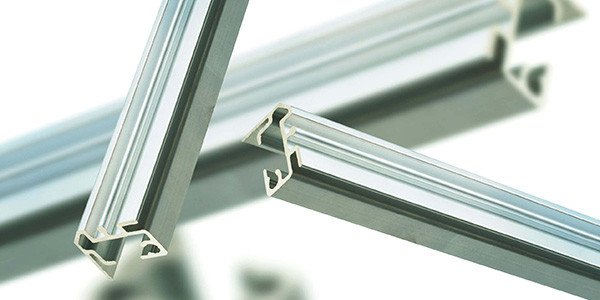
Aluminum is the most commonly extruded material due to its excellent ductility and lightweight properties. Common alloys include 6061, 6063, and 7075.
4.2 Copper and Copper Alloys
Copper extrusion is widely used for electrical and thermal applications. Brass and bronze are also extruded for decorative and mechanical uses.
4.3 Steel and Stainless Steel
Steel extrusion requires higher forces and is often performed at high temperatures. Stainless steel extrusion is used for corrosion-resistant applications.
4.4 Titanium and Nickel Alloys
These materials are used in aerospace and medical industries due to their high strength-to-weight ratio and corrosion resistance.
5. Extrusion Equipment and Tooling
5.1 Extrusion Press
Extrusion presses can be hydraulic or mechanical. Hydraulic presses are more common due to their ability to provide constant pressure and better control.
Key components:
- Ram
- Container
- Die holder
- Dummy block
5.2 Dies and Tooling
The die is a critical component that determines the shape and quality of the extruded product. Dies are typically made from high-strength tool steels and must withstand high temperatures and pressures.
Types of dies:
- Solid dies for simple shapes
- Hollow dies for tubes and complex profiles
- Semi-hollow dies for partially enclosed sections
Proper die design ensures uniform material flow and minimizes defects.
6. Process Flow of Metal Extrusion Service
A typical extrusion service involves the following steps:
- Billet Preparation
The raw material is cut into billets and preheated if required. - Loading and Lubrication
The billet is placed into the container, and lubricants are applied to reduce friction. - Extrusion
The ram pushes the billet through the die, forming the desired profile. - Cooling
The extruded product is cooled using air or water quenching. - Stretching and Straightening
This step removes residual stresses and improves dimensional accuracy. - Cutting
The extruded profile is cut into specified lengths. - Heat Treatment (Optional)
Enhances mechanical properties such as strength and hardness. - Surface Finishing
Processes like anodizing, polishing, or coating are applied based on requirements.
7. Design Considerations for Extrusion
Design plays a crucial role in the success of an extrusion project. Key considerations include:
- Uniform Wall Thickness: Prevents uneven material flow
- Rounded Corners: Reduces stress concentration and improves die life
- Symmetry: Helps maintain balanced flow during extrusion
- Tolerance Requirements: Must align with process capabilities
- Material Selection: Influences strength, corrosion resistance, and cost
Engineers often collaborate with extrusion service providers during the design phase to optimize manufacturability.
8. Applications of Metal Extrusion
Metal extrusion services are widely used across industries:
8.1 Construction
Aluminum extrusions are used in window frames, curtain walls, and structural components.
8.2 Automotive
Extruded parts are used in chassis components, heat exchangers, and crash management systems.
8.3 Aerospace
High-performance alloys are extruded for aircraft structures and engine components.
8.4 Electronics
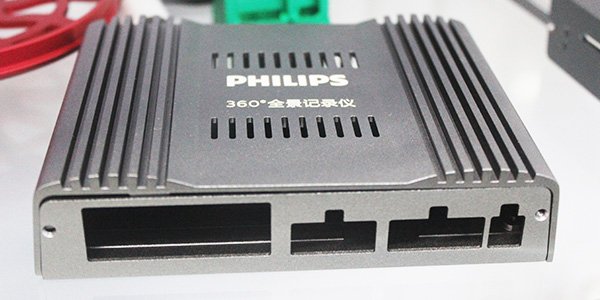
Heat sinks and enclosures are commonly produced using aluminum extrusion.
8.5 Energy Sector
Extruded components are used in solar panel frames, pipelines, and power transmission systems.
9. Quality Control in Metal Extrusion Services
Maintaining consistent quality is essential in extrusion manufacturing. Key quality control measures include:
9.1 Dimensional Inspection
Using tools such as calipers, micrometers, and coordinate measuring machines (CMM) to verify dimensions.
9.2 Surface Inspection
Checking for defects such as scratches, cracks, or oxidation.
9.3 Mechanical Testing
Testing tensile strength, hardness, and elongation to ensure material performance.
9.4 Non-Destructive Testing (NDT)
Techniques such as ultrasonic testing or X-ray inspection detect internal defects.
9.5 Process Monitoring
Real-time monitoring of temperature, pressure, and speed ensures process stability.
10. Advantages of Metal Extrusion Services
- High material utilization and minimal waste
- Ability to produce complex cross-sections
- Excellent surface finish
- Improved mechanical properties due to grain refinement
- Cost-effective for high-volume production
11. Challenges and Limitations
Despite its advantages, metal extrusion also has limitations:
- High initial tooling cost
- Limited to constant cross-sectional profiles
- Die wear and maintenance requirements
- Potential defects if process parameters are not optimized
12. Future Trends in Metal Extrusion
The metal extrusion industry is evolving with advancements in technology:
- Automation and Industry 4.0: Integration of sensors and data analytics for smarter manufacturing
- Advanced Alloys: Development of new materials with enhanced performance
- Simulation Software: Predicting material flow and optimizing die design
- Sustainability: Energy-efficient processes and recycling of scrap materials
13. Conclusion
Metal extrusion service is a versatile and efficient manufacturing process that plays a vital role in modern industry. By enabling the production of high-quality, complex profiles with excellent material efficiency, extrusion supports innovation across multiple sectors. A deep understanding of process parameters, material behavior, and design principles is essential to achieving optimal results.
As technology continues to advance, metal extrusion services will become even more precise, sustainable, and adaptable, making them an indispensable part of the global manufacturing landscape.
Choose Gazfull CNC Machining Services
At Gazfull, we specialize in providing machining services that go beyond traditional manufacturing. We aim to optimize your processes and reduce production expenses while delivering high-quality results. Our expertise and state-of-the-art 3-axis cutting systems also enable us to handle all your custom needs efficiently and precisely.
For more about metal extrusion service: principles, processes, applications, and quality control, you can pay a visit to Gazfull at https://www.gazfull.com/services/ for more info.