CNC Machining Metal Parts +86-18169936698
In today’s highly competitive automotive industry, manufacturers are under constant pressure to deliver high-quality components at scale, while maintaining cost efficiency and meeting strict regulatory standards. CNC (Computer Numerical Control) machining has emerged as a cornerstone technology in high volume automotive parts manufacturing due to its precision, repeatability, and adaptability. This article explores how CNC machining supports large-scale automotive production, the technologies involved, material considerations, process optimization strategies, and future trends shaping the industry.
1. The Role of CNC Machining in Automotive Manufacturing
CNC machining refers to the automated control of machining tools through computer programming. Unlike manual machining, CNC systems execute pre-programmed sequences with extreme precision, enabling consistent production of complex parts.
In automotive manufacturing, CNC machining is widely used to produce critical components such as:
- Engine blocks and cylinder heads
- Transmission housings and gears
- Brake system components
- Suspension parts
- Steering components
- Custom fixtures and tooling
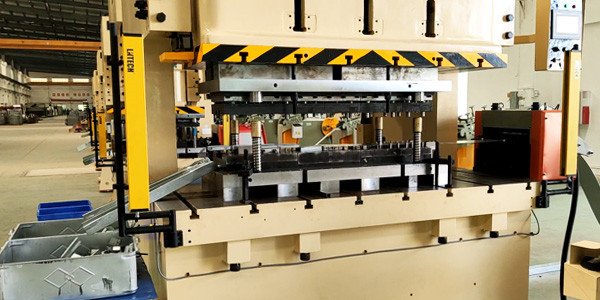
CNC machining for high volume production, CNC machining offers a balance between flexibility and precision. While processes like stamping and casting are often used for mass production, CNC machining is essential for finishing operations, tight tolerance parts, and components requiring superior surface quality.
2. Advantages of CNC Machining for High Volume Production
2.1 Precision and Consistency
Automotive components often require tolerances within microns. CNC machining ensures consistent quality across thousands—or even millions—of parts. Once a program is validated, it can be replicated with minimal variation, reducing defects and ensuring compliance with industry standards.
2.2 Scalability
Modern CNC systems can operate continuously with minimal human intervention. By integrating multiple machines into automated production lines, manufacturers can significantly increase output while maintaining quality.
2.3 Flexibility
Unlike dedicated tooling systems, CNC machining allows rapid adjustments through software changes. This is particularly valuable in automotive manufacturing, where design modifications and model updates are frequent.
2.4 Material Versatility
CNC machines can process a wide range of materials, including:
- Aluminum alloys (lightweight components)
- Steel and stainless steel (structural parts)
- Titanium (high-performance applications)
- Plastics and composites (interior and lightweight parts)
This versatility enables manufacturers to meet diverse performance requirements across different vehicle systems.
3. Key CNC Machining Processes in Automotive Production
3.1 CNC Milling
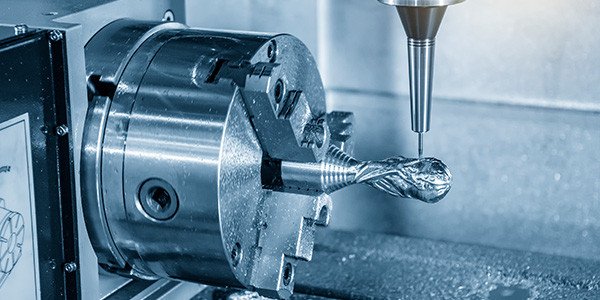
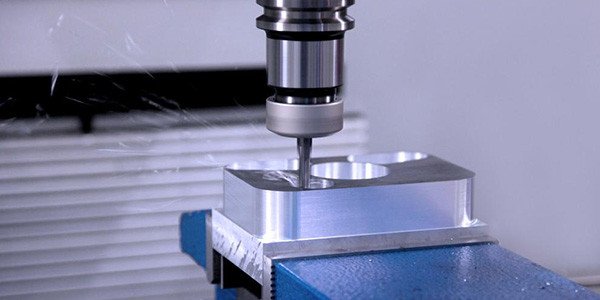
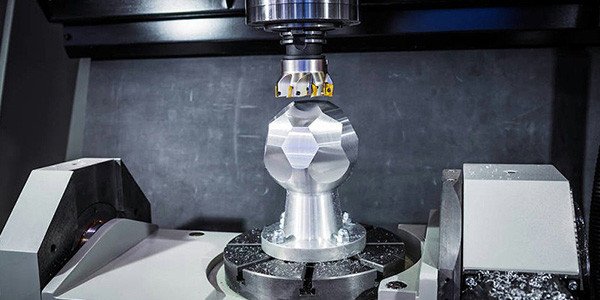
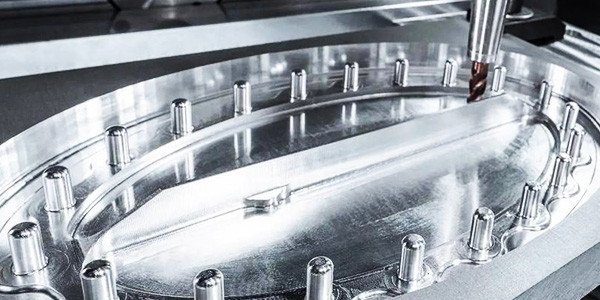
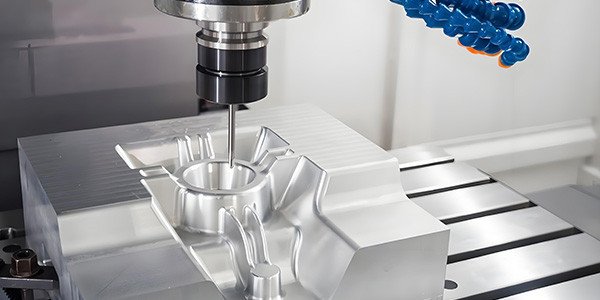
CNC milling is widely used for producing complex geometries and flat surfaces. Multi-axis milling machines (3-axis, 4-axis, and 5-axis) allow manufacturers to create intricate parts such as engine components and transmission housings in fewer setups, improving efficiency.
3.2 CNC Turning
CNC turning is ideal for cylindrical components like shafts, bushings, and fasteners. High-speed CNC lathes can produce large volumes of rotational parts with excellent surface finishes.
3.3 Drilling and Boring
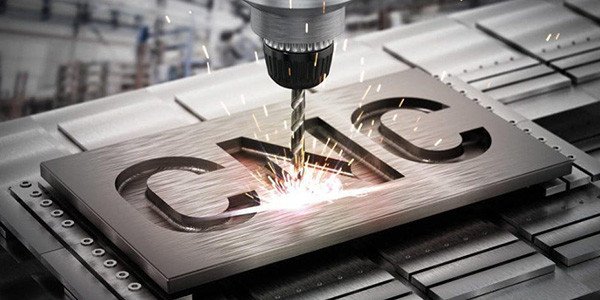
Precision holes are critical in automotive assemblies. CNC drilling and boring operations ensure accurate hole placement and diameter, which are essential for proper fit and function.
3.4 Grinding
Grinding is often used as a finishing process to achieve tight tolerances and superior surface quality. It is especially important for components like crankshafts and camshafts.
4. Automation and Integration in High Volume CNC Machining
To achieve true high volume production, CNC machining is often integrated with advanced automation systems.
4.1 Robotic Loading and Unloading
Industrial robots are commonly used to load raw materials and unload finished parts. This reduces labor costs, increases consistency, and enables 24/7 operation.
4.2 Pallet Systems
Pallet changers allow multiple workpieces to be prepared offline while the machine is operating. This minimizes downtime and maximizes machine utilization.
4.3 In-Line Inspection Systems
Automated inspection systems, such as coordinate measuring machines (CMM) and vision systems, are integrated into production lines to ensure quality control in real time.
4.4 Manufacturing Execution Systems (MES)
MES software connects CNC machines with enterprise systems, enabling real-time monitoring, data collection, and process optimization. This improves traceability and decision-making.
5. Tooling and Cutting Technology
Efficient tooling is critical for high volume CNC machining.
5.1 Cutting Tool Materials
Common cutting tool materials include:
- Carbide tools for high-speed machining
- Ceramic tools for heat-resistant applications
- Diamond-coated tools for abrasive materials
Selecting the right tool material improves tool life and reduces downtime.
5.2 Tool Path Optimization
Advanced CAM (Computer-Aided Manufacturing) software optimizes tool paths to minimize cycle time and reduce tool wear. Techniques such as high-speed machining (HSM) and adaptive clearing are widely used.
5.3 Tool Monitoring Systems
Modern CNC machines are equipped with sensors that monitor tool wear and breakage. Predictive maintenance reduces unexpected downtime and improves production efficiency.
6. Material Considerations in Automotive CNC Machining
Material selection plays a significant role in manufacturing efficiency and product performance.
6.1 Aluminum Alloys
Aluminum is widely used due to its lightweight properties and machinability. It is commonly used for engine components and structural parts.
6.2 Steel and High-Strength Alloys
Steel provides strength and durability for load-bearing components. Advanced high-strength steels (AHSS) are increasingly used in modern vehicles.
6.3 Composites and Plastics
With the push for lightweight vehicles, composites and engineering plastics are gaining popularity. CNC machining allows precise shaping of these materials.
7. Challenges in High Volume CNC Machining
Despite its advantages, CNC machining for high volume production presents several challenges:
7.1 Tool Wear and Maintenance
Continuous operation leads to tool wear, which can affect quality and increase costs. Effective tool management strategies are essential.
7.2 Cycle Time Optimization
Reducing cycle time without compromising quality is a constant challenge. Manufacturers must balance speed, precision, and tool life.
7.3 Thermal Effects
Heat generated during machining can cause material expansion and affect dimensional accuracy. Proper cooling and process control are required.
7.4 Cost Management
While CNC machining offers flexibility, it can be more expensive than other mass production methods for certain parts. Manufacturers must carefully evaluate cost-benefit trade-offs.
8. Quality Control and Standards
Automotive manufacturing requires strict adherence to quality standards such as:
- ISO 9001 (Quality Management Systems)
- IATF 16949 (Automotive Quality Management)
CNC machining supports these standards through:
- High repeatability
- Automated inspection systems
- Data-driven process control
Statistical process control (SPC) is often used to monitor production and ensure consistent quality.
9. Sustainability in CNC Machining
Sustainability is becoming increasingly important in automotive manufacturing.
9.1 Energy Efficiency
Modern CNC machines are designed to consume less energy while maintaining high performance.
9.2 Coolant Management
Eco-friendly coolants and recycling systems reduce environmental impact and operating costs.
9.3 Material Utilization
Optimized machining strategies minimize material waste, contributing to more sustainable production.
10. Future Trends in CNC Machining for Automotive Manufacturing
10.1 Smart Manufacturing and Industry 4.0
The integration of IoT (Internet of Things) technologies enables real-time monitoring and predictive maintenance. Smart factories use data analytics to optimize production processes.
10.2 Artificial Intelligence (AI)
AI is being used to optimize tool paths, predict tool wear, and improve quality control. This leads to higher efficiency and reduced downtime.
10.3 Additive Manufacturing Integration
Hybrid manufacturing systems combine CNC machining with additive manufacturing, allowing for more complex designs and reduced material waste.
10.4 Electric Vehicle (EV) Components
The rise of electric vehicles is changing the landscape of automotive manufacturing. CNC machining is increasingly used for:
- Battery housings
- Electric motor components
- Lightweight structural parts
Conclusion
CNC machining plays a vital role in high volume automotive parts manufacturing by delivering precision, consistency, and flexibility. While challenges such as tool wear and cost management remain, advancements in automation, tooling, and digital technologies continue to enhance its efficiency and scalability.
As the automotive industry evolves—driven by electrification, sustainability, and smart manufacturing—CNC machining will remain a key enabler of innovation and high-quality production. Manufacturers that invest in advanced CNC technologies and process optimization will be well-positioned to meet the demands of the future automotive market.
Choose Gazfull CNC Machining Services
At Gazfull, we specialize in providing machining services that go beyond traditional manufacturing. We aim to optimize your processes and reduce production expenses while delivering high-quality results. Our expertise and state-of-the-art 3-axis cutting systems also enable us to handle all your custom needs efficiently and precisely.
For more about CNC machining for high volume automotive parts manufacturing, you can pay a visit to Gazfull at https://www.gazfull.com/services/ for more info.】