CNC Machining Metal Parts +86-18169936698
Titanium alloys have become indispensable in advanced engineering sectors such as aerospace and medical device manufacturing. Their exceptional strength-to-weight ratio, corrosion resistance, and biocompatibility make them ideal for critical applications where performance and reliability are non-negotiable. However, these same properties also make titanium alloys notoriously difficult to machine. When combined with the demand for high precision and low production volumes, manufacturers must adopt specialized CNC machining strategies to meet strict quality and cost requirements.
This article explores the key challenges, technologies, and best practices associated with high-precision, low-volume CNC machining of titanium alloys in aerospace and medical fields.
1. Characteristics of Titanium Alloys
Titanium alloys, particularly Ti-6Al-4V, are widely used due to their unique combination of properties:
- High strength-to-weight ratio: Essential for aerospace components where weight reduction directly impacts fuel efficiency.
- Excellent corrosion resistance: Suitable for harsh environments, including seawater and bodily fluids.
- Biocompatibility: Ideal for implants and surgical instruments in the medical field.
- Low thermal conductivity: Leads to heat concentration during machining, increasing tool wear.
- High chemical reactivity at elevated temperatures: Causes adhesion between tool and workpiece.
These characteristics demand precise control over machining parameters to avoid defects such as surface burns, tool failure, or dimensional inaccuracies.
2. Application Requirements in Aerospace and Medical Fields
Aerospace Industry
In aerospace, titanium components are used in:
- Engine components (compressor blades, discs)
- Structural parts (airframe fittings, fasteners)
- Landing gear systems
These parts require:
- Tight tolerances (often within ±0.005 mm)
- Fatigue resistance
- Traceability and compliance with standards such as AS9100
Low-volume production is common due to customized designs, prototyping, and limited production runs.
Medical Industry
In the medical sector, titanium is used for:
- Orthopedic implants (hip and knee joints)
- Dental implants
- Surgical instruments
Requirements include:
- Ultra-high precision and surface finish
- Strict biocompatibility standards (ISO 13485)
- Cleanroom-compatible manufacturing
- Customization for patient-specific implants
Low-volume, high-mix production is typical, especially with the rise of personalized medicine.
3. Challenges in CNC Machining of Titanium Alloys
Machining titanium alloys presents several technical challenges:
3.1 Tool Wear and Heat Generation
Due to poor thermal conductivity, heat generated during cutting is not dissipated effectively. This leads to:
- Rapid tool wear
- Built-up edge formation
3.2 Work Hardening
Titanium alloys tend to harden during machining, making subsequent cuts more difficult and increasing tool stress.
3.3 Vibration and Chatter
Low modulus of elasticity can cause deflection, leading to:
- Poor surface finish
- Dimensional inaccuracies
- Tool breakage
3.4 Chip Control
Titanium produces continuous chips that are difficult to break, increasing the risk of entanglement and surface damage.
4. CNC Machining Strategies for High Precision
To overcome these challenges, manufacturers implement advanced CNC machining techniques:
4.1 Tool Selection
- Use of carbide or polycrystalline diamond (PCD) tools
- Sharp cutting edges to minimize cutting forces
4.2 Cutting Parameters Optimization
- Lower cutting speeds (typically 30–60 m/min)
- Moderate feed rates
- Shallow depth of cut to reduce heat buildup
4.3 Cooling and Lubrication
- High-pressure coolant systems (up to 100 bar)
- Use of minimum quantity lubrication (MQL) in some medical applications
- Cryogenic cooling (liquid nitrogen) for enhanced tool life
4.4 Toolpath Optimization
- Use of high-efficiency milling (HEM) strategies
- Adaptive toolpaths to maintain constant chip load
- Avoidance of sharp corners to reduce tool stress
4.5 Machine Tool Requirements
- High rigidity and thermal stability
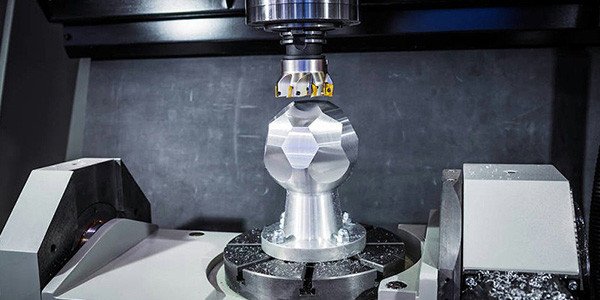
- 5-axis CNC machines for complex geometries
- Real-time monitoring systems for vibration and temperature
5. Surface Integrity and Quality Control
In both aerospace and medical applications, surface integrity is critical:
- Surface roughness (Ra) often required below 0.8 μm
Quality control methods include:
- Coordinate Measuring Machines (CMM)
- Non-destructive testing (NDT) such as ultrasonic or X-ray inspection
- Surface analysis using profilometers and microscopy
6. Low-Volume Production Considerations
Low-volume CNC machining introduces unique challenges:
6.1 Cost Efficiency
- High setup costs must be amortized over small batches
- Use of modular fixturing and quick-change tooling to reduce setup time
6.2 Flexibility
- CNC programming must accommodate frequent design changes
- Digital twins and simulation software help reduce trial-and-error
6.3 Lead Time
- Rapid prototyping capabilities are essential
- Integration with CAD/CAM systems for seamless workflow
6.4 Customization
- Especially critical in medical applications (e.g., patient-specific implants)
- Requires close collaboration between engineers and end-users
7. Emerging Technologies and Trends
7.1 Hybrid Manufacturing
Combining additive manufacturing (3D printing) with CNC machining allows:
- Near-net-shape production
- Reduced material waste
- Improved design flexibility
7.2 Automation and Smart Manufacturing
- Use of robotics for part handling
- IoT-enabled machines for real-time monitoring
- Predictive maintenance to reduce downtime
7.3 Advanced Materials
- Development of new titanium alloys with improved machinability
- Surface treatments to enhance performance
7.4 AI and Process Optimization
- Machine learning algorithms to optimize cutting parameters
8. Best Practices for Manufacturers
To succeed in high-precision, low-volume titanium machining, manufacturers should:
- Develop expertise in titanium-specific machining strategies
- Implement robust quality management systems
- Leverage digital tools for design and simulation
- Continuously monitor and optimize processes
Conclusion
High-precision, low-volume CNC machining of titanium alloys is a complex but essential capability in aerospace and medical industries. The unique properties of titanium demand specialized machining techniques, advanced equipment, and rigorous quality control. As industries continue to evolve toward customization, lightweight design, and high performance, the importance of mastering titanium machining will only grow.
Manufacturers that invest in technology, expertise, and process optimization will be well-positioned to meet the demanding requirements of these critical sectors while maintaining efficiency and competitiveness.
Choose Gazfull CNC Machining Services
At Gazfull, we specialize in providing machining services that go beyond traditional manufacturing. We aim to optimize your processes and reduce production expenses while delivering high-quality results. Our expertise and state-of-the-art 3-axis cutting systems also enable us to handle all your custom needs efficiently and precisely.
For more about high-precision low-volume CNC machining of titanium alloys in aerospace and medical industries, you can pay a visit to Gazfull at https://www.gazfull.com/services/ for more info.