CNC Machining Metal Parts +86-18169936698
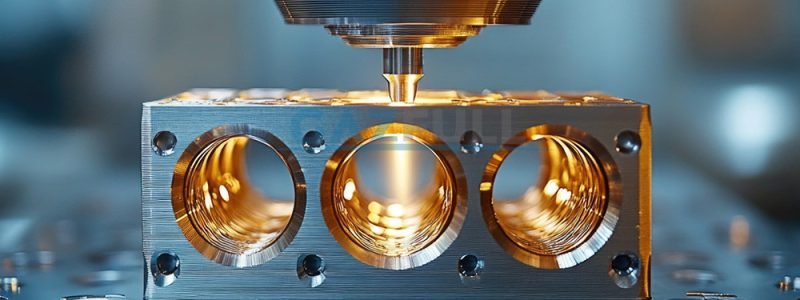
In the modern landscape of manufacturing, the ability to transform a digital blueprint into a tangible, high-precision component is the cornerstone of innovation. From the aerospace industry, where a single turbine blade must withstand extreme temperatures, to the medical sector, where custom implants demand flawless biocompatibility, the demand for accuracy is relentless. At the heart of this industrial capability lie two fundamental processes: CNC milling and CNC turning. While often grouped together under the umbrella of “subtractive manufacturing,” these technologies represent distinct methodologies. Understanding their mechanics, capabilities, and synergistic application is crucial for engineers, product designers, and procurement specialists aiming to optimize for quality, cost, and lead time.
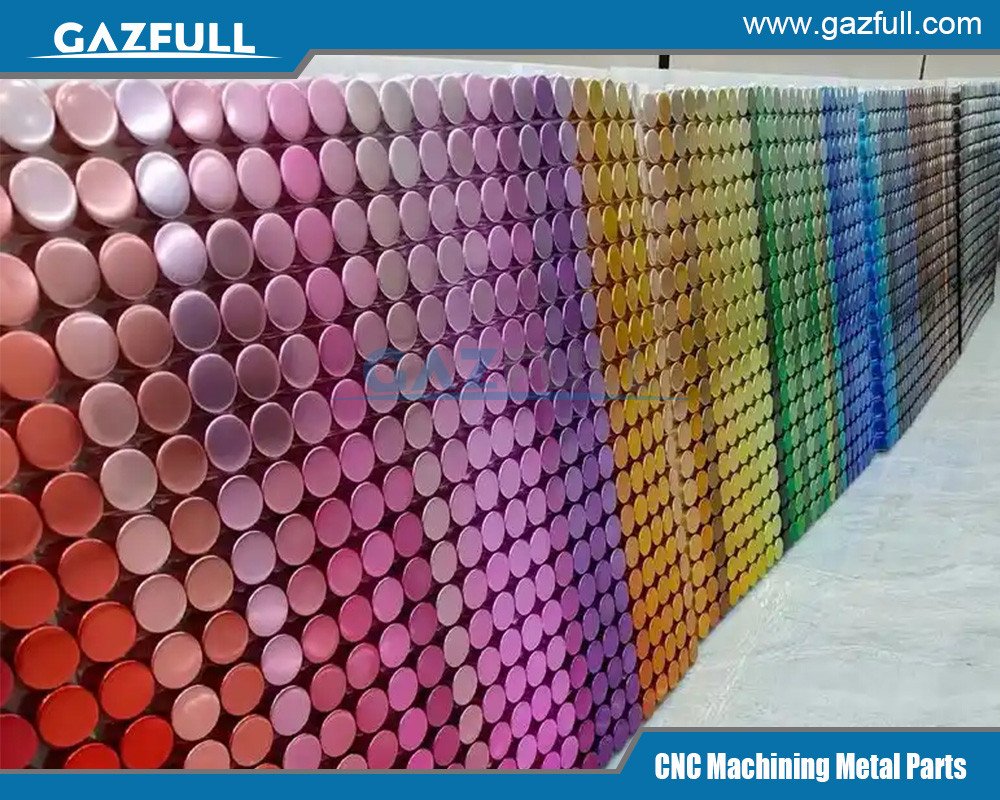
The Foundation: What is CNC Machining?
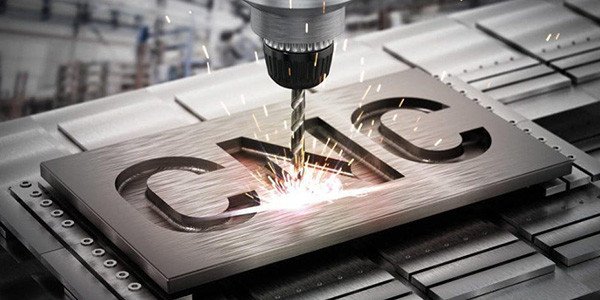
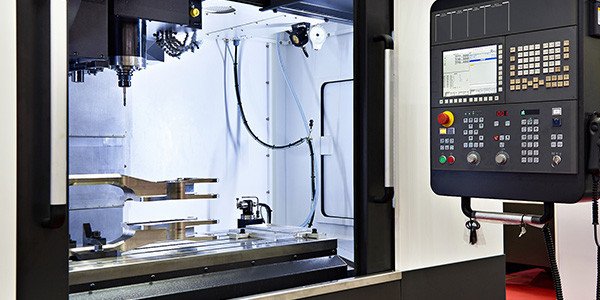
Before dissecting the individual processes, it is essential to define the common thread: Computer Numerical Control (CNC). CNC machining is a subtractive manufacturing process where pre-programmed computer software dictates the movement of factory tools and machinery. Unlike manual control, where operators must guide levers and wheels, CNC systems rely on digital instructions derived from Computer-Aided Design (CAD) and Computer-Aided Manufacturing (CAM) files. This automation allows for three-dimensional cutting tasks to be completed in a single set of prompts with a level of precision measured in microns—often as tight as +/- 0.001 inches or better.
The primary advantage of CNC over conventional machining is consistency. Once a program is validated, a CNC machine can replicate that part thousands of times with virtually no deviation, ensuring that the first part is identical to the last.
CNC Turning: The Art of Rotation
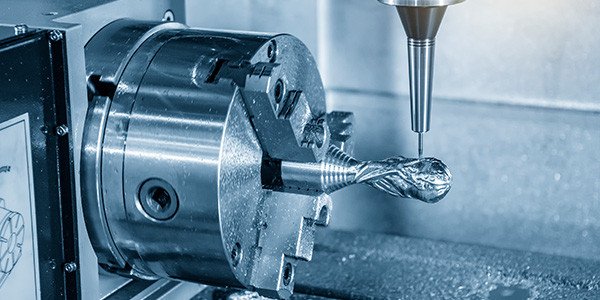
CNC turning is typically employed to create cylindrical or conical features. The process is defined by the rotation of the workpiece itself, as opposed to the cutting tool. In a CNC lathe or turning center, the raw material (usually a bar stock) is rotated at high speeds (RPM) while a stationary cutting tool, held in a turret, traverses along the axis of the rotating part to remove material.
The Mechanics of Turning
The primary motion in turning is the rotation of the workpiece. The cutting tool moves in two axes:
-
X-Axis: Controls the diameter by moving the tool towards or away from the centerline of the part.
-
Z-Axis: Controls the length by moving the tool along the horizontal axis of the part.
Modern CNC lathes often include live tooling capabilities. This innovation blurs the line between turning and milling. With live tooling, rotating cutting tools (such as drills or end mills) can be engaged while the workpiece is held stationary or indexed to a specific angle. This allows for the machining of flats, cross-holes, and keyways without removing the part from the lathe, dramatically increasing efficiency and positional accuracy.
Key Capabilities and Geometries
Turning is the go-to solution for parts that exhibit rotational symmetry. Common components include shafts, bushings, pulleys, and threaded rods. It excels at:
-
External Diameter (OD) and Internal Diameter (ID) Operations: From roughing down large diameters to boring internal cavities with tight tolerances.
-
Threading: Producing high-quality internal and external threads with precision pitch control.
-
Grooving and Parting: Cutting narrow grooves or cutting off finished parts from the parent stock.
Turning is generally considered more cost-effective than milling for high-volume production of cylindrical parts, as the continuous cutting action allows for rapid material removal rates (MRR).
CNC Milling: The Art of Positioning
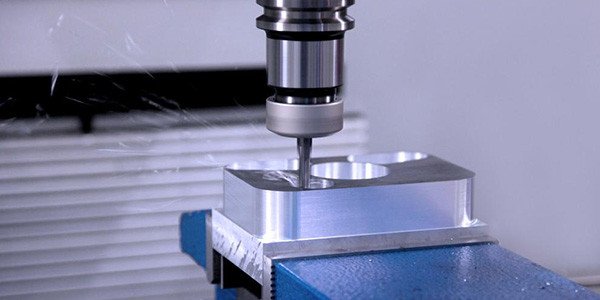
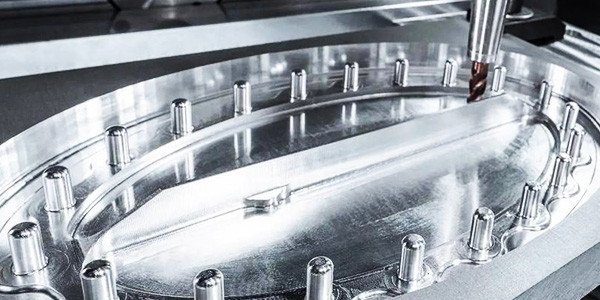
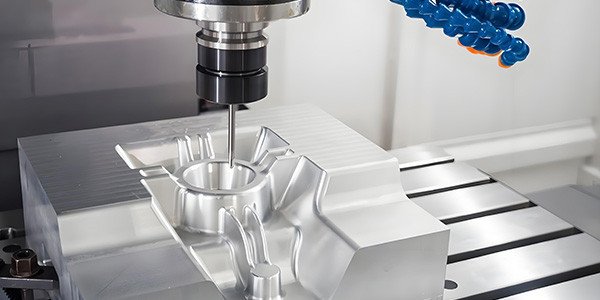
If turning is about rotation, milling is about articulation. In CNC milling, the workpiece remains stationary on a table (often moving in the X and Y axes), while a rotating cylindrical cutting tool—called an end mill or face mill—spins at high speed to remove material. The complexity of milling is defined by the number of axes available.
Multi-Axis Milling
While standard 3-axis milling (X, Y, Z) is suitable for simple prismatic parts, the modern manufacturing industry relies heavily on advanced multi-axis machining:
-
4-Axis Milling: Adds a rotational axis (A-axis) to the standard 3-axis setup. This allows the part to be rotated horizontally, enabling continuous machining around a part’s periphery, ideal for gears, cams, and helical features.
-
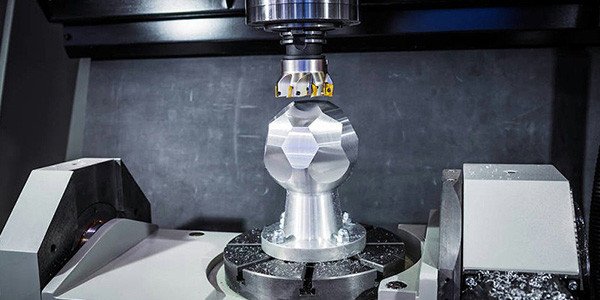
5-Axis Milling: Adds two rotational axes (typically A and B). This capability allows the cutting tool to approach the workpiece from virtually any direction. The primary benefit of 5-axis machining is the ability to machine complex geometries—such as impellers, aerospace structural components, and medical prosthetics—in a single setup. Reducing setups eliminates cumulative fixturing errors and shortens lead times.
Tooling and Material Removal
Unlike turning tools, which typically maintain a single point of contact, milling cutters have multiple cutting edges. The selection of the correct toolpath strategy—such as trochoidal milling for hard metals or high-efficiency milling (HEM) for lighter alloys—is critical for managing heat generation and tool wear.
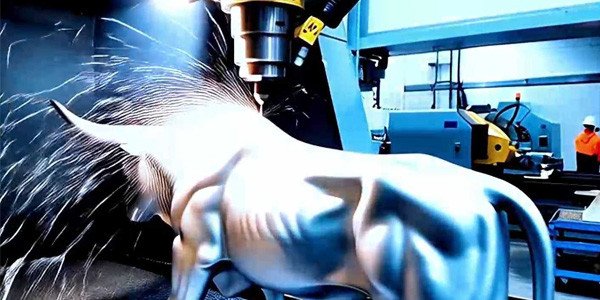
Milling is unmatched in its ability to create complex shapes. Where turning creates cylinders, milling creates cubes, brackets, cavities, and intricate surface contours. It is the preferred method for creating features like pockets, slots, ribs, and intricate 3D surfaces.
The Synergy: When to Use Turning vs. Milling
Choosing between milling and turning is rarely a binary decision. Often, the most efficient manufacturing strategy involves a hybrid approach. However, understanding the core criteria helps in process planning.
Geometric Consideration:
If the part is predominantly cylindrical with features centered around a rotational axis, turning is the logical choice. If the part is prismatic (box-like) or requires complex contours and undercuts, milling is necessary.
Tolerances and Surface Finish:
Turning generally produces a superior surface finish on external diameters due to the continuous cutting action, often achieving 32 micro-inch Ra finishes as standard. Milling, while capable of high precision, may leave subtle tool marks depending on the step-over percentage of the cutter path.
Cost Analysis:
For high-volume production of simple shafts, a CNC lathe has a lower cost-per-part ratio than a mill. Conversely, for low-volume, highly complex prototype work, a 5-axis mill offers the flexibility to iterate quickly without the need for custom fixtures.
Advanced Multi-Tasking Machines (MTM)
The modern trend in CNC services is moving toward consolidation. Multi-tasking machines, often referred to as mill-turn centers, combine the capabilities of a lathe and a mill into a single platform. These machines feature a spindle that can rotate for turning operations but can also index and lock for milling operations, alongside a second spindle (sub-spindle) for part transfer.
This technology offers several advantages:
-
Complete Machining in One Go: A complex part can be loaded as bar stock and completed—turned, milled, drilled, and tapped—without human intervention.
-
Elimination of Soft Jaws: By removing the need to transfer parts between a lathe and a mill, the cumulative error from re-fixturing is eliminated.
-
Just-in-Time (JIT) Manufacturing: The speed of these machines allows manufacturers to produce finished components in minutes, aligning perfectly with lean inventory strategies.
Material Considerations
The efficacy of CNC milling and turning services is highly dependent on material science. A service provider’s capability is often defined by the range of materials they can machine reliably.
-
Metals:
-
Aluminum (6061, 7075): The gold standard for machinability. It offers high speed, low tool wear, and excellent thermal conductivity, making it ideal for prototyping and aerospace.
-
*Stainless Steel (303, 304, 17-4):* Requires robust spindles and rigid setups. 303 is the most machinable stainless due to the addition of sulfur, while 17-4 is prized for its high strength and corrosion resistance in turned parts.
-
*Titanium (Grade 5, Ti-6Al-4V):* The most demanding common metal. It requires specialized tooling, high-pressure coolant systems, and conservative cutting parameters due to its tendency to work-harden and its poor thermal conductivity.
-
-
Engineering Plastics:
-
PEEK, Acetal, and Nylon: Machining plastics requires sharp tooling to avoid melting or burring. Unlike metals, thermal expansion must be carefully managed to maintain tight tolerances during the machining process.
-
Quality Assurance and Metrology
The “service” aspect of CNC milling and turning extends beyond simply making parts; it involves certifying that those parts meet specifications. A robust CNC service provider integrates quality assurance (QA) into the workflow.
In-Process Probing:
Modern CNC machines are equipped with touch probes. These allow the machine to automatically measure critical features while the part is still fixtured. If a feature is trending out of tolerance, the machine can automatically adjust tool offsets to correct it before producing scrap parts.
Post-Process Inspection:
Following machining, parts are typically validated using precision metrology equipment. This includes:
-
Coordinate Measuring Machines (CMM): For complex geometries, a CMM uses a probe to map the physical dimensions of a part against the CAD model.
-
Optical Comparators and Vision Systems: Used for rapid inspection of 2D profiles, threads, and small features.
-
Surface Roughness Testers: To verify that the finish meets the requirements for sealing surfaces or aesthetic standards.
Design for Manufacturability (DFM)
The collaboration between the designer and the CNC service provider is most effective when Design for Manufacturability (DFM) principles are applied. Common pitfalls that increase costs include:
-
Deep Pockets with Sharp Internal Corners: An end mill is cylindrical. To create a sharp internal corner, the machinist must use a very small tool (increasing time) or a secondary EDM (Electrical Discharge Machining) process. Designing a radius (the size of the standard tool) into internal corners dramatically reduces cost.
-
Tolerances: Specifying a tolerance of +/- 0.001″ on every feature is exponentially more expensive than limiting tight tolerances to only the critical mating surfaces. Standard tolerances (+/- 0.005″ or 0.010″) allow for faster machining.
-
Wall Thickness: In both turning and milling, extremely thin walls (less than 0.020” in metal) are prone to chatter (vibration). This requires slower feeds, specialized toolpaths, or potting materials to stabilize the part, increasing cost.
The Future of CNC Services
As we look toward the horizon, the landscape of CNC milling and turning is being reshaped by digital integration and automation.
Automation and Lights-Out Manufacturing:
Robotic arms and automated pallet changers are increasingly common. This allows machine shops to run unattended during “lights-out” shifts. A machine loaded with raw material and monitored remotely can run for 12, 16, or 24 hours, drastically reducing the cost-per-part by maximizing spindle uptime.
Digital Twin Technology:
Before a physical chip is ever cut, advanced service providers use simulation software to create a “digital twin” of the machining process. This software simulates the toolpath, checks for collisions between the tool and the machine, and predicts vibration and tool deflection. This shifts the risk from the physical workshop to the digital realm, ensuring first-pass success on complex geometries.
Sustainability:
Sustainability is becoming a key differentiator. Services are now focusing on dry machining (using minimal coolant) for certain materials to reduce waste, as well as advanced recycling programs to ensure that the valuable metal chips produced by turning and milling are reclaimed rather than sent to landfill.
Conclusion
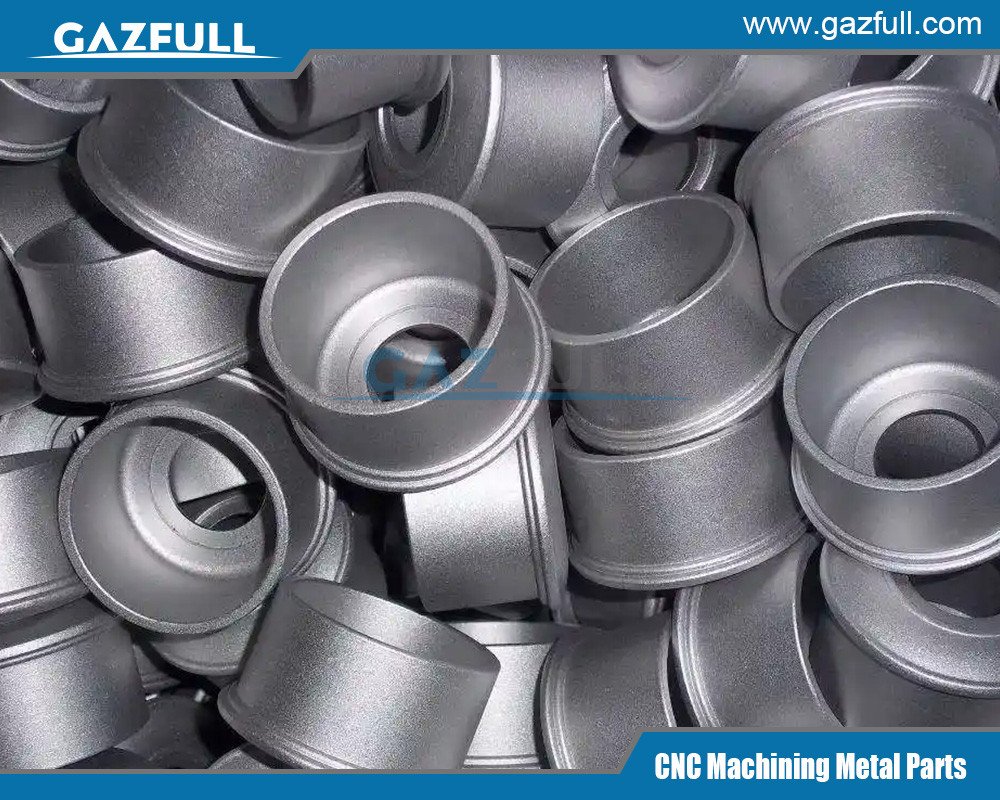
CNC milling and turning services represent the backbone of modern manufacturing. While turning focuses on the efficient creation of cylindrical precision through the rotation of the workpiece, milling offers the geometric freedom to create complex prismatic shapes through the articulation of the tool. In the competitive landscape of product development, the distinction between these two technologies is less about choosing one over the other and more about understanding how to integrate them.
Whether through the high-speed spindles of a 5-axis mill, the robust rigidity of a CNC lathe, or the consolidated capabilities of a mill-turn center, the goal remains the same: to convert digital concepts into physical reality with absolute fidelity. For engineers and businesses, partnering with a CNC service provider that not only possesses this advanced hardware but also offers deep expertise in tooling, material science, and Design for Manufacturability is the key to accelerating time-to-market, reducing production costs, and achieving the uncompromising quality standards required in industries ranging from aerospace to medical devices. As automation and digital simulation continue to evolve, the precision and efficiency of these subtractive processes will only deepen, solidifying their role as the cornerstone of industrial fabrication for decades to come.
Choose Gazfull CNC Machining Services
At Gazfull, we specialize in providing machining services that go beyond traditional manufacturing. We aim to optimize your processes and reduce production expenses while delivering high-quality results. Our expertise and state-of-the-art 3-axis cutting systems also enable us to handle all your custom needs efficiently and precisely.
For more about custom CNC machining china: precision, scalability, and the dynamics of global sourcing, you can pay a visit to Gazfull at https://www.gazfull.com/services/ for more info.