
CNC Machining Metal Parts +86-18169936698
Blog
We offer metal fabrication service and custom manufactured parts factory service
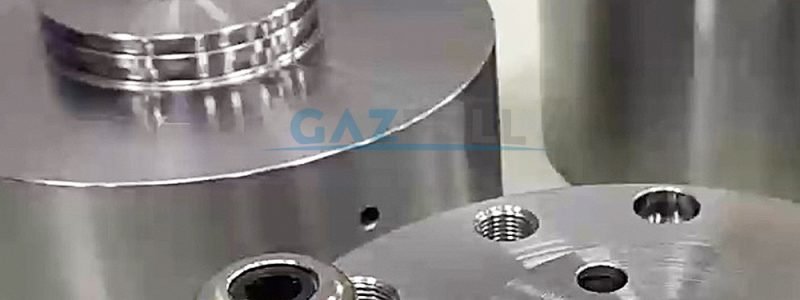
How to Find a Reliable CNC Machining Parts Manufacturer for Your Project
In the world of modern manufacturing, Computer Numerical Control (CNC) machining remains the gold standard for producing high-precision parts with tight tolerances. Whether you are an engineer developing a prototype, a startup launching a new product, or a procurement manager scaling up for mass production, your success hinges on one critical factor: the reliability of your CNC machining partner.
A reliable manufacturer does more than just cut metal or plastic; they act as a strategic partner who ensures quality, adheres to deadlines, and helps optimize your design for manufacturability. Conversely, a poor choice can lead to budget overruns, missed market windows, and compromised product integrity.
With the global market flooded with machine shops, from local job shops to massive overseas facilities, how do you separate the industry leaders from the amateurs? This technical guide provides a systematic approach to vetting, evaluating, and selecting a CNC machining manufacturer that aligns with your project’s specific requirements.
Phase 1: Defining Your Technical Requirements (The Prerequisite)
Before you begin searching for a supplier, you must first ensure your own documentation is flawless. A manufacturer can only be as reliable as the data you provide. Sending incomplete or ambiguous files is the fastest way to encounter manufacturing errors.
1. The Technical Drawing (The 2D Blueprint)
While 3D models are essential for toolpath generation, a 2D technical drawing remains the legally binding contract for the part’s geometry.
-
Critical Dimensions: Clearly identify which features have tight tolerances (e.g., ±0.01 mm) and which are standard (e.g., ±0.1 mm).
-
Geometric Dimensioning and Tolerancing (GD&T): For complex assemblies, use GD&T symbols to define true position, flatness, and concentricity. This removes ambiguity and tells the machinist exactly how the part must function.
-
Surface Finish: Specify the required Ra (roughness average) value. Is it a structural component requiring a standard 3.2 µm finish, or a sealing surface needing a fine 0.8 µm finish?
-
Thread Specifications: Define thread types (Metric, UNC, UNF) and class of fit (e.g., 6H for internal threads).
2. The 3D Model (The CAD File)
Ensure your CAD model is watertight and free of errors.
-
File Format: Native files (like .SLDPRT or .STEP) are preferred, but a universal .STEP or .IGES file is usually acceptable.
-
Material Specification: Don’t just say “Aluminum.” Specify the alloy (e.g., 6061-T6 vs. 7075-T6) as they have different machinability, strength, and cost profiles.
Phase 2: The Search and Initial Vetting
With your technical package ready, you can begin sourcing potential partners. The goal here is to create a shortlist of capable shops.
1. Matchmaking: Capability vs. Complexity
Not all CNC shops are created equal. They generally fall into three categories:
-
Job Shops: Best for prototypes and low-volume production (1–100 parts). They are flexible but may lack the capacity for large-scale runs.
-
Production Shops: Specialize in medium to high-volume manufacturing. They invest in multi-axis machining centers and automation to reduce per-part cost.
-
Specialty Shops: Focus on specific industries (Aerospace, Medical) or materials (e.g., 5-axis Titanium machining).
How to vet: Look at their “Machine Tour” or “Equipment List.” Do they have the specific machinery required for your part? If your part requires 5-axis simultaneous machining and they only own 3-axis mills, they are not a fit.
2. Certifications as a Baseline
Certifications are not just wall decorations; they are evidence of a standardized process.
-
ISO 9001:2015: This is the baseline for quality management. It ensures they have documented procedures for handling non-conformances, calibration, and traceability. If a shop lacks ISO 9001, proceed with extreme caution.
-
AS9100D: Mandatory for aerospace and defense work.
-
ISO 13485: Required for medical device manufacturing.
-
ITAR Registration: Essential if you are manufacturing defense articles in or for the United States.
Phase 3: The Technical Evaluation (RFQ Process)
The Request for Quote (RFQ) process is your primary tool for evaluation. A reliable manufacturer will use this phase to demonstrate their technical expertise.
1. Analyzing the Quotation
When you receive a quote, look beyond the bottom-line price.
-
Breakdown: A transparent quote should separate material costs, setup fees, and per-unit machining costs.
-
Lead Time: Is it realistic? A shop promising 100 complex parts in 2 days when others need 2 weeks may be cutting corners or desperate for work.
-
Payment Terms: Standard terms are often Net 30 or a deposit for raw materials (especially if they are expensive). Be wary of shops demanding 100% payment upfront.
2. The “Design for Manufacturability” (DFM) Feedback
This is the single most important indicator of a reliable partner. After receiving your files, a competent manufacturer will come back with questions or suggestions. This is called DFM feedback.
-
Red Flag: A supplier who accepts your files without a single question is likely just pushing “Accept” and will figure out the problems later—on your dime and your timeline.
-
Green Flag: A supplier who asks, “We noticed this internal corner radius is 0.5mm, but the reach of our standard endmill is 1mm. Can we increase it to 1.5mm to avoid EDM costs?” or “This thin wall is 0.3mm thick; in this material, we recommend increasing it to 0.8mm to prevent vibration during machining.”
3. Communication Cadence
Time zone differences can be a challenge, especially with overseas suppliers. Establish the communication protocol early.
-
How quickly do they respond to emails? (24 hours is standard).
-
Do they speak your language fluently enough to discuss technical nuances?
-
Can they provide progress photos or video updates during the machining process?
Phase 4: The Deep Dive – Auditing Quality Assurance
A reliable manufacturer is defined by their ability to prove the part is right. This is where their Quality Assurance (QA) department comes in.
1. Inspection Equipment and Methodology
Ask about their inspection capabilities. You cannot rely on calipers alone for critical features.
-
CMM (Coordinate Measuring Machine): Do they have a CMM to digitally map complex geometries and generate a formal inspection report?
-
Surface Roughness Tester: Do they have profilometers to verify surface finish?
-
Go/No-Go Gauges: For threaded holes and press-fit features, do they use physical gauges?
2. In-Process vs. Final Inspection
-
In-Process: The operator checks the part during machining to correct drift before it happens. This is a hallmark of a mature shop.
-
Final Inspection: The QA department performs a final check before shipping.
3. The First Article Inspection (FAI)
For production runs, you should request an FAI. This is a comprehensive inspection of the first part off the line against your drawing. In industries like aerospace, this is mandated by standards like AS9102. It proves that the manufacturing process is capable of producing a conforming part before mass production begins.
4. Material Traceability
For critical applications, you need to know that the “6061 Aluminum” is actually 6061 and not a cheaper substitute.
-
Certified Mills: Do they buy material from certified mills?
-
Material Certificates (MTR): Can they provide a Mill Test Report that verifies the chemical and physical properties of the specific lot of material used for your parts?
Phase 5: Logistics, Scalability, and Commercial Terms
Once the technical side is verified, the commercial and logistical reliability must be assessed.
1. Scalability: From Prototype to Production
Your project needs may change. A prototype run of 10 parts might succeed, leading to a production order of 10,000.
-
Can the manufacturer scale with you?
-
If you started with a local job shop for prototyping, do they have the capacity for mass production, or will you have to re-qualify a new vendor later? A reliable partner will be honest about their limitations and may even help you transition to a larger shop if needed.
2. Risk Management and Contracts
-
Non-Disclosure Agreements (NDA): A professional shop will sign an NDA without hesitation to protect your IP.
-
Shipping and Incoterms: Define who is responsible for the goods at each stage of transport. If a part is damaged in transit, who files the claim? Clarify Incoterms (e.g., EXW, FOB, DAP) before placing the order.
-
Non-Conformance Reports (NCR): Ask about their process for when things go wrong. Do they have a formal system for issuing an NCR, documenting the defect, and proposing a corrective action (scrap, rework, or use-as-is)?
Phase 6: Making the Final Decision – The Scorecard
After gathering quotes and conducting evaluations, you may have multiple viable candidates. Use a weighted scorecard to make an objective decision.
| Criteria | Weight | Supplier A | Supplier B | Supplier C |
|---|---|---|---|---|
| Price | 20% | 8 | 9 | 7 |
| Lead Time | 15% | 9 | 7 | 9 |
| Technical Capability | 25% | 9 | 6 | 8 |
| Quality Certifications | 20% | 10 (ISO 9001) | 5 (No cert) | 10 (ISO 9001) |
| Communication/DFM | 20% | 9 | 8 | 6 |
| Total Weighted Score | 100% | 9.0 | 6.95 | 7.95 |
In this scenario, Supplier A might be slightly more expensive, but their superior technical feedback, solid quality system, and good communication make them the most reliable choice.
Red Flags: When to Walk Away
To conclude, here is a checklist of behaviors that signal an unreliable manufacturer:
-
The “Yes” Man: They agree to everything without question, no matter how impossible the tolerance or thin the wall.
-
Vague Quotations: They provide a single lump sum price with no breakdown and refuse to discuss the details.
-
No Quality Manual: They cannot or will not provide evidence of their quality control processes.
-
Unprofessional Communication: They are consistently late to respond, evasive, or lack the technical vocabulary to discuss your parts.
-
Unrealistic Promises: They promise tolerances of ±0.001mm on a large plastic part, which is physically impossible due to material expansion.
Conclusion
Finding a reliable CNC machining manufacturer is a strategic endeavor. It requires due diligence that goes far beyond comparing prices on a spreadsheet. By defining your requirements meticulously, evaluating technical feedback during the RFQ process, auditing their quality systems, and assessing their communication skills, you transform a vendor relationship into a true manufacturing partnership.
The right manufacturer will not only build your parts but will also protect your intellectual property, improve your designs, and help you navigate the complex journey from a prototype to a successful product launch. Take the time to find them—your project’s success depends on it.
Choose Gazfull CNC Machining Services
At Gazfull, we specialize in providing machining services that go beyond traditional manufacturing. We aim to optimize your processes and reduce production expenses while delivering high-quality results. Our expertise and state-of-the-art 3-axis cutting systems also enable us to handle all your custom needs efficiently and precisely.
Recent Posts
Tags
Gazfull CNC Machining Services
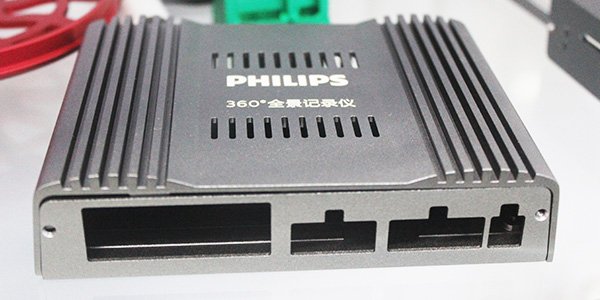
Custom CNC Metal Parts Machining Service
Gazfull CNC Machining, A manufacturer for CNC Machining Metal Parts. We offer metal fabrication service and custom manufactured parts factory service.
CNC Machining for Low Volume Production
We offer a full suite of CNC capabilities — including 3, 4, and 5-axis milling, Swiss-style turning, conventional turning, and mill-turn machining — to support low volume production.
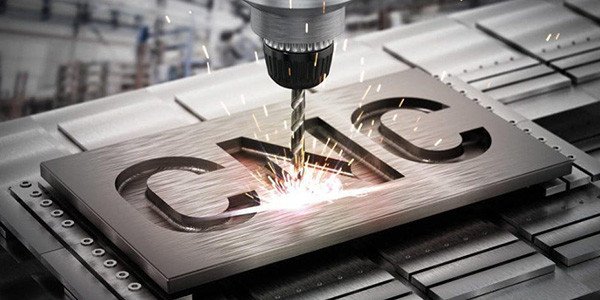
CNC Machining for High Volume Machining
High-volume CNC machining utilizes advanced computer-controlled machines that can execute machining operations at significantly higher speeds than traditional manual methods.
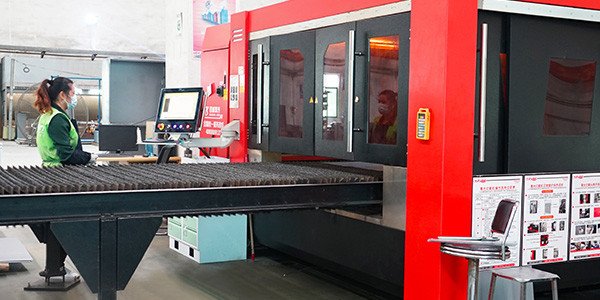
CNC Cutting Service
We are able to provide 2D and 3D product designs in a variety of colors. We excel at laser cutting hard and delicate materials, difficult and complex projects, and both large and small projects.
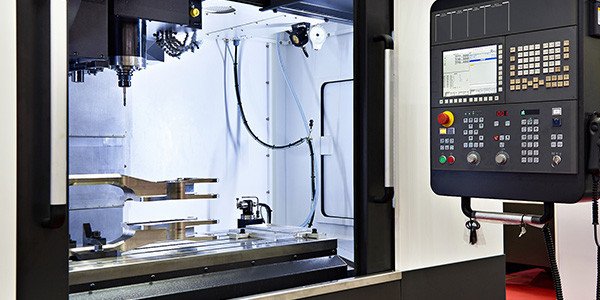
CNC Milling Service
We have dozens of in-house 5-axis CNC milling machines that can easily mill plastic and metal parts with tight tolerances and complex geometries. We also use 3-axis and 4-axis milling machines to provide low-cost machined parts.
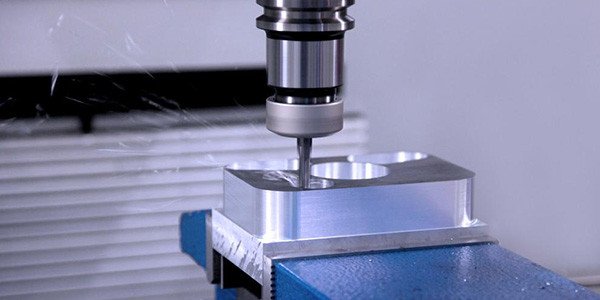
CNC Turning Service
Our commitment to excellence and dedication to transparency and efficiency have made us a key player in promoting the production and delivery of CNC turning parts, further improving the quality and precision of parts in various industries.
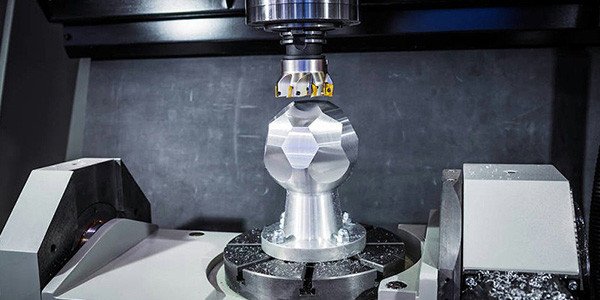
CNC Routing Service
CNC routing offers several advantages over traditional manual routing or other manufacturing methods. For example, plasma or laser cutting.

CNC Product Surface Treatment
CNC product surface treatment involves post-machining processes like anodizing, powder coating, electroplating, and polishing to enhance appearance, corrosion resistance, wear.

CNC Machining Metal Fabrication Service
Providing high-quality CNC Machining Fabricating Services services in China for a wide range of mechanical products, assemblies, and custom parts.
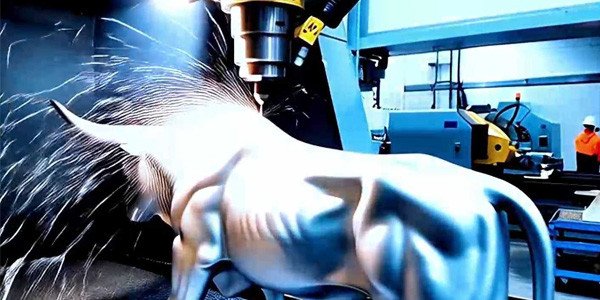
CNC Prototype Machining Service
CNC Rapid prototyping services are essential to modern advanced manufacturing, enabling engineers and product developers to move from concept to functional parts in days rather than months.
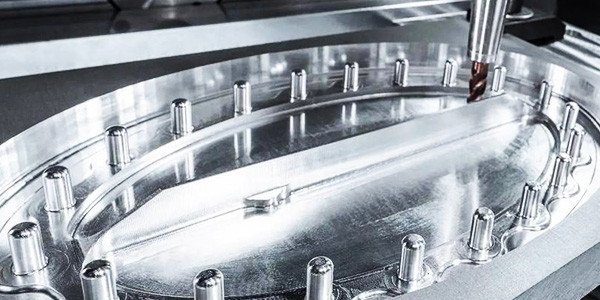
CNC Machining Low Volume Manufacturing
Low volume manufacturing (LVM) is characterized by production runs that are too small for high-volume techniques but too large for one-off prototyping.
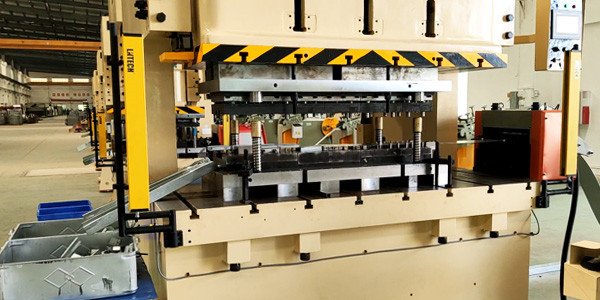
Custom Metal Stamping Service
Metal stamping is a cold-forming fabrication method that’s simple yet versatile. In this process, flat metal strips are fed into stamping equipment with tooling or dies.
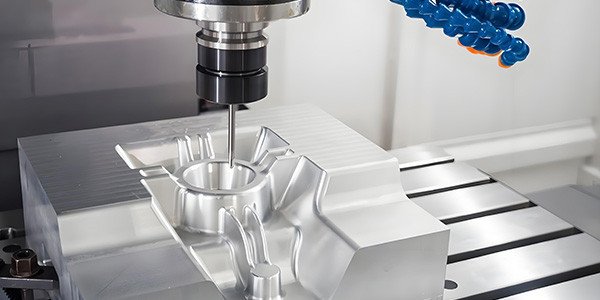
Custom Die Casting Service
Gazfull partners with the leading extrusion suppliers who utilize the most sophisticated technology to deliver high-quality extrusions.
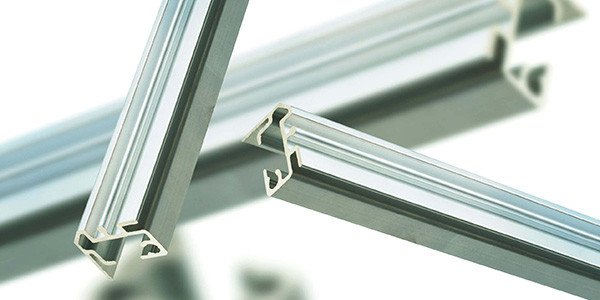
Metal Extrusion Service
Metal extrusion is the manufacturing process of choice when producing high volumes of material with a constant cross-section. With the extrusion process, metal material is forced through the shaped opening of a die using high pressure, resulting in an extruded profile.
Get a quote
Email:info@gazfull.com
Ready to get started on your next project?
From one part to thousands of parts, we can help you accelerate your sheet metal projects using CNC machining Services in a cost-effective way. Contact us right now! info@gazfull.com