CNC Machining Metal Parts +86-18169936698
Custom CNC Metal Parts Machining Service: Precision, Processes, and Performance
In the modern landscape of manufacturing, the demand for precision, repeatability, and complexity in metal components is at an all-time high. From the critical turbine blades in aerospace engineering to the intricate housings in medical devices, the backbone of industrial innovation rests on the ability to convert digital designs into physical realities with microscopic accuracy. This is where Custom CNC Metal Parts Machining Services become indispensable. Computer Numerical Control (CNC) machining has evolved from a rudimentary automation process into a sophisticated manufacturing discipline that offers unparalleled versatility in material selection, geometric complexity, and surface integrity.
This article delves into the technical intricacies of custom CNC metal machining, exploring the processes, material science, quality assurance protocols, and the strategic advantages that define modern machining service providers.
The Core Technology: What is CNC Machining?
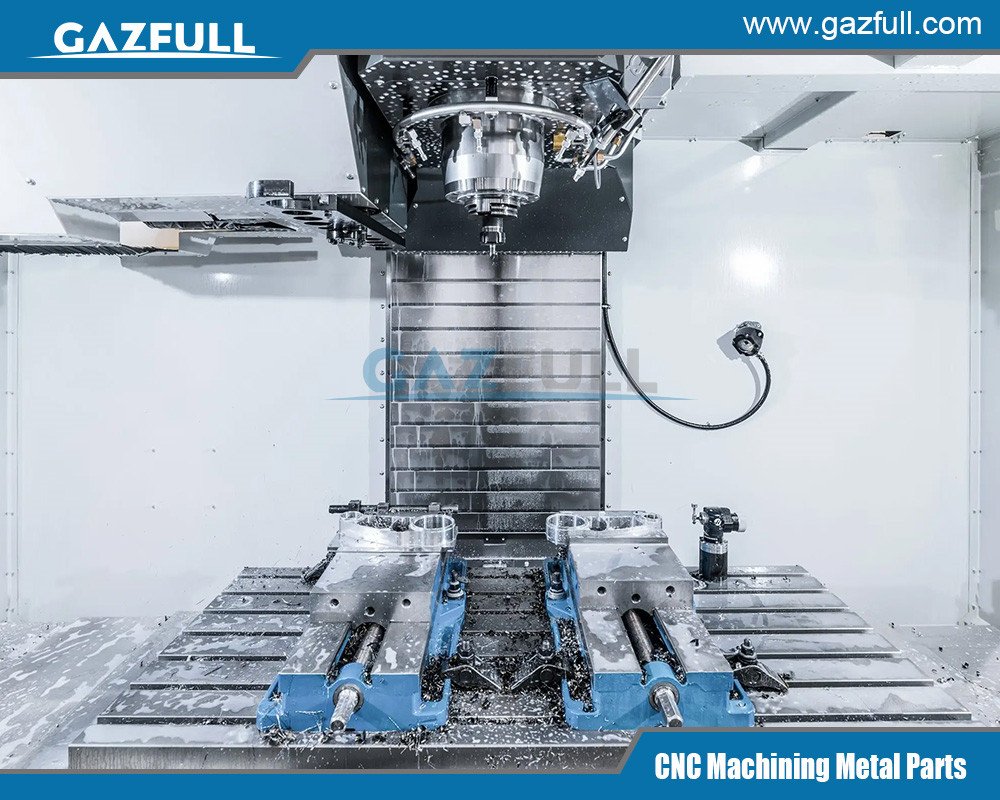
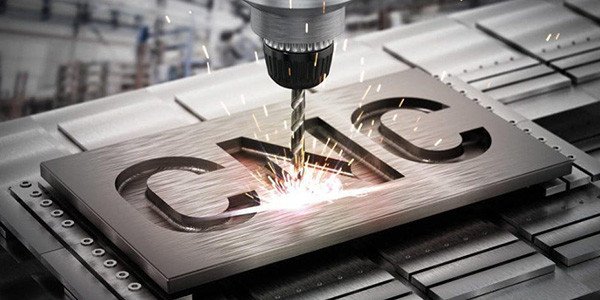
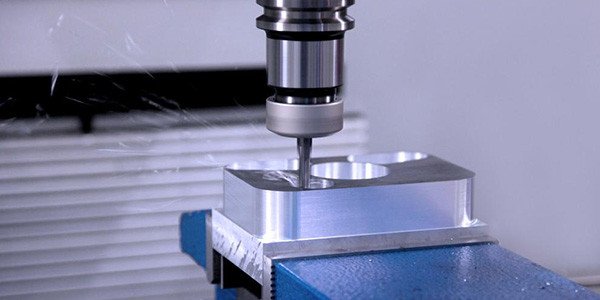
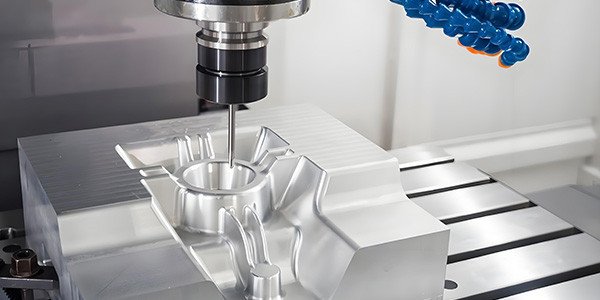
At its core, CNC machining is a subtractive manufacturing process. Unlike additive manufacturing (3D printing), which builds parts layer by layer, CNC machining starts with a solid block of metal—referred to as a “workpiece” or “blank”—and removes material selectively using high-speed cutting tools. The “CNC” aspect refers to the automation of machine tools via pre-programmed sequences of code, typically G-code.
This code dictates every nuance of the operation: spindle speed (RPM), feed rate (inches per minute), tool path coordinates (X, Y, Z axes, and often rotational axes), and coolant flow. The sophistication of modern CNC machining centers allows for multi-axis operations. While standard 3-axis machining is suitable for prismatic parts (simple blocks or plates), advanced services utilize 4-axis, 5-axis, and even 9-axis mill-turn centers.
5-Axis Machining: The Pinnacle of Complexity
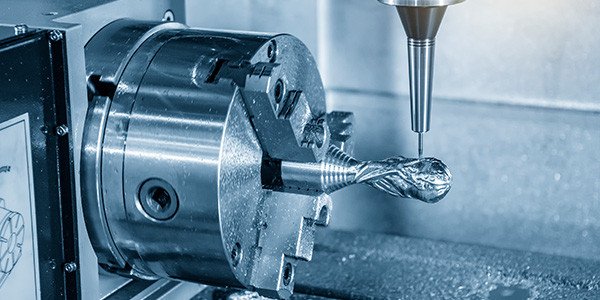
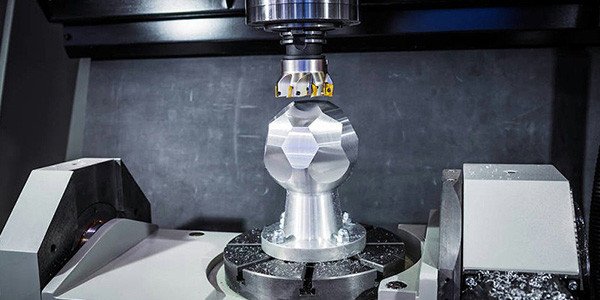
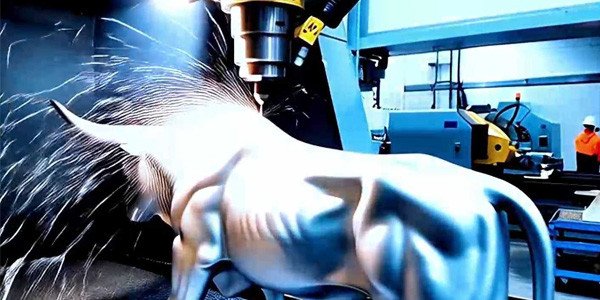
In a typical 3-axis machine, the workpiece remains stationary while the cutting tool moves along three linear axes. This often requires multiple setups to machine different faces of a part, leading to cumulative tolerancing errors. Custom CNC services offering 5-axis machining introduce two additional rotational axes (typically A, B, or C). This allows the cutting tool or the workpiece to rotate continuously during the process.
The technical advantages of 5-axis machining are substantial:
-
Geometric Complexity: It enables the production of complex organic shapes, such as impellers, blisks (integral bladed rotors), and medical prosthetics, in a single setup.
-
Tolerance Integrity: By eliminating multiple setups, it removes the stack-up of positional errors, achieving tighter tolerances (often ±0.0002 inches or tighter).
-
Tool Life: It allows for the use of shorter cutting tools because the tool head can tilt, maintaining optimal chip load and reducing vibration (chatter), which extends tool life and improves surface finish.
Material Selection in Custom Metal Machining
The “custom” aspect of a CNC service is largely defined by its material portfolio. Different industries require specific mechanical properties—such as tensile strength, corrosion resistance, thermal conductivity, or biocompatibility. A high-tier machining service must possess the tooling, coolant systems, and expertise to handle a diverse range of metals.
1. Aluminum Alloys (6061, 7075, 2024)
Aluminum is the workhorse of CNC machining due to its excellent machinability, high strength-to-weight ratio, and natural corrosion resistance.
-
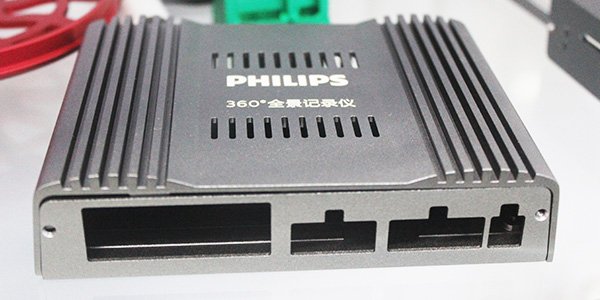
6061-T6: The most common general-purpose aluminum. It offers good weldability and is ideal for structural components, automotive parts, and consumer electronics enclosures.
-
7075: Often referred to as “aircraft aluminum.” It is significantly stronger than 6061 (comparable to many steels) but is more difficult to machine and less weldable. It is used in high-stress applications like aerospace fittings and rock climbing equipment.
2. Stainless Steels (303, 304, 316, 17-4 PH)
Stainless steel is chosen for its corrosion resistance and strength. However, it presents a technical challenge due to its high work-hardening rate.
-
303: The “free-machining” variant. It contains sulfur to improve machinability, producing easy-to-break chips. It is used for shafts, gears, and fasteners.
-
316: The “marine grade” stainless. It contains molybdenum, offering superior resistance to chlorides and acids. It is difficult to machine due to its toughness but is essential for medical implants and chemical processing equipment.
-
17-4 PH: A precipitation-hardening stainless steel. It can be heat-treated to achieve very high strength (up to 150 ksi yield strength) while maintaining good corrosion resistance. It is ideal for aerospace and nuclear components.
3. Engineering Steels & Tool Steels (A2, D2, S7)
For applications requiring wear resistance or high hardness, tool steels are used. Machining these materials requires rigid machine setups, carbide tooling, and often slow cutting speeds to prevent thermal damage to both the tool and the part’s microstructure.
4. Exotic Alloys (Titanium, Inconel, Monel)
High-end custom CNC services specialize in “difficult-to-machine” materials.
-
Titanium (Grade 5 / Ti-6Al-4V): Possesses the highest strength-to-density ratio of any metallic element. However, it has poor thermal conductivity. Heat generated during cutting stays concentrated in the cutting tool edge, leading to rapid failure if speeds and feeds are not meticulously managed. It requires high-pressure coolant systems to evacuate chips and manage heat.
-
Inconel (Nickel-Chromium Superalloy): Used in jet engines and gas turbines. It retains its strength at extreme temperatures (>1000°F) but exhibits significant work hardening and abrasive characteristics. Machining Inconel requires specialized carbide or ceramic inserts and very conservative cutting parameters.
Secondary Processes and Post-Processing
A raw machined part is rarely the final product. Custom machining services often provide a suite of secondary operations to ensure the part meets functional and aesthetic specifications.
Surface Finishing
-
Anodizing (Type II & III): For aluminum, anodizing is an electrochemical process that converts the surface into a hard, durable, corrosion-resistant aluminum oxide layer. Type III (hard coat) can achieve surface hardness approaching that of tool steel.
-
Passivation: For stainless steel, this chemical treatment removes free iron particles from the surface, creating a passive oxide layer that maximizes corrosion resistance—a critical requirement for medical and food-service parts.
-
Electroless Nickel Plating: A chemical plating process that deposits a uniform layer of nickel-phosphorus alloy. It provides excellent hardness, lubricity, and uniform thickness even on complex internal geometries.
-
Powder Coating: A dry finishing process applied electrostatically and cured under heat, providing a thick, durable, and aesthetically pleasing finish.
Heat Treatment
Machining is often performed in the material’s “annealed” (soft) state to facilitate easier cutting. After rough machining, the part may undergo heat treatment to achieve the final mechanical properties.
-
Solution Annealing and Aging: Used for aluminum and superalloys to precipitate strengthening phases.
-
Through Hardening: Used for steels to achieve uniform hardness (e.g., Rockwell C 58-62).
-
Case Hardening (Carburizing/Nitriding): A process that hardens only the surface of the steel, leaving the core tough and ductile, ideal for gears and wear components.
Quality Assurance and Metrology
In custom CNC machining, the reputation of a service is built on its metrology capabilities. “Tolerance” is the permissible limit of variation in a physical dimension. For mission-critical industries (aerospace, defense, medical), tolerances are often specified as “±0.0005 inches” or even “±0.0002 inches” for features like bearing bores.
A professional machining service utilizes a hierarchy of inspection tools:
-
In-Process Probing: Modern CNC machines are equipped with touch-trigger probes. These tools automatically measure critical features while the part is still on the machine. If a feature is trending out of tolerance, the machine can automatically adjust tool offsets (adaptive machining) to correct it before the part is completed.
-
Coordinate Measuring Machines (CMM): A CMM uses a tactile probe or laser to measure the physical geometry of a finished part. It generates a “point cloud” that is compared against the original CAD model (Computer-Aided Design) to generate a color-coded deviation map.
-
Surface Roughness Testers: Surface finish is critical for sealing surfaces, fatigue life, and aesthetics. Services specify finish in Ra (Roughness Average). Machined surfaces typically range from 32 Ra (standard milling) to 8 Ra (fine grinding or high-speed machining).
Design for Manufacturability (DFM)
One of the primary values of a custom CNC service is their engineering feedback loop, often referred to as Design for Manufacturability (DFM). Before a single chip is cut, skilled machinists and manufacturing engineers analyze the client’s CAD file to optimize it for production.
Key DFM considerations include:
-
Hole Depth: Drilling a hole deeper than 4x the diameter requires specialized “deep hole drilling” tooling (gundrilling). Standard drills are ineffective and prone to breakage beyond this ratio.
-
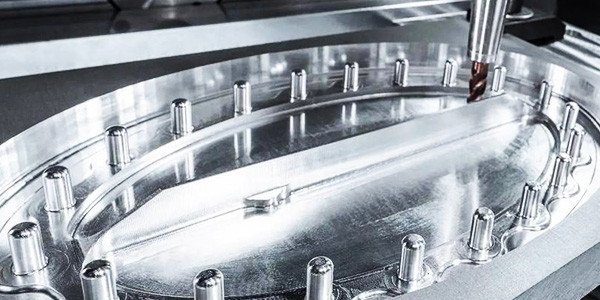
Internal Corners: Milling tools are cylindrical. Therefore, internal vertical corners will always retain a radius equal to the radius of the cutting tool used. If a sharp internal corner is required, the designer must specify a “corner relief” (a small undercut) or accept that Electrical Discharge Machining (EDM) will be required as a secondary process.
-
Wall Thickness: Extremely thin walls (<0.020 inches in metal) are susceptible to vibration (chatter) during machining, leading to poor surface finish and dimensional inaccuracy. A good DFM analysis will flag these areas for redesign or recommend specialized fixturing.
The Digital Supply Chain: From CAD to CAM
The integration of digital workflows distinguishes modern custom machining services from traditional machine shops. The process is a seamless chain of digital transformation:
-
CAD (Computer-Aided Design): The client provides a 3D solid model, typically in STEP, IGES, or native SolidWorks/Parasolid formats.
-
CAM (Computer-Aided Manufacturing): The service imports the model into CAM software (such as Mastercam, NX, or Fusion 360). The programmer defines the machining strategy. This is not merely path generation; it involves selecting the correct tooling, defining the “stock” (raw material), calculating optimal stepovers to balance surface finish and cycle time, and simulating the entire machining process to detect collisions or errors.
-
Post-Processing: The CAM software outputs the toolpath as APT (Automatically Programmed Tool) data. A “post-processor”—a specialized script unique to the make and model of the CNC machine (e.g., Haas, Mazak, DMG Mori)—converts this data into G-code.
-
Machine Monitoring: Advanced shops employ Machine Monitoring Software (MTS) that connects to the shop floor via IoT (Internet of Things). This allows clients to view real-time production status, cycle times, and quality control data, providing transparency that is crucial for critical supply chains.
Economic Considerations: Prototyping vs. Production
A robust custom CNC service bridges the gap between prototyping and production.
-
Prototyping: For low-volume runs (1 to 100 units), the primary cost drivers are setup time and programming. Because CNC machining does not require hard tooling (molds or dies), it is the fastest method to obtain functional metal prototypes. The focus here is on speed, flexibility, and iterative design changes.
-
Production: For high-volume runs (1,000 to 100,000+ units), the economic model shifts to efficiency. The service focuses on “lights-out manufacturing”—running machines unattended overnight to maximize spindle uptime. Cost reduction is achieved through:
-
Workholding: Designing custom fixtures that allow rapid loading/unloading.
-
Tool Life Management: Implementing tool libraries to change inserts at optimal intervals to prevent failure.
-
Process Automation: Utilizing bar feeders for lathes or robotic arms for milling cells to automate material handling.
-
Conclusion
Custom CNC metal parts machining is far more than a simple conversion of metal into shapes; it is a sophisticated engineering discipline that marries material science, mechanical engineering, and digital programming. The ideal service provider acts not merely as a vendor, but as a manufacturing partner—offering DFM feedback, multi-axis capabilities, a diverse material library, and rigorous quality assurance.
As industries continue to push the boundaries of performance—demanding lighter materials like titanium and tougher alloys like Inconel—the reliance on advanced CNC machining services will only deepen. Whether for a one-off prototype destined for a surgical suite or a production run of ten thousand components for an aerospace assembly, the precision, repeatability, and efficiency of custom CNC machining remain the gold standard in metal manufacturing.
For engineers and procurement specialists, selecting a custom CNC service requires evaluating not just the price per part, but the technical capability in 5-axis processing, the robustness of the quality management system (ISO 9001:2015 or AS9100D for aerospace), and the expertise in the specific material required. In the high-stakes world of custom metal parts, capability and precision are the ultimate currencies.
Choose Gazfull CNC Machining Services
At Gazfull, we specialize in providing machining services that go beyond traditional manufacturing. We aim to optimize your processes and reduce production expenses while delivering high-quality results. Our expertise and state-of-the-art 3-axis cutting systems also enable us to handle all your custom needs efficiently and precisely.
For more about custom CNC metal parts machining service: precision, processes, and performance, you can pay a visit to Gazfull at https://www.gazfull.com/services/ for more info.