
CNC Machining Metal Parts +86-18169936698
Blog
We offer metal fabrication service and custom manufactured parts factory service
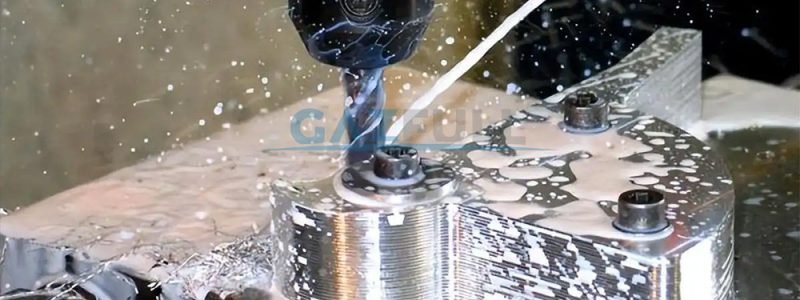
CNC Machining Large Parts: Breaking the Size Barrier to Achieve Sub-Millimeter Precision
In the world of manufacturing, there is an unspoken rule: the larger the part, the looser the tolerance. Historically, if a component was the size of a car or a aircraft wing section, engineers expected precision measured in millimeters or even fractions of a millimeter. However, the demands of modern industries—from aerospace and energy to defense and high-tech automotive—have shattered this paradigm. Today, the expectation is that a five-meter-long landing gear component or a three-meter-wide satellite panel must interface with its counterparts with the same accuracy as a watch gear.
Achieving sub-millimeter precision (tolerances of less than 0.1 mm or 0.005 inches) on large-scale parts is one of the most complex challenges in the field of Computer Numerical Control (CNC) machining. It requires not just brute force, but a symphony of advanced machine design, thermal compensation, sophisticated software, and meticulous process control. This article explores how modern technology is pushing beyond the traditional limits of scale to deliver micron-level accuracy on a macro scale.
The Challenge: The Physics of “Big”
To understand the achievement, one must first appreciate the adversaries at play. When a machine shop shifts from machining a small bracket to a large fuselage frame, the difficulty curve does not just rise linearly; it exponentiates.
-
Machine Deflection and Rigidity: A small CNC mill is a rigid cube. A large gantry machine, by contrast, is a massive bridge spanning several meters. Under the stress of heavy cutting, the gantry can twist, the columns can deflect, and the machine itself can bend like a spring. Maintaining perpendicularity (squareness) across a 5-meter axis is exponentially harder than across a 500mm axis.
-
Thermal Growth: Metal expands when it heats up. A spindle running at high RPM generates heat that travels into the machine structure. On a small machine, a 1°C temperature change might result in a dimensional error of a few microns. On a large part, the same 1°C change can cause the part to grow or shrink by hundreds of microns, pushing it immediately out of tolerance.
-
Workholding and Gravity: How do you hold a 3-ton piece of aluminum or titanium without distorting it? Gravity becomes a significant factor. A large, thin-walled part may sag under its own weight when placed on a fixture. When you machine it flat, release the clamps, and pick it up, it springs back into its “gravity-neutral” shape, ruining the machined surface flatness.
-
Vibration and Chatter: The longer the cutting tool or the longer the distance between the spindle and the machine base, the greater the leverage for vibration. In large-part machining, “chatter” (resonant vibration) is a primary enemy, leading to poor surface finish and accelerated tool wear.
The Machine Evolution: From Bridges to Gantries
The first line of defense against these challenges is the machine tool itself. The era of simply scaling up a Bridgeport mill is long gone. Today’s large-format CNC machines are engineering marvels designed to be stiffer and more stable than the parts they produce.
Gantry vs. Bridge Mills: For massive parts, the go-to configuration is often the Gantry Mill or the Double-Column Bridge Mill. Unlike a C-frame machine where the tool hangs off one side (which encourages deflection), a gantry machine features a spindle mounted on a cross-beam supported by two pillars. This design closes the force loop symmetrically. The machine effectively surrounds the part, canceling out torsional forces.
Modern builders utilize advanced materials like polymer concrete (mineral casting) for the machine base. This material absorbs vibration 6 to 10 times better than cast iron. By dampening the vibrations before they reach the cutting zone, these massive bases provide the stability required for fine surface finishes on large dies and molds used in the automotive industry.
The Metrology Revolution: Closing the Loop
Perhaps the most significant breakthrough enabling large-part precision is the integration of advanced metrology directly into the machining process. The old method of “cut, then check on a CMM” is obsolete for high-tolerance large parts because if the part is wrong, the material cost is catastrophic.
Laser Trackers and Volumetric Compensation:
Modern large-part machining centers employ laser trackers and radar-based systems. Before a cut begins, the machine probes the part and the fixture. However, the real game-changer is dynamic volumetric compensation.
Every CNC machine has a geometric error map—small imperfections in its linear guides, pitch, and yaw. In standard machines, these errors are mapped during manufacturing. In advanced large-part machining, laser trackers continuously monitor the exact position of the spindle relative to the part in real-time.
If the machine column expands due to heat or the gantry twists under load, the laser tracker detects this deviation (down to the micron) and feeds the data back to the controller. The controller then adjusts the tool path on-the-fly to compensate for the machine’s physical imperfection. Essentially, the machine corrects its own structural errors while cutting.
In-Process Probing:
High-precision probes mounted in the spindle allow the machine to check its own work mid-process. For example, after a roughing pass, the probe will scan the part. If the software detects that too much stock remains on one side due to a slight shift in the raw casting, it dynamically re-calculates the finishing toolpath to ensure the final surface meets the 0.05mm tolerance, regardless of the raw part’s asymmetry.
Taming the Thermal Beast
Thermal management is the hidden battle in sub-millimeter machining. To achieve high precision on large parts, the machine and the part must be in thermal equilibrium.
Coolant as a Climate Control System:
High-volume through-spindle coolant (TSSC) is used not just to evacuate chips, but to stabilize temperature. By flooding the cutting zone with temperature-controlled coolant (held to within ±1°C), the heat generated by friction is immediately whisked away. This prevents the heat from soaking into the part and causing localized expansion.
Structural Cooling:
High-end machines now feature cooled ballscrews and cooled guideways. Just like a car engine has a radiator, these machines circulate coolant through the structural components. The ball screws, which generate heat through friction, are hollow and filled with coolant. This prevents the screw from expanding, ensuring that the positioning accuracy remains consistent regardless of how long the machine has been running.
The Digital Twin and Adaptive Machining
Software has become the ultimate tool for breaking the size barrier. The concept of the Digital Twin is critical for large parts.
Before a single chip is cut, the entire process is simulated in a virtual environment. The CAM (Computer-Aided Manufacturing) software accounts for the specific kinematics of the massive machine tool. It analyzes the toolpaths for “near-net” shapes (castings or forgings that are close to the final shape but rough).
However, the real magic happens with Adaptive Machining. Large parts are often castings that have inherent variability. If you run a pre-programmed finishing pass on a casting that has a 2mm shift in its internal geometry, you might cut air in some spots and hit a “hard spot” in others.
Using 3D scanners or touch probes, the machine digitizes the raw part. The software then “morphs” the ideal CAD model to fit the actual part. The finishing toolpath is generated not from the blueprint, but from a hybrid model that blends the design intent with the reality of the part’s location. This ensures that the thin walls of a aerospace duct maintain their 1mm thickness within a 0.1mm tolerance, even if the overall casting shifted during heat treatment.
Workholding: The Art of Support
Holding a large, flexible part without distorting it requires a departure from traditional vices and clamps.
Vacuum Chucks and Magnetic Chucks: For non-ferrous materials like aluminum and composites, custom-built vacuum tables are used. These tables have grids of seals that conform to the shape of the part, holding it down with atmospheric pressure. This distributes the holding force evenly, preventing the “potato chip” effect where a part bends because it was clamped too tight at the edges.
Tombstones and Fixturing: For prismatic parts, modular fixturing systems with adjustable jack screws and supports are used. The goal is to support the part at multiple points to counteract gravity. In some advanced applications, follow-on supports are used. These are hydraulically or pneumatically actuated supports that rise up to touch the part as the machine removes material, preventing the part from vibrating or deflecting away from the cutter.
Case Study: The Aerospace Bulkhead
Consider the machining of a titanium bulkhead for a modern jet fighter. This part might be 2 meters wide, with walls that taper down to 1.5mm thick. The tolerance for the bolt holes that attach the skin to the frame is often within 50 microns (0.05mm).
The process begins with a forged block of titanium weighing 500kg. The part is bolted into a stress-relieved fixture. The machine, a 5-axis gantry, begins with roughing, removing 90% of the material. After roughing, the part is released from the fixture to allow it to “relax” and relieve internal stresses. It is then re-fixtured, but this time using a laser tracker to map its exact position. The software compares the relaxed shape to the CAD model and creates a warped toolpath for finishing. During the finishing pass, the machine maintains a constant chip load, using trochoidal milling techniques to keep heat generation low. The result is a lightweight, incredibly strong structure where every hole lines up perfectly with the mating component, despite the part having been a twisted block of raw titanium just hours before.
Conclusion
Achieving sub-millimeter precision on large CNC machined parts is no longer a matter of luck or “cut and hope.” It is a discipline that combines brute-force engineering with nano-scale awareness. By building hyper-rigid machines, integrating real-time laser metrology, actively controlling temperature, and utilizing intelligent software that adapts to the part’s reality, manufacturers have successfully broken the size barrier.
As industries push toward larger rockets, lighter aircraft, and more efficient energy generation, the demand for these massive, yet perfectly precise components will only grow. The limit is no longer the size of the part, but the ingenuity of the engineers and the fidelity of the control systems that guide the cut.
Choose Gazfull CNC Machining Services
At Gazfull, we specialize in providing machining services that go beyond traditional manufacturing. We aim to optimize your processes and reduce production expenses while delivering high-quality results. Our expertise and state-of-the-art 3-axis cutting systems also enable us to handle all your custom needs efficiently and precisely.
Recent Posts
Tags
Gazfull CNC Machining Services

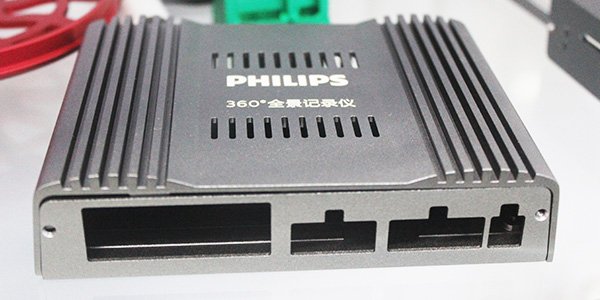
Custom CNC Metal Parts Machining Service
Gazfull CNC Machining, A manufacturer for CNC Machining Metal Parts. We offer metal fabrication service and custom manufactured parts factory service.
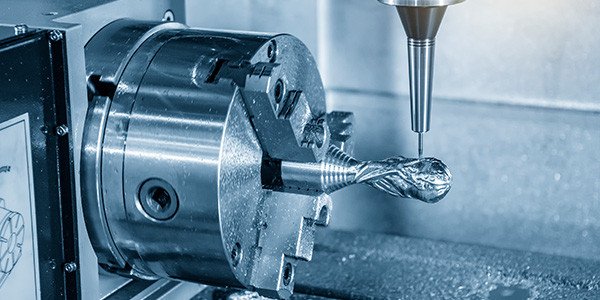
CNC Machining for Low Volume Production
We offer a full suite of CNC capabilities — including 3, 4, and 5-axis milling, Swiss-style turning, conventional turning, and mill-turn machining — to support low volume production.
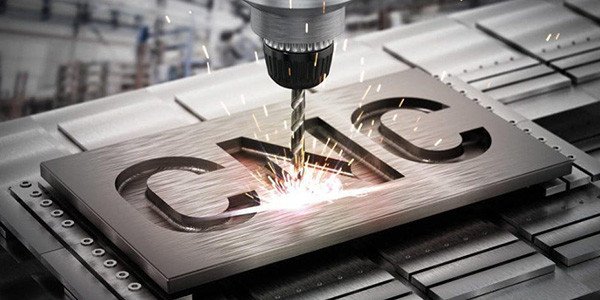
CNC Machining for High Volume Machining
High-volume CNC machining utilizes advanced computer-controlled machines that can execute machining operations at significantly higher speeds than traditional manual methods.
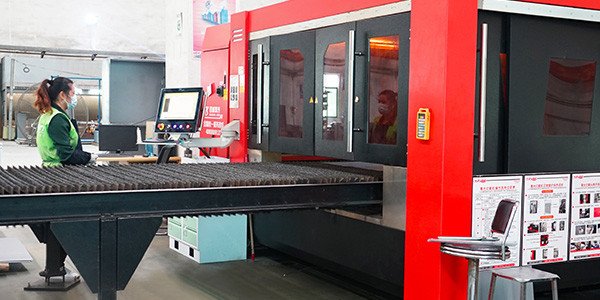
CNC Cutting Service
We are able to provide 2D and 3D product designs in a variety of colors. We excel at laser cutting hard and delicate materials, difficult and complex projects, and both large and small projects.
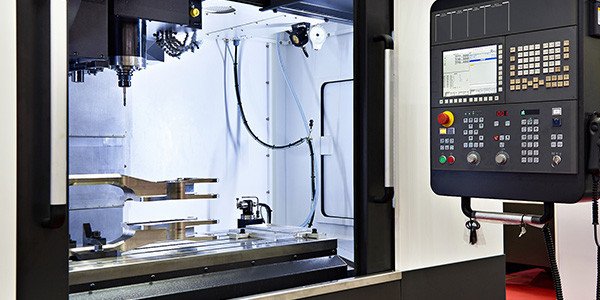
CNC Milling Service
We have dozens of in-house 5-axis CNC milling machines that can easily mill plastic and metal parts with tight tolerances and complex geometries. We also use 3-axis and 4-axis milling machines to provide low-cost machined parts.
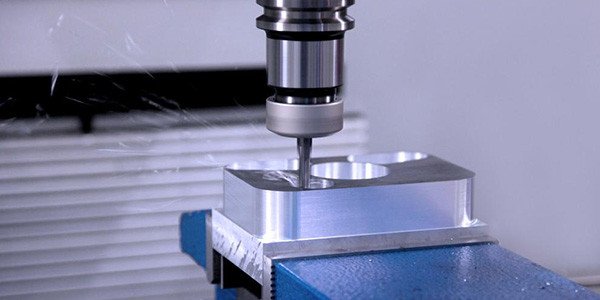
CNC Turning Service
Our commitment to excellence and dedication to transparency and efficiency have made us a key player in promoting the production and delivery of CNC turning parts, further improving the quality and precision of parts in various industries.
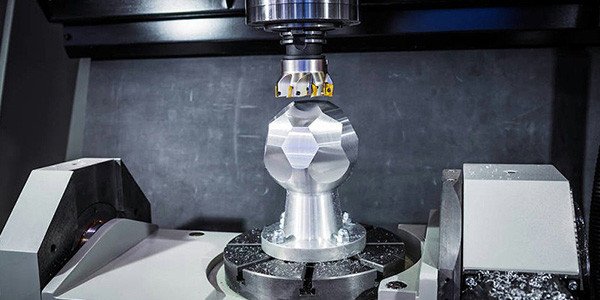
CNC Routing Service
CNC routing offers several advantages over traditional manual routing or other manufacturing methods. For example, plasma or laser cutting.

CNC Product Surface Treatment
CNC product surface treatment involves post-machining processes like anodizing, powder coating, electroplating, and polishing to enhance appearance, corrosion resistance, wear.

CNC Machining Metal Fabrication Service
Providing high-quality CNC Machining Fabricating Services services in China for a wide range of mechanical products, assemblies, and custom parts.
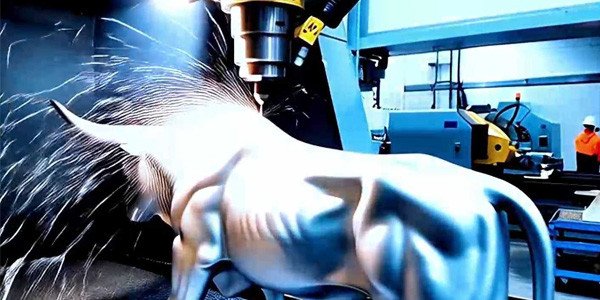
CNC Prototype Machining Service
CNC Rapid prototyping services are essential to modern advanced manufacturing, enabling engineers and product developers to move from concept to functional parts in days rather than months.
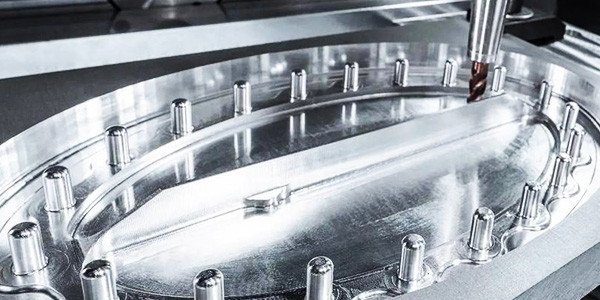
CNC Machining Low Volume Manufacturing
Low volume manufacturing (LVM) is characterized by production runs that are too small for high-volume techniques but too large for one-off prototyping.
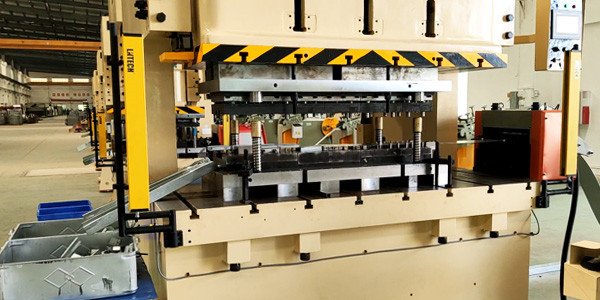
Custom Metal Stamping Service
Metal stamping is a cold-forming fabrication method that’s simple yet versatile. In this process, flat metal strips are fed into stamping equipment with tooling or dies.
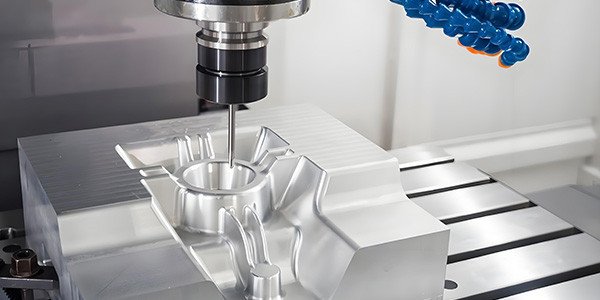
Custom Die Casting Service
Gazfull partners with the leading extrusion suppliers who utilize the most sophisticated technology to deliver high-quality extrusions.
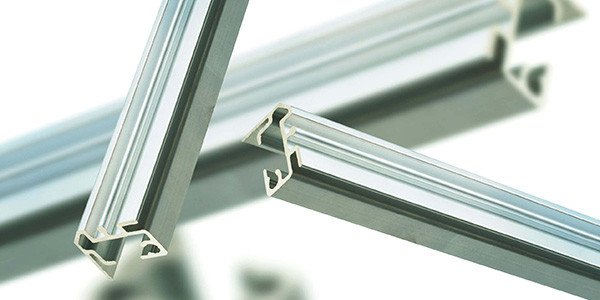
Metal Extrusion Service
Metal extrusion is the manufacturing process of choice when producing high volumes of material with a constant cross-section. With the extrusion process, metal material is forced through the shaped opening of a die using high pressure, resulting in an extruded profile.
Get a quote
Email:info@gazfull.com
Ready to get started on your next project?
From one part to thousands of parts, we can help you accelerate your sheet metal projects using CNC machining Services in a cost-effective way. Contact us right now! info@gazfull.com