CNC Machining Metal Parts +86-18169936698
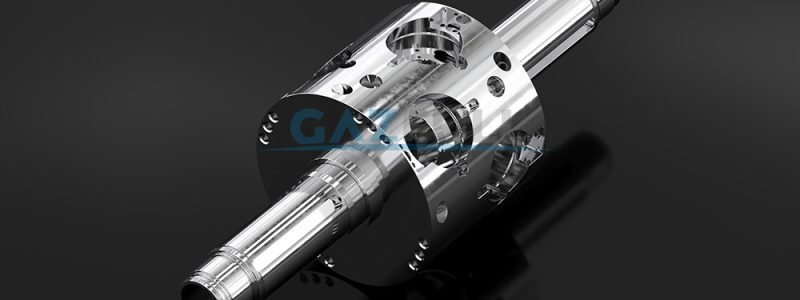
In modern industrial manufacturing, precision, durability, and efficiency are critical requirements for heavy machinery components. Industries such as construction, mining, energy, marine engineering, and transportation rely heavily on robust mechanical systems that operate under extreme conditions. At the core of producing these reliable components lies CNC (Computer Numerical Control) turning technology, which has transformed traditional machining into a highly accurate, automated, and scalable process.
Industrial CNC turning services play a vital role in producing heavy machinery parts with tight tolerances, complex geometries, and superior surface finishes. This article explores the principles, advantages, applications, materials, and technological developments of CNC turning in heavy machinery manufacturing.
1. Understanding CNC Turning in Industrial Manufacturing
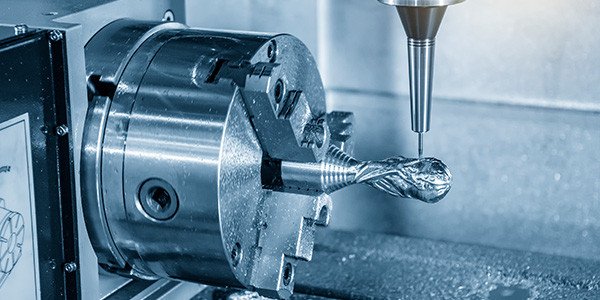
CNC turning is a subtractive manufacturing process where a cutting tool removes material from a rotating workpiece to create cylindrical parts. The process is controlled by computer programming (G-code), ensuring precise control over dimensions, speed, and tool movement.
In industrial applications, CNC turning is typically performed on CNC lathes or turning centers. These machines are capable of producing complex parts such as shafts, bushings, hydraulic cylinders, rollers, and flanges—components widely used in heavy machinery systems.
Unlike manual machining, CNC turning eliminates human error, increases production efficiency, and ensures consistent quality across large production batches.
2. Importance of CNC Turning for Heavy Machinery Parts
Heavy machinery operates in demanding environments where components are exposed to high stress, vibration, pressure, and wear. Any dimensional inaccuracy or material defect can lead to machine failure, downtime, and costly repairs.
CNC turning addresses these challenges by providing:
- High dimensional accuracy
- Excellent repeatability
- Superior surface quality
- Compatibility with high-strength materials
- Ability to produce complex geometries
These advantages make CNC turning essential in the production of critical mechanical components that require long-term durability and performance reliability.
3. Key Applications in Heavy Machinery Industries
CNC turning services are widely used across multiple heavy industries. Some of the most common applications include:
3.1 Construction Equipment
Heavy construction machines such as excavators, bulldozers, and loaders require precision-engineered parts like:
- Hydraulic piston rods
- Gear shafts
- Bearing housings
- Track rollers
These parts must withstand heavy loads and harsh working conditions.
3.2 Mining Machinery
Mining equipment operates in abrasive environments, requiring durable components such as:
- Drill rods
- Crushing machine shafts
- Conveyor rollers
- Wear-resistant bushings
CNC turning ensures these parts maintain structural integrity under continuous stress.
3.3 Energy and Power Generation
In power plants, CNC-turned parts are used in turbines, generators, and pumps, including:
- Turbine shafts
- Valve stems
- Coupling components
Precision is crucial to ensure energy efficiency and operational stability.
3.4 Marine Engineering
Shipbuilding and offshore platforms rely on CNC-turned components such as:
- Propeller shafts
- Marine engine parts
- Hydraulic connectors
These components must resist corrosion and withstand extreme environmental conditions.
3.5 Agricultural Machinery
Modern farming equipment depends on CNC-turned parts like:
- Transmission shafts
- Gear components
- Rotating blades and hubs
Durability and precision ensure smooth agricultural operations.
4. Materials Used in CNC Turning for Heavy Machinery
Material selection is critical in CNC turning for heavy-duty applications. The most commonly used materials include:
4.1 Carbon Steel
Widely used due to its strength, affordability, and machinability. It is suitable for structural components and general machinery parts.
4.2 Alloy Steel
Alloy steels offer enhanced mechanical properties such as higher strength, toughness, and wear resistance, making them ideal for high-load applications.
4.3 Stainless Steel
Used in environments requiring corrosion resistance, such as marine and chemical industries.
4.4 Aluminum Alloys
Lightweight yet strong, aluminum alloys are used in applications where weight reduction is important without compromising strength.
4.5 Titanium Alloys
Known for excellent strength-to-weight ratio and corrosion resistance, titanium is used in specialized heavy machinery and aerospace-related applications.
4.6 Engineering Plastics
Materials like PEEK and nylon are used for non-metal components requiring wear resistance and low friction.
5. Advantages of CNC Turning Services
CNC turning offers multiple advantages that make it indispensable for heavy machinery manufacturing.
5.1 High Precision and Accuracy
CNC machines can achieve tolerances as tight as ±0.001 mm, ensuring perfect fit and function of mechanical parts.
5.2 Consistency in Mass Production
Once programmed, CNC machines can produce thousands of identical parts with no deviation, ensuring uniform quality.
5.3 Improved Efficiency
Automation reduces production time significantly compared to manual machining, increasing overall productivity.
5.4 Complex Geometry Capability
Modern CNC turning centers can produce complex shapes, including tapered surfaces, grooves, threads, and multi-axis features.
5.5 Reduced Human Error
Since operations are computer-controlled, the risk of manual errors is greatly minimized.
5.6 Cost-Effectiveness in Long-Term Production
Although initial setup costs may be high, CNC turning reduces labor costs and material waste over time.
6. CNC Turning Process Workflow
The CNC turning process for industrial parts typically follows these steps:
6.1 Design and CAD Modeling
Engineers create a 3D model of the part using CAD software, defining dimensions, tolerances, and material requirements.
6.2 CAM Programming
The CAD model is converted into machine-readable G-code using CAM software.
6.3 Machine Setup
The raw material is mounted on the CNC lathe, and cutting tools are installed according to the machining plan.
6.4 Machining Process
The machine executes programmed instructions, rotating the workpiece while cutting tools shape it into the desired form.
6.5 Quality Inspection
Finished parts are inspected using precision measuring instruments such as calipers, micrometers, and CMM (Coordinate Measuring Machines).
6.6 Surface Treatment (Optional)
Depending on application requirements, parts may undergo heat treatment, coating, or polishing to enhance performance.
7. Technological Advancements in CNC Turning
The CNC turning industry has evolved significantly due to advancements in technology:
7.1 Multi-Axis CNC Machines
Modern machines offer 4-axis and 5-axis capabilities, allowing more complex geometries in a single setup.
7.2 Smart Manufacturing Integration
IoT-enabled CNC machines allow real-time monitoring, predictive maintenance, and production optimization.
7.3 High-Speed Machining
Advanced spindles and cutting tools enable faster material removal rates without compromising accuracy.
7.4 Automation and Robotics
Automated loading and unloading systems reduce manual intervention and improve efficiency.
7.5 Advanced Cutting Tools
The use of carbide, ceramic, and diamond-coated tools enhances tool life and machining performance.
8. Challenges in CNC Turning for Heavy Machinery
Despite its advantages, CNC turning also presents certain challenges:
8.1 High Initial Investment
CNC machines and software require significant capital investment.
8.2 Skilled Workforce Requirement
Operating and programming CNC machines require technical expertise.
8.3 Tool Wear and Maintenance
Machining hard materials can cause rapid tool wear, increasing maintenance needs.
8.4 Material Limitations
Some extremely hard or brittle materials may be difficult to machine efficiently.
9. Future Trends in CNC Turning for Heavy Industry
The future of CNC turning is expected to be driven by automation, digitalization, and sustainability:
- Increased use of AI-driven machining optimization
- Greater adoption of digital twins for process simulation
- Integration of additive manufacturing with CNC machining
- Energy-efficient and eco-friendly machining processes
- Expansion of fully automated smart factories
These developments will further enhance productivity, precision, and cost efficiency in heavy machinery manufacturing.
Conclusion
Industrial CNC turning services are a cornerstone of modern heavy machinery manufacturing. With their ability to produce highly precise, durable, and complex components, CNC turning technologies ensure that critical machinery operates safely and efficiently in demanding environments.
From construction and mining to energy and marine industries, CNC-turned parts form the backbone of mechanical systems that power global infrastructure. As technology continues to evolve, CNC turning will become even more advanced, automated, and integral to the future of industrial production.
In an era where precision and reliability define competitiveness, CNC turning services remain an indispensable solution for manufacturing high-performance heavy machinery parts.
Choose Gazfull CNC Machining Services
At Gazfull, we specialize in providing machining services that go beyond traditional manufacturing. We aim to optimize your processes and reduce production expenses while delivering high-quality results. Our expertise and state-of-the-art 3-axis cutting systems also enable us to handle all your custom needs efficiently and precisely.
For more about industrial CNC turning services for heavy machinery parts, you can pay a visit to Gazfull at https://www.gazfull.com/services/ for more info.