CNC Machining Metal Parts +86-18169936698
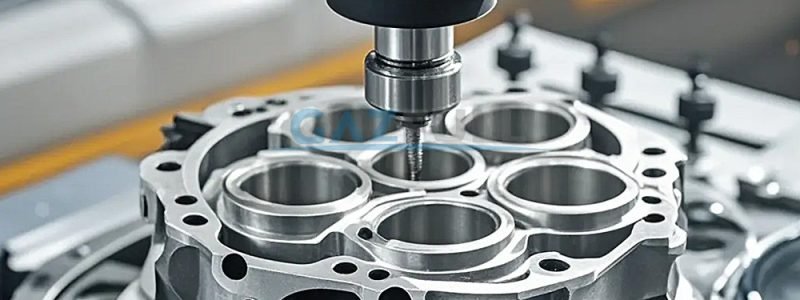
In the modern manufacturing landscape, the demand for complexity, accuracy, and repeatability has never been higher. From the titanium bone screws used in orthopedic surgery to the intricate housings of aerospace sensors, the components that power our world require a level of precision that traditional manual machining simply cannot achieve. At the heart of this industrial capability lies Precision CNC Machining Services.
Computer Numerical Control (CNC) machining has evolved from a novelty in the 1940s into the undisputed cornerstone of subtractive manufacturing. However, “precision” in this context is not merely a marketing adjective; it is a quantifiable standard. This article delves into the technical intricacies of precision CNC machining services, exploring the machinery, the metrology, the material science, and the value-added engineering that define this critical industry.
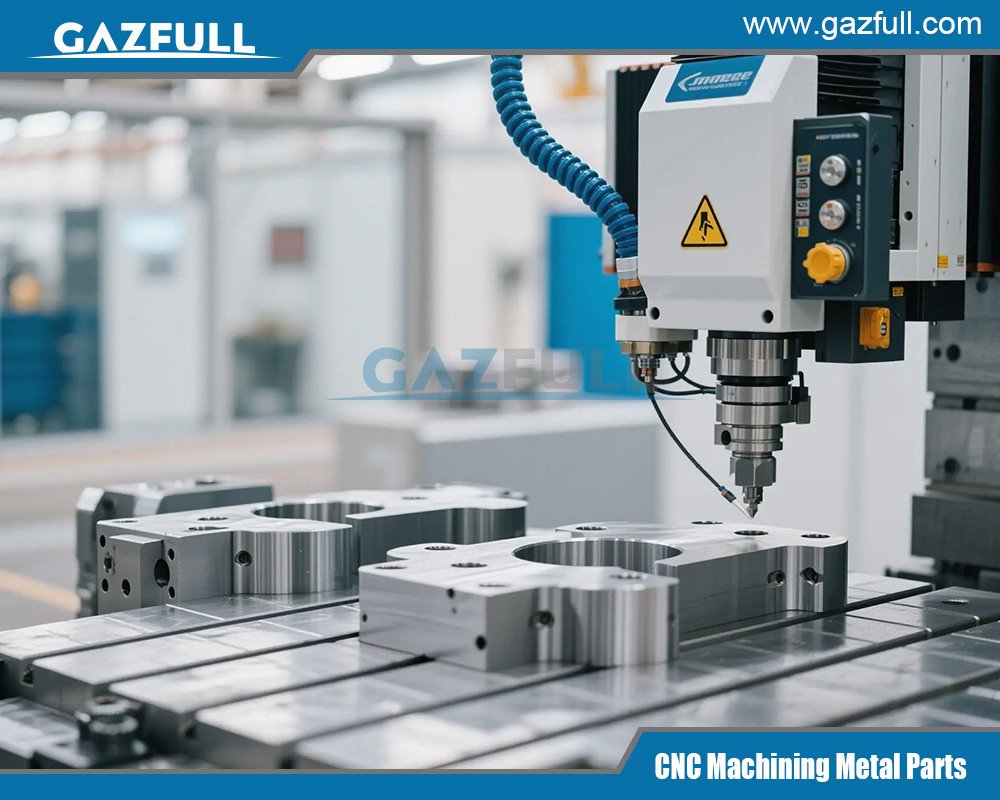
Defining Precision in Machining
Before examining the processes, it is essential to define what constitutes “precision” in CNC machining. In technical terms, precision is often defined by tolerance—the permissible limit of variation in a physical dimension.
While standard machining might hold tolerances of ±0.005 inches (±0.127 mm), precision machining routinely operates within tolerances of ±0.0005 inches (±0.0127 mm) or tighter. In the realm of ultra-precision machining, tolerances can dip into the micron (0.001 mm) and sub-micron levels.
Achieving this level of accuracy requires a holistic approach. It is not enough to have a high-end machine tool. Precision is the result of a symbiotic relationship between four critical pillars:
-
Rigid Machine Geometry: The physical stability of the machine tool.
-
Advanced Control Systems: The software and servo mechanisms guiding the tool path.
-
Tooling and Work-holding: The interface between the machine and the raw material.
-
Environmental Control: The management of temperature, vibration, and humidity in the manufacturing cell.
The Machinery: Multi-Axis Capabilities
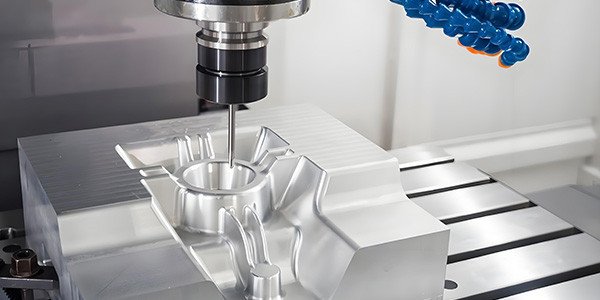
The capabilities of a precision CNC machine shop are often defined by the number of axes it can control simultaneously. While 3-axis machining (X, Y, Z) is suitable for simple prismatic parts, precision applications frequently require multi-axis machining to eliminate human error and tolerance stacking.
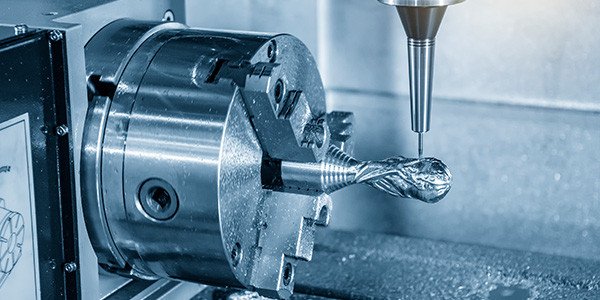
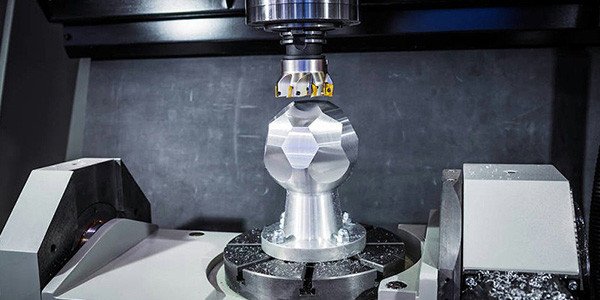
5-Axis Machining represents the gold standard for complex geometry. By adding two rotational axes (A and B) to the traditional three linear axes, machinists can approach a part from virtually any direction in a single setup. This is technically advantageous for precision for several reasons:
-
Reduced Fixturing Errors: Every time a part is unclamped and re-fixtured for a new operation, the physical location of the part shifts slightly. By completing a part in one setup, 5-axis machining eliminates these “soft jaw” tolerance accumulations.
-
Improved Tool Access: Shorter cutting tools can be used because the head can tilt to reach deep cavities. Shorter tools reduce “tool deflection”—a primary source of inaccuracy in deep milling operations.
-
Surface Finish: By utilizing the optimal cutting angle (usually a slight tilt to avoid the center tip of a ball end mill), 5-axis machining produces superior surface finishes (low Ra values), which are critical for components subject to high fatigue loads.
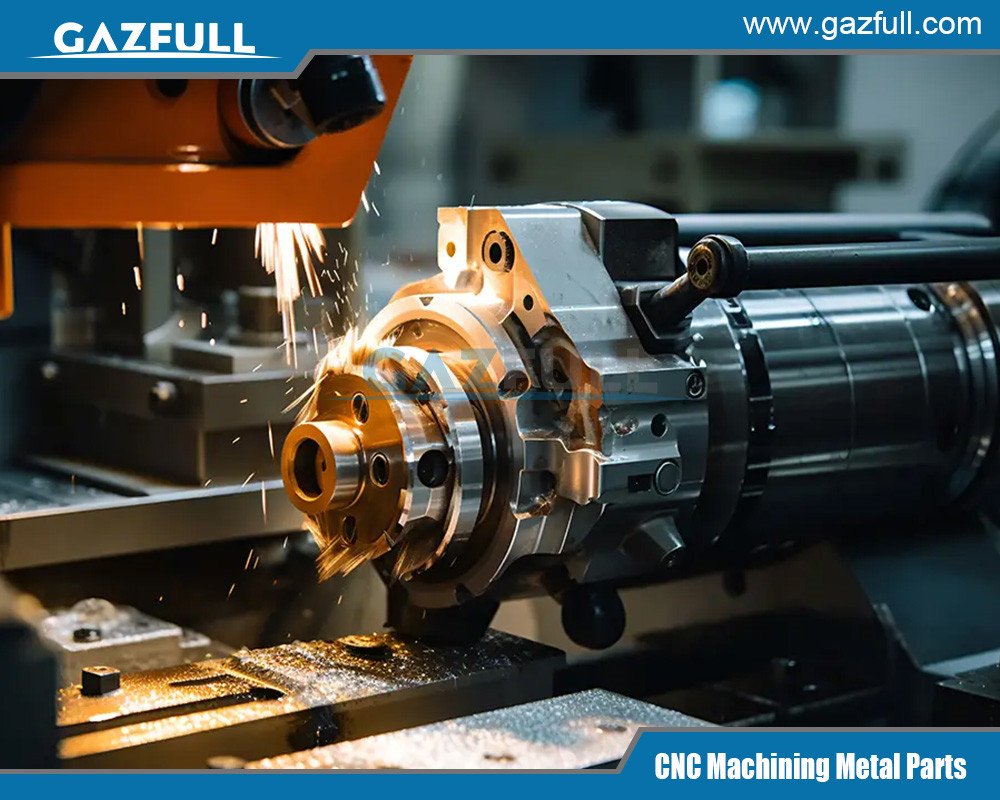
CNC Turning and Swiss-style (Sliding Headstock) Machining are equally vital for precision cylindrical components. Swiss-type lathes are the undisputed leaders for long, slender, and micro-components. They feed the bar stock through a guide bushing, which supports the material literally microns away from the cutting action. This eliminates deflection, allowing for the production of parts with length-to-diameter ratios that would be impossible on a conventional lathe.
Metrology: Verification as a Process
In precision manufacturing, you cannot manufacture what you cannot measure. Metrology (the science of measurement) is integrated into the workflow of precision CNC machining services, often acting as a closed-loop feedback system.
The foundation of quality assurance in this sector is the Coordinate Measuring Machine (CMM) . Modern CMMs, often housed in climate-controlled metrology labs separate from the shop floor, utilize touch probes or laser scanners to map the physical geometry of a part against the original CAD model (the “nominal” data).
However, to achieve high-volume precision, shops utilize In-Process Probing. This involves equipping the CNC machine itself with a touch probe. The machine can automatically:
-
Locate the exact position of the raw casting or stock.
-
Set tool length offsets automatically.
-
Measure features mid-cycle and automatically adjust tool wear offsets to correct for drift.
For example, if a probe detects that a bore is 0.002 mm smaller than nominal due to tool wear, the machine control automatically adjusts the tool radius compensation for the next part. This shifts quality control from a reactive “inspect and reject” model to a proactive “manufacture and verify” model, ensuring 100% of parts meet the specified tolerance band (Cpk > 1.33).
Material Considerations: Machinability and Stability
Precision does not exist in a vacuum; it is heavily dependent on the material being cut. Different materials react differently to the stresses of machining and thermal fluctuations.
-
Aluminum (e.g., 6061-T6, 7075): The workhorse of precision machining. It offers high machinability, good thermal conductivity (which helps dissipate heat away from the cutting zone), and a favorable strength-to-weight ratio. However, it has a high coefficient of thermal expansion (CTE), meaning dimensions can shift significantly if the part heats up during finishing passes.
-
Stainless Steel (e.g., 303, 304, 17-4 PH): Used for medical instruments and marine components. It is “gummy” and work-hardens. Precision machining in stainless requires rigid setups, sharp positive-rake tooling, and constant chip load to prevent the material from hardening against the cutter, which would lead to tool failure and scrap.
-
Titanium (e.g., Grade 5 Ti-6Al-4V): The premier material for aerospace and medical implants. It has poor thermal conductivity. During machining, 80% of the heat generated stays in the cutting tool, not the chip. Precision machining titanium requires high-pressure coolant (1,000 PSI+) to evacuate chips and manage heat, preventing rapid tool wear and maintaining tight tolerances on thin walls.
-
Engineering Plastics (e.g., PEEK, Acetal, Ultem): While softer than metals, plastics present unique precision challenges. They have high thermal expansion and absorb moisture. Stress relief is critical; if internal stresses from extrusion are not relieved before machining, the part will warp after the material is removed, rendering the precision work useless.
The Role of Tooling and High-Speed Spindles
The cutting tool is the point of contact where precision succeeds or fails. In high-precision environments, the focus is on runout—the measure of how much the tool wobbles in the spindle.
Runout must be minimized (typically <0.0002 inches) because any eccentricity in the tool rotation will cause one flute to take a heavier cut than the others. This leads to uneven tool wear, poor surface finish, and catastrophic failure on small tools (micro end mills under 0.5 mm in diameter).
Modern precision machines utilize HSK (Hollow Shank Taper) tool holders instead of the traditional CAT or BT taper. HSK provides a flange-face contact in addition to taper contact. This results in higher rigidity, better repeatability, and superior performance at high spindle speeds (20,000 to 40,000 RPM). High-speed machining (HSM) strategies—taking light radial depths of cut at extremely high feed rates and spindle speeds—have become a staple of precision work because they reduce cutting forces, allowing for the machining of thin walls without deflection and leaving minimal residual stress in the finished part.
Industry Applications
The necessity for precision CNC machining services is driven by industries where failure is not an option.
Aerospace
The aerospace sector demands “critical” components. Hydraulic manifold bodies, turbine blades, and structural airframe components must withstand extreme G-forces, temperature fluctuations, and pressure variances. Tolerance stacking is strictly prohibited; a misalignment of 0.001 inches in a wing spar can lead to catastrophic fatigue over time. Precision machining in this sector is governed by rigorous standards such as AS9100.
Medical and Dental
The medical industry pushes the boundaries of miniaturization. Surgical robotics, spinal implants, and dental abutments require micro-machining capabilities. The materials used (stainless steel, titanium, and cobalt-chrome) must be biocompatible. Furthermore, precision extends beyond geometry to surface integrity. Implants require specific surface finishes (measured in Ra microinches) to promote osseointegration (bone growth) without harboring bacteria.
Automotive (High-Performance)
In motorsports (F1, IndyCar, NASCAR), components are designed at the limit of material science. CNC machining is used for engine blocks, transmission cases, and suspension components where weight reduction is achieved through complex “pocketing” and rib structures that maintain strength while removing mass. These parts often feature light-weighting geometries that are impossible to produce via casting or 3-axis machining.
The Service Ecosystem: DFM and Value Addition
A modern precision CNC machining service is not merely a “job shop” that accepts drawings and ships parts. It functions as a manufacturing engineering partner. This is often referred to as Design for Manufacturability (DFM) .
When a client submits a CAD model, a precision machine shop reviews the design for:
-
Geometric Dimensioning and Tolerancing (GD&T): Is the required tolerance realistic for the material and geometry? Can the datum structure be reliably established during machining?
-
Tool Access: Is there a radius in the internal corner that matches a standard end mill size? If not, will Electrical Discharge Machining (EDM) be required to achieve a sharp internal corner?
-
Thin Walls: Are the specified wall thicknesses machinable without vibration (chatter), which would compromise surface finish and tolerance?
Beyond machining, these service providers often offer value-added finishing services to ensure the part is ready for assembly. These include:
-
Anodizing (Type II and Type III Hard Coat): For aluminum, adding corrosion resistance and surface hardness. Note: Anodizing builds thickness; precision shops must account for this build-up (typically 0.0002″ to 0.001″) when machining the “as-machined” dimension.
-
Passivation: For stainless steel, removing free iron contaminants to prevent rust.
-
Heat Treatment: Stress relieving or age hardening (e.g., 17-4 PH stainless) to achieve the required material hardness post-machining.
The Future: Automation and Industry 4.0
The future of precision CNC machining services lies in the integration of automation to ensure consistency. Robotic Machine Tending allows for “lights-out manufacturing”—running machines unattended during off-hours. When combined with automated in-machine probing and post-process gaging, this creates a manufacturing cell that can produce tens of thousands of parts with zero human intervention, ensuring that every single part meets the exact same micron-level tolerance.
Furthermore, the rise of Digital Twins allows engineers to simulate the entire machining process—including tool paths, spindle loads, and thermal growth—before cutting a single chip. This predictive capability reduces setup time and eliminates the risk of a costly crash that could knock a high-precision spindle out of alignment.
Conclusion
Precision CNC machining services represent the apex of subtractive manufacturing. It is a discipline that transcends simply cutting metal; it is a sophisticated interplay of ultra-rigid machinery, advanced metrology, specialized tooling, and deep material science.
For engineers, procurement specialists, and product developers, partnering with a precision machine shop requires more than just sending a drawing. It requires a collaboration that leverages the shop’s expertise in GD&T, fixturing, and secondary processes to ensure that the final component not only fits the CAD model but also performs flawlessly in its intended environment.
As industries continue to miniaturize, demand tighter tolerances, and push the boundaries of material performance, the role of precision CNC machining will only grow. It remains the critical enabler that turns a digital design into a tangible, high-reliability reality.
Choose Gazfull CNC Machining Services
At Gazfull, we specialize in providing machining services that go beyond traditional manufacturing. We aim to optimize your processes and reduce production expenses while delivering high-quality results. Our expertise and state-of-the-art 3-axis cutting systems also enable us to handle all your custom needs efficiently and precisely.
For more about precision CNC machining services: the backbone of modern manufacturing, you can pay a visit to Gazfull at https://www.gazfull.com/services/ for more info.