
CNC Machining Metal Parts +86-18169936698
Blog
We offer metal fabrication service and custom manufactured parts factory service
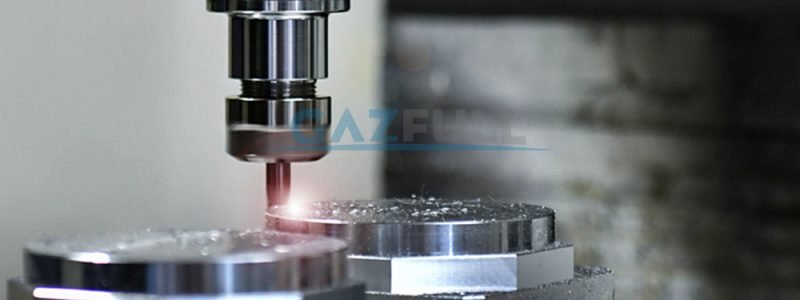
Tight Tolerances on Tiny Components: CNC Solutions for Micro-Machining
The relentless march of technological miniaturization has transformed countless industries. From the life-saving agility of a stent navigating a human artery to the computational power housed within a smartwatch, the demand for smaller, lighter, and more complex devices is insatiable. This drive towards the microscopic brings with it a monumental engineering challenge: how to manufacture components measured in microns with a level of precision that was once reserved for much larger parts. The answer lies in the specialized and evolving world of micro-machining, where Computer Numerical Control (CNC) technology is being pushed to its absolute physical limits to deliver tight tolerances on tiny components.
The Landscape of the Infinitesimally Small
Micro-machining is generally defined as the creation of parts with features in the size range of 1 to 999 micrometers. This discipline is the backbone of several high-stakes sectors:
-
Medical Technology: Manufacturing stents, surgical robot components, dental implants, and micro-needles for drug delivery.
-
Electronics: Producing connectors, semiconductor test equipment, cooling micro-channels for high-power chips, and housings for wearable devices.
-
Aerospace & Defense: Crafting precision orifices for fuel injectors, micro-sensors, and intricate components for guidance systems.
-
Optics: Creating lens molds, fiber optic connectors, and mirror mounts with nanometer-level surface finishes.
In this realm, a “tight tolerance” is not the ±0.001 inches (±25.4 µm) common in conventional machining. Instead, it enters the realm of ±5 microns or even sub-micron (±0.5 µm) precision. To put this in perspective, a human hair is approximately 70 microns in diameter. Achieving tolerances of ±5 microns means manufacturing parts with an allowable error that is less than one-tenth the width of a hair. This level of precision introduces a unique set of challenges that demand a holistic engineering approach.
The Four Pillars of Challenge in Micro-Machining
Achieving tight tolerances on a micro-scale is not simply a matter of scaling down a conventional machining process. It introduces a new set of physical and operational hurdles.
1. The Scale of Physics: At the micro-level, the physics of cutting change dramatically. The “chip load” (the amount of material removed per tooth per revolution) is often smaller than the cutting edge radius of the tool. This means the tool is not so much “cutting” as it is “plowing” or “burnishing” the material. This phenomenon, known as the “size effect,” generates excessive heat, increases cutting forces, and can lead to rapid tool failure and poor surface integrity if not meticulously controlled.
2. Tooling Precision and Durability: The cutting tools themselves are marvels of engineering. Micro-end mills can have diameters as small as 25 microns—finer than a human hair. Manufacturing these tools with consistent geometry is a challenge in itself. Their fragility makes them highly susceptible to breakage from minor vibrations, tool runout, or inconsistent material properties. Maintaining the sharpness and integrity of these microscopic cutting edges is paramount for holding tolerance.
3. The Rigidity Equation: A fundamental rule of machining is that the workholding, toolholding, and machine structure must be rigid. In micro-machining, the forces are small, but so is the tool. Any lack of rigidity—whether from the machine frame, spindle, or collet—will result in micro-deflections, chatter, and ultimately, a loss of positional accuracy and surface finish.
4. Environmental Sensitivity: At micron levels, the environment becomes a direct participant in the manufacturing process. A temperature fluctuation of just a few degrees can cause thermal expansion in the machine tool or the workpiece, pushing it out of tolerance. Microscopic dust particles can ruin a critical surface. Even the vibration from a passing forklift or a nearby air conditioning unit can be enough to cause a micro-tool to chatter or break.
CNC Solutions: The Anatomy of a Micro-Machining System
Overcoming these challenges requires a synergistic approach where the CNC machine, its components, and the programming software are all designed with the micro-scale in mind.
1. The Machine Tool: A Fortress of Stability
Standard CNC machines are not adequate for consistent micro-machining. Dedicated micro-machining centers are built from the ground up for stability and precision.
-
Ultra-Rigid Construction: These machines often feature a granite or mineral-cast polymer base. These materials have superior vibration damping characteristics compared to traditional cast iron, absorbing parasitic energy that would otherwise be transferred to the cut.
-
Linear Motor Drives: Instead of ball screws, high-end micro-machining centers use linear motors. These provide frictionless, backlash-free motion with极高的 acceleration and deceleration. This allows the machine to move precisely and settle quickly at a position, which is critical for maintaining tight positional tolerances.
-
Aerostatic or Hydrostatic Bearings: To achieve perfectly smooth motion, some machines use air (aerostatic) or oil (hydrostatic) bearings in their guideways. This creates a frictionless, zero-wear motion system with unparalleled straightness and accuracy, eliminating the minute stick-slip effects found in conventional mechanical bearings.
2. The Spindle: The Heart of Precision
The spindle is arguably the most critical component. It must rotate with minimal runout and vibration at extremely high speeds.
-
High-Speed Operation: Micro-tools require high surface feet per minute (SFM) to cut effectively rather than “plow.” Due to their tiny diameters, this necessitates spindle speeds from 30,000 RPM to over 200,000 RPM. These spindles often use ceramic hybrid bearings or are completely contactless, levitated by air or magnetic fields.
-
Runout Tolerance: The total indicated runout (TIR) at the tool tip must be in the sub-micron range. Any runout will be magnified at the tool tip, causing one flute to bear the entire cutting load, leading to premature tool failure and oversized holes or features.
3. Toolholding: The Critical Connection
The toolholder is the critical interface between the high-speed spindle and the micro-tool. Standard toolholders can introduce significant runout.
-
High-Precision Collets (e.g., ER Collets): For micro-machining, only the highest quality collets are used, and they must be meticulously clean.
-
Shrink-Fit Holders: This technology uses thermal expansion to clamp the tool. The toolholder is heated, the tool is inserted, and as the holder cools, it contracts to provide a highly concentric, balanced, and rigid grip. This is often the preferred method for micro-machining as it minimizes runout and maximizes rigidity.
4. CNC Control and Programming: The Intelligence
The brain of the operation is the CNC control and the software that drives it.
-
Look-Ahead and Nano-Processing: The control must be capable of “looking ahead” thousands of blocks of code and processing toolpaths in nanometer increments. This allows it to anticipate corners and complex geometry, adjusting feed rates smoothly to maintain a constant chip load. Jerky motion at the macro-level is catastrophic at the micro-level.
-
Specialized CAM Strategies: Computer-Aided Manufacturing (CAM) software for micro-machining employs toolpaths designed to maintain a constant engagement angle of the tool with the material. Trochoidal milling (moving in a circular or looping path) and adaptive clearing techniques are used to avoid burying the tool in the material, which would instantly snap it. They ensure that the tool is always cutting with a manageable portion of its flute length.
-
Toolpath Optimization: The software must generate smooth, continuous motion without sharp directional changes. It polishes paths to create G-code that is sympathetic to the machine’s mechanical limits, preventing the servo motors from “hunting” to follow an impossible path.
5. Workholding: Immobilizing the Minute
Holding a tiny part that is itself subject to micro-forces is a unique puzzle.
-
Miniature Vises and Chucks: Specialized workholding devices are scaled down to provide access to the part without creating interference.
-
Vacuum Chucks: For thin, flat materials like silicon wafers or metal foils, vacuum chucks provide a uniform, distributed holding force without inducing stress.
-
Custom Fixturing: Often, a custom fixture must be designed, sometimes with integrated micro-clamps or using adhesives (like cyanoacrylate or wax) to temporarily and rigidly mount the part. After machining, the part is released by dissolving the adhesive in a solvent.
6. Metrology and In-Process Inspection
You cannot control what you cannot measure. In micro-machining, inspection is integral to the process.
-
High-Magnification Vision Systems: Many micro-machining centers are equipped with onboard, high-resolution cameras. This allows for fully automated tool setting (measuring tool length and diameter to sub-micron accuracy) and part probing to establish a datum or perform in-process quality checks without disturbing the setup.
-
Non-Contact Measurement: Offline, tools like optical comparators, white light interferometers, and scanning electron microscopes (SEMs) are used to verify critical features without risking damage from contact probes.
Case Study: Micro-Machining a Medical Stent
Consider the manufacturing of a coronary stent. This tiny, latticed tube, often made from a shape-memory alloy like Nitinol, must expand an artery and remain there permanently. Its struts are typically less than 100 microns wide.
A conventional process might use a laser, which creates a heat-affected zone (HAZ) that requires post-processing. A CNC micro-machining solution offers an alternative:
-
Machine: The process begins on a ultra-precision Swiss-type lathe or a micro-machining center with a high-speed spindle.
-
Tooling: A custom-ground micro-end mill, perhaps 50 microns in diameter, is secured in a shrink-fit holder.
-
Process: The tube is held in a specialized micro-collet. The CAM program, designed to maintain a constant tool engagement, directs the machine to cut the complex stent pattern. The high spindle speed (60,000+ RPM) and ultra-smooth motion control ensure that the delicate struts are cut cleanly, without burrs, and with a flawless surface finish that is critical for biocompatibility.
-
Outcome: The result is a stent with no HAZ, superior fatigue resistance, and tighter geometric tolerances, all achieved in a single setup. This demonstrates how CNC micro-machining is not just an alternative, but an enabling technology for next-generation medical devices.
The Future of Precision: What’s Next?
The field of micro-machining continues to evolve, driven by demands for even greater precision and complexity.
-
Hybrid Manufacturing: The integration of micro-machining with other processes, such as micro-laser ablation or micro-EDM (Electrical Discharge Machining), allows for the creation of geometries impossible with cutting tools alone. A part might be roughed out with a laser and then finished with a micro-end mill for superior surface finish.
-
Machine Learning and AI: Smart controls are beginning to use machine learning to monitor cutting conditions in real-time. By analyzing spindle load, acoustic emissions, or vibration signatures, the control can predict tool wear or impending breakage and adjust parameters on the fly to maintain tolerances and protect the tool.
-
Multi-Axis Micro-Machining: The move towards 5-axis micro-machining centers allows for the creation of increasingly complex, free-form micro-optics and medical implants in a single setup, reducing errors from multiple handlings.
Conclusion
The ability to hold tight tolerances on tiny components is a defining capability of the 21st century’s high-tech economy. It is a discipline born of necessity and perfected through innovation. The solutions provided by modern CNC technology—from granite bases and linear motors to nano-processing software and vision-based metrology—form a cohesive ecosystem designed to conquer the physics of the infinitesimally small. As we continue to demand more from our technology, the silent, precise work of micro-machining will remain the invisible hand that shapes our future, one micron at a time.
Choose Gazfull CNC Machining Services
At Gazfull, we specialize in providing machining services that go beyond traditional manufacturing. We aim to optimize your processes and reduce production expenses while delivering high-quality results. Our expertise and state-of-the-art 3-axis cutting systems also enable us to handle all your custom needs efficiently and precisely.
Recent Posts
Tags
Gazfull CNC Machining Services

Custom CNC Metal Parts Machining Service
Gazfull CNC Machining, A manufacturer for CNC Machining Metal Parts. We offer metal fabrication service and custom manufactured parts factory service.
CNC Machining for Low Volume Production
We offer a full suite of CNC capabilities — including 3, 4, and 5-axis milling, Swiss-style turning, conventional turning, and mill-turn machining — to support low volume production.
CNC Machining for High Volume Machining
High-volume CNC machining utilizes advanced computer-controlled machines that can execute machining operations at significantly higher speeds than traditional manual methods.
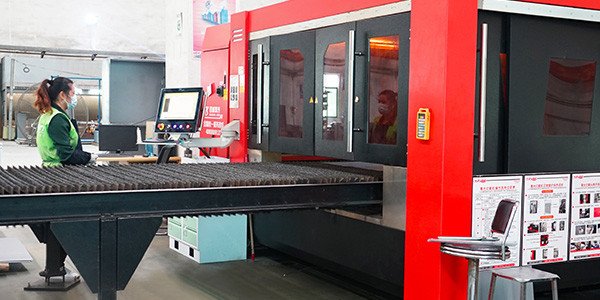
CNC Cutting Service
We are able to provide 2D and 3D product designs in a variety of colors. We excel at laser cutting hard and delicate materials, difficult and complex projects, and both large and small projects.
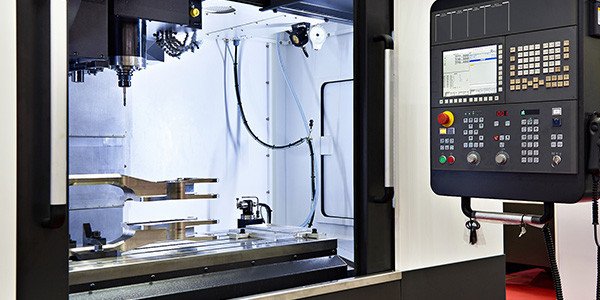
CNC Milling Service
We have dozens of in-house 5-axis CNC milling machines that can easily mill plastic and metal parts with tight tolerances and complex geometries. We also use 3-axis and 4-axis milling machines to provide low-cost machined parts.
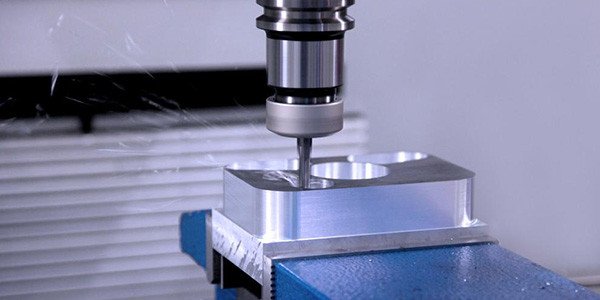
CNC Turning Service
Our commitment to excellence and dedication to transparency and efficiency have made us a key player in promoting the production and delivery of CNC turning parts, further improving the quality and precision of parts in various industries.
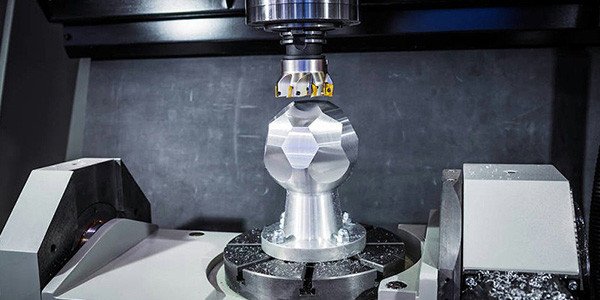
CNC Routing Service
CNC routing offers several advantages over traditional manual routing or other manufacturing methods. For example, plasma or laser cutting.

CNC Product Surface Treatment
CNC product surface treatment involves post-machining processes like anodizing, powder coating, electroplating, and polishing to enhance appearance, corrosion resistance, wear.

CNC Machining Metal Fabrication Service
Providing high-quality CNC Machining Fabricating Services services in China for a wide range of mechanical products, assemblies, and custom parts.
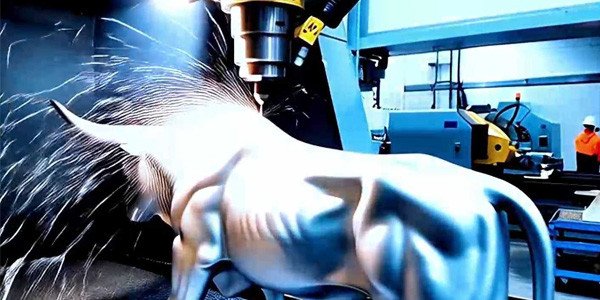
CNC Prototype Machining Service
CNC Rapid prototyping services are essential to modern advanced manufacturing, enabling engineers and product developers to move from concept to functional parts in days rather than months.
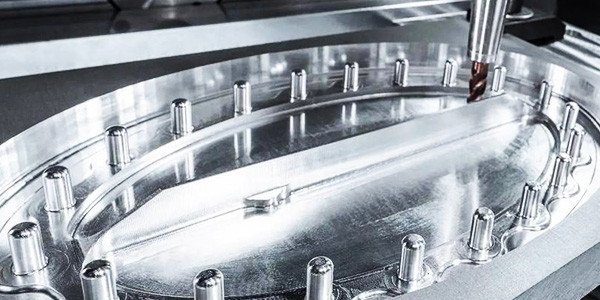
CNC Machining Low Volume Manufacturing
Low volume manufacturing (LVM) is characterized by production runs that are too small for high-volume techniques but too large for one-off prototyping.
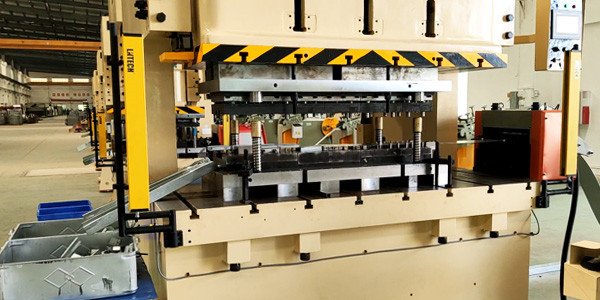
Custom Metal Stamping Service
Metal stamping is a cold-forming fabrication method that’s simple yet versatile. In this process, flat metal strips are fed into stamping equipment with tooling or dies.
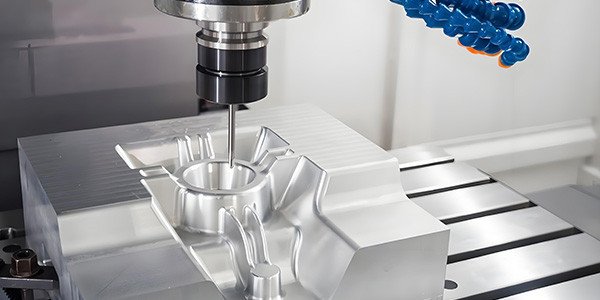
Custom Die Casting Service
Gazfull partners with the leading extrusion suppliers who utilize the most sophisticated technology to deliver high-quality extrusions.
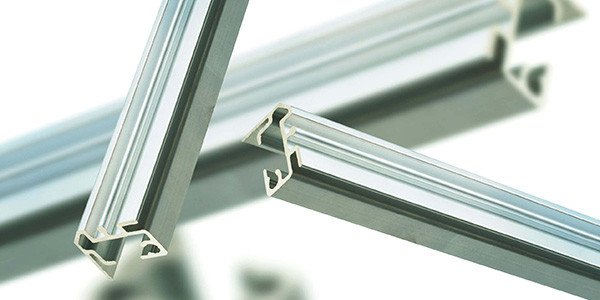
Metal Extrusion Service
Metal extrusion is the manufacturing process of choice when producing high volumes of material with a constant cross-section. With the extrusion process, metal material is forced through the shaped opening of a die using high pressure, resulting in an extruded profile.
Get a quote
Email:info@gazfull.com
Ready to get started on your next project?
From one part to thousands of parts, we can help you accelerate your sheet metal projects using CNC machining Services in a cost-effective way. Contact us right now! info@gazfull.com