
CNC Machining Metal Parts +86-18169936698
Blog
We offer metal fabrication service and custom manufactured parts factory service

3-axis vs 5-axis CNC routers: Which is right for your business?
Choosing between a 3-axis and a 5-axis CNC router is one of the most consequential capital decisions a manufacturing or fabrication business will make. The right choice can increase throughput, reduce rework and unlock new product lines. The wrong choice can tie up cash in capability you rarely use, or constrain growth because your machine can’t handle the work you’re winning.
This guide explains the practical differences, what they mean for part quality and productivity, and how UK buyers can weigh true cost of ownership against return on investment.
What ‘axis’ really means
At its simplest, “axis” describes the directions in which the cutter can move relative to the workpiece.
- 3-axis: linear movement in X (left–right), Y (front–back) and Z (up–down).
- 4-axis: a 3-axis machine with an added rotary (usually around the X or Y axis) for indexing or wrapping jobs such as columns or profiles.
- 5-axis: 3 linear axes plus two rotational axes (commonly A and B, or A and C). On routers this is often delivered through a trunnion table or a 5-axis head. The rotations allow the spindle to tilt and the tool to approach from compound angles.
The extra axes aren’t about speed for its own sake. They reduce setups, improve access to complex features and keep the cutter at an optimal angle, which can dramatically improve surface finish and tool life.
What a 3-axis CNC router is best at
A 3-axis router is the backbone of thousands of UK shops. It excels at:
- Flat panel processing: sheet goods such as MDF, plywood, plastics, composites and aluminium plate.
- Profiling and pocketing: signs, furniture components, cabinetry, exhibition panels and jig plates.
- Simple 3D relief work: moulds and forms that don’t need undercuts or steep side walls.
Strengths
- Lower capital cost and simpler installation requirements.
- Short learning curve for operators; plentiful training resources.
- Fast changeovers for nested-based manufacturing and batch panel work.
- High reliability with straightforward maintenance.
Limitations
- Multiple setups for multi-face parts, which introduces error stack-up.
- Restricted geometry: no true undercuts or steep compound angles.
- More fixturing and manual intervention for complex shapes.
Browse our 3-axis CNC routers.
What a 5-axis CNC router is best at
A 5-axis router enables the spindle to tilt and rotate, keeping the tool normal to the surface or pointing into features that are unreachable in 3 axes. It shines in:
- Complex 3D geometry: moulds, plugs and patterns for aerospace, marine and automotive.
- Edge machining and drilling on contoured parts in a single clamping.
- Fewer setups: five-sided machining in one hit increases accuracy and reduces scrap.
- Tool life and surface finish: the ability to “lean” the tool improves chip evacuation and reduces rubbing.
Strengths
- Capability that opens higher-value work and tighter tolerances.
- Process consolidation: fewer fixtures, fewer part hand-offs, less WIP.
- Better finish on steep walls and contoured surfaces; less hand finishing.
- Material efficiency with optimised toolpaths, particularly on expensive composites.
Limitations
- Higher capital and operating cost: machine price, CAM software, probes and safety.
- Steeper training requirement: programming complexity and verification needs.
- May be over-specified if your workload is predominantly flat panels.
Quick comparison table
| Factor | 3-axis router | 5-axis router |
| Typical work | Flat panels, pockets, profiles | Complex 3D forms, five-sided parts |
| Setups per part | Often multiple | Often single |
| Accuracy risk | Higher due to re-clamping | Lower with one-and-done |
| Cycle time | Fast for 2D/2.5D | Fast for multi-face jobs; slower per toolpath on some operations |
| Programming | Simpler | Advanced 5-axis CAM required |
| Operator skill | Moderate | Higher (programming, probing, verification) |
| Capex | Lower | Higher |
| ROI driver | Throughput on volume panels | Capability premium, setup reduction, finish quality |
How to choose: a practical decision framework
1) Your parts and geometry
- Mostly flat panels, pockets and through-cuts? A 3-axis is almost certainly right.
- Regular 3D contours, undercuts, angled holes or five-sided access? A 5-axis will pay back through setup reduction, accuracy and finish.
Tip: audit the last 3–6 months of jobs. For each part, ask: how many setups did we need, what rework occurred due to re-clamping, and what features forced compromises?
2) Volume, takt time and changeover
- High-mix, low-volume shops benefit from fewer setups and faster changeovers; 5-axis can compress lead times.
- High-volume panel work favours 3-axis with nesting, vacuum beds and tool changers.
3) Materials and finish
- MDF, ply, PVC, ACM and aluminium plate: 3-axis delivers excellent value, especially with good dust extraction and chip evacuation.
- Composite layups, foam plugs, marine forms, aerospace components: 5-axis brings finish and access advantages that reduce hand finishing and secondary operations.
4) Tolerances and quality
If downstream processes are sensitive to misalignment (e.g. drilled edge holes lining up with inserts), single-setup machining on 5-axis protects alignment and reduces scrap.
5) Skills, training and CAM
- 3-axis: competent operators can be productive quickly with standard CAD/CAM.
- 5-axis: invest in advanced CAM, post processors, simulation and probing workflows. Plan for operator and programmer upskilling and consider verification routines to protect high-value parts.
6) Total cost of ownership (TCO)
Look beyond sticker price:
- Acquisition: machine, extraction, tooling, workholding, electricals, software.
- Operating: tooling wear, energy usage, services, spares, preventive maintenance.
- People: training, programming time, set-up time, quality inspection.
- Opportunity: new work you can win, rework you can eliminate, lead time you can quote.
7) Shop footprint and infrastructure
5-axis trunnion machines may require more height clearance, robust extraction and tailored guarding. Confirm floor loading, door access and lifting plans for installation.
Frequently asked questions
Can I upgrade from 3-axis to 5-axis later?
Sometimes. A 4th-axis add-on is common; full 5-axis usually means a different machine or head/trunnion configuration, plus CAM changes.
Is 5-axis always faster?
Not on every toolpath. The speed advantage comes from fewer setups, less fixturing and reduced hand finishing, which collectively shorten lead time.
Do I need special tooling for 5-axis?
You’ll use many of the same diameters, but you’ll likely add long-reach and tapered ball-nose tools for finishing steep surfaces.
How steep is the training curve?
3-axis operators can be productive within days. 5-axis requires additional CAM skills, verification habits and probing workflows; plan structured training.
What about workholding?
3-axis panel work thrives on vacuum tables. 5-axis often needs modular risers and vises to expose five sides while keeping clear of collisions.
Will a 5-axis machine replace multiple setups on my 3-axis?
If the geometry allows five-sided access, yes. Complex undercuts or internal features still need smart strategies, but you’ll usually consolidate most operations.
Axis count isn’t a badge of honour. It’s a practical choice about geometry, accuracy, finish and lead time. If your business lives in panels and 2.5D profiles, a high-quality 3-axis router will deliver outstanding ROI. If complex forms, angled features and five-sided access are routine, a 5-axis platform will unlock capability, compress setups and elevate quality. Define your work, model the payback, then invest with confidence.
Recent Posts
CNC Cutting Service for Electronics and PCB Components
CNC Machining for High Volume Automotive Parts Manufacturing
Gazfull CNC Machining Services

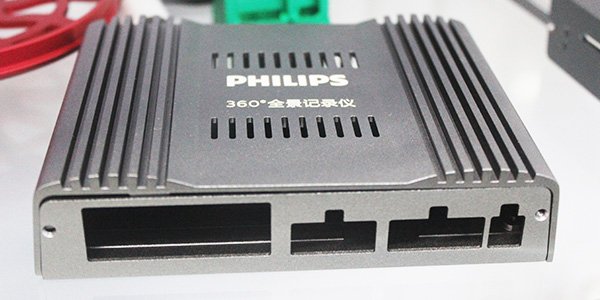
Custom CNC Metal Parts Machining Service
Gazfull CNC Machining, A manufacturer for CNC Machining Metal Parts. We offer metal fabrication service and custom manufactured parts factory service.
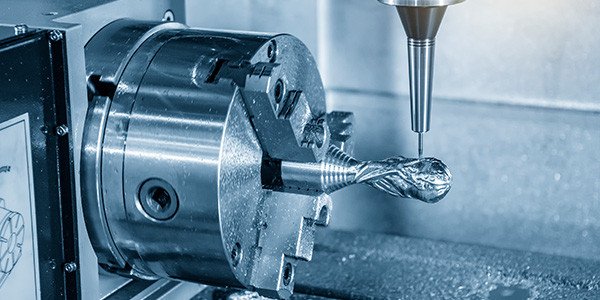
CNC Machining for Low Volume Production
We offer a full suite of CNC capabilities — including 3, 4, and 5-axis milling, Swiss-style turning, conventional turning, and mill-turn machining — to support low volume production.
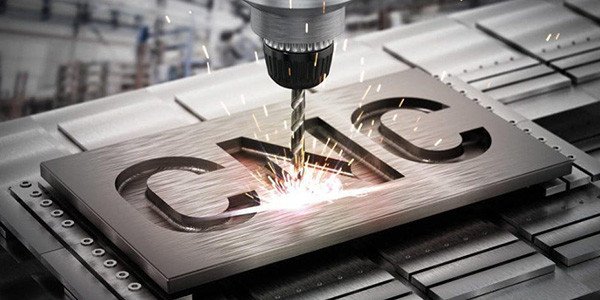
CNC Machining for High Volume Machining
High-volume CNC machining utilizes advanced computer-controlled machines that can execute machining operations at significantly higher speeds than traditional manual methods.
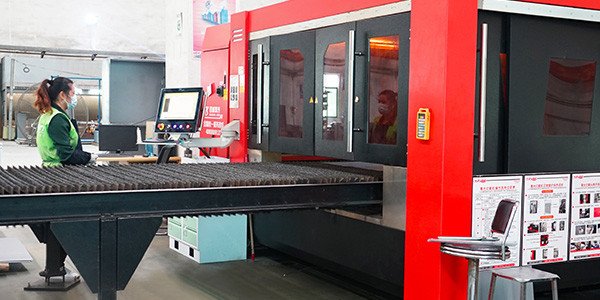
CNC Cutting Service
We are able to provide 2D and 3D product designs in a variety of colors. We excel at laser cutting hard and delicate materials, difficult and complex projects, and both large and small projects.
CNC Milling Service
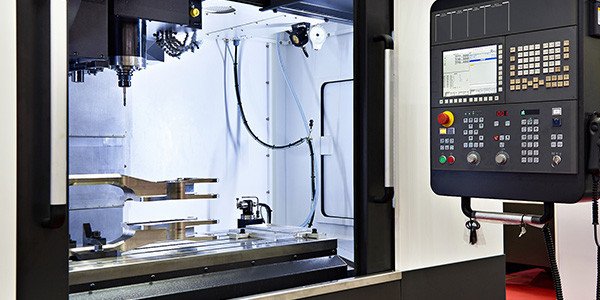
We have dozens of in-house 5-axis CNC milling machines that can easily mill plastic and metal parts with tight tolerances and complex geometries. We also use 3-axis and 4-axis milling machines to provide low-cost machined parts.
CNC Turning Service
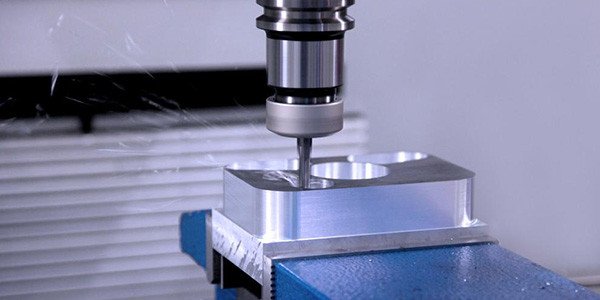
Our commitment to excellence and dedication to transparency and efficiency have made us a key player in promoting the production and delivery of CNC turning parts, further improving the quality and precision of parts in various industries.
CNC Routing Service
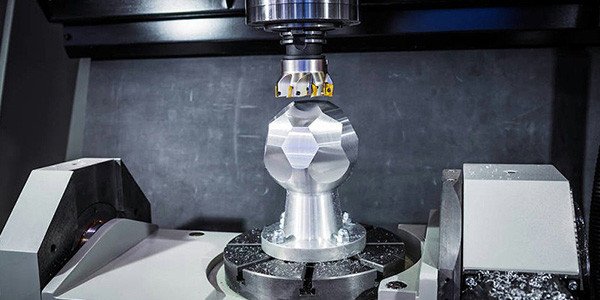
CNC routing offers several advantages over traditional manual routing or other manufacturing methods. For example, plasma or laser cutting.

CNC Product Surface Treatment
CNC product surface treatment involves post-machining processes like anodizing, powder coating, electroplating, and polishing to enhance appearance, corrosion resistance, wear.

CNC Machining Metal Fabrication Service
Providing high-quality CNC Machining Fabricating Services services in China for a wide range of mechanical products, assemblies, and custom parts.
CNC Prototype Machining Service
CNC Rapid prototyping services are essential to modern advanced manufacturing, enabling engineers and product developers to move from concept to functional parts in days rather than months.
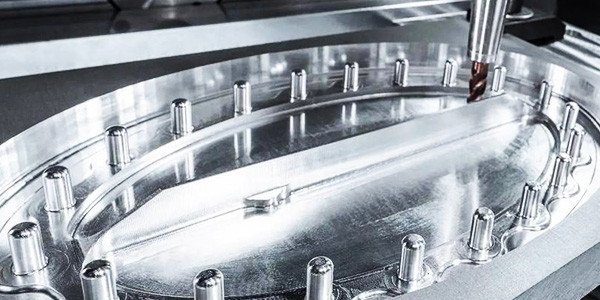
CNC Machining Low Volume Manufacturing
Low volume manufacturing (LVM) is characterized by production runs that are too small for high-volume techniques but too large for one-off prototyping.
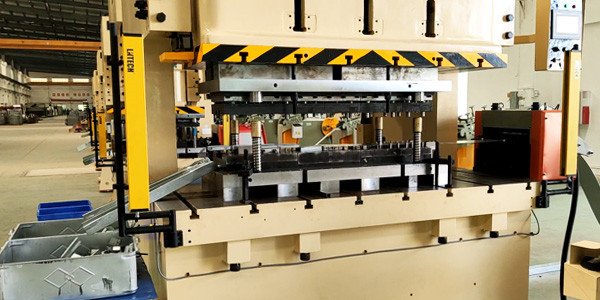
Custom Metal Stamping Service
Metal stamping is a cold-forming fabrication method that’s simple yet versatile. In this process, flat metal strips are fed into stamping equipment with tooling or dies.
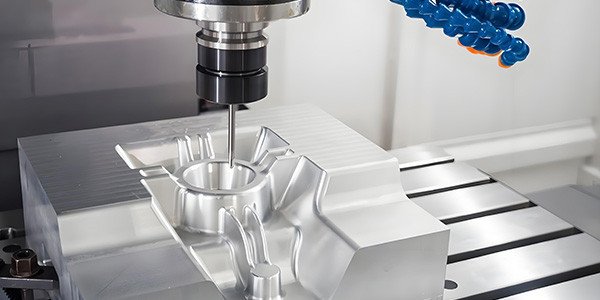
Custom Die Casting Service
Gazfull partners with the leading extrusion suppliers who utilize the most sophisticated technology to deliver high-quality extrusions.
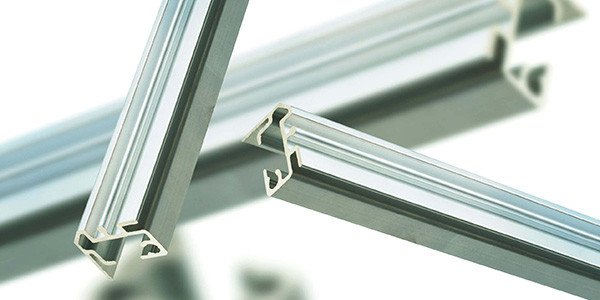
Metal Extrusion Service
Metal extrusion is the manufacturing process of choice when producing high volumes of material with a constant cross-section. With the extrusion process, metal material is forced through the shaped opening of a die using high pressure, resulting in an extruded profile.
Get a quote
Email:info@gazfull.com
Ready to get started on your next project?
From one part to thousands of parts, we can help you accelerate your sheet metal projects using CNC machining Services in a cost-effective way. Contact us right now! info@gazfull.com