
CNC Machining Metal Parts +86-18169936698
Blog
We offer metal fabrication service and custom manufactured parts factory service
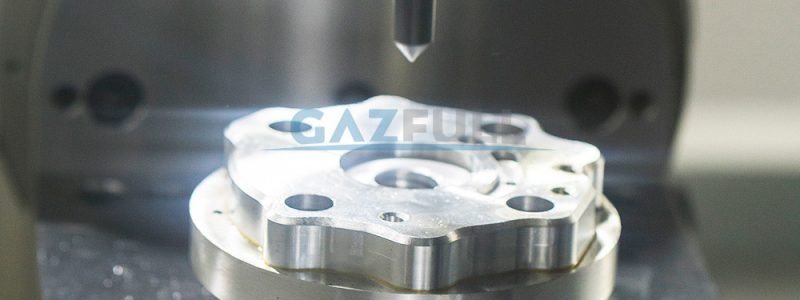
Mastering Complexity: The Definitive Guide to 5-Axis Precision Machining for Complex Geometries
In the relentless pursuit of innovation, modern engineering demands components that are not only stronger and lighter but also geometrically more complex than ever before. From the monolithic blisks in jet turbine engines to the intricate contours of medical implants and the precision molds for consumer electronics, the parts defining our future are increasingly difficult to manufacture using conventional methods. At the heart of this manufacturing revolution lies 5-axis precision machining, a technology that has moved from a niche capability to a critical cornerstone of modern production. This article delves into the world of machining complex geometry CNC parts, exploring the technology, advantages, applications, and challenges of 5-axis precision machining.
The Evolution from 3-Axis to 5-Axis Machining
To appreciate the capabilities of 5-axis machining, one must first understand its predecessor: traditional 3-axis machining. In a standard 3-axis CNC (Computer Numerical Control) mill, the cutting tool moves along three linear axes—X (left/right), Y (forward/back), and Z (up/down). The workpiece is fixed to a table, and the tool approaches it from a single, vertical direction. This is perfectly adequate for creating prismatic parts with features on one face, such as pockets, holes, and flat surfaces.
However, when a part requires machining on multiple faces or features complex undercuts, curved surfaces, or deep cavities, the limitations of 3-axis machining become apparent. The typical workaround involves multiple setups: the operator must manually reposition the part to machine each new face. This process is time-consuming, prone to human error, and compromises accuracy, as each new setup introduces minute alignment errors.
This is where 5-axis machining transcends these limitations. A 5-axis CNC machine incorporates the three linear axes (X, Y, Z) but adds two rotational axes. The specific configuration of these rotational axes varies by machine manufacturer—commonly designated as A and B, or B and C—but the principle is the same: the machine can tilt the cutting tool or rotate the workpiece to approach the material from virtually any direction.
This capability allows the tool to maintain an optimal, perpendicular orientation to the cutting surface, a concept known as “tool vectoring.” Instead of the tool tip doing all the work, the entire fluted length of the tool can be used efficiently. This fundamental shift in capability is what unlocks the potential to machine highly complex geometries in a single setup.
The Technical Advantages for Complex Geometries
The application of 5-axis technology offers a host of technical benefits that directly address the challenges posed by complex parts.
1. Unhindered Access to Complex Features:
The most obvious advantage is the ability to machine intricate features like deep cavities, steep wall angles, and complex undercuts that would be impossible with a 3-axis machine. For instance, in mold-making, cooling channels often need to follow the contour of the part for optimal thermal management. 5-axis machining allows these channels to be drilled and shaped along complex curves, far beyond the straight lines possible with traditional methods.
2. Superior Surface Finishes with Shorter Cutters:
When machining a deep, vertical wall with a 3-axis mill, a long, extended cutter is often necessary to reach the bottom. Long tools are prone to deflection (bending) and vibration (chatter), which degrades surface finish and limits cutting speeds. In 5-axis machining, the head can be tilted so that a short, rigid cutter is used to machine the same deep wall. The tool’s large core diameter and short overhang provide immense stability, resulting in dramatically better surface finishes (Ra values) and the ability to take heavier cuts at faster speeds.
3. Unmatched Dimensional Accuracy:
As the adage goes, “accuracy is lost in the setup.” Every time a part is moved from one fixture to another, errors are introduced. By machining all, or most, sides of a part in a single setup, 5-axis machining eliminates these stacking errors. Features on the front, back, and sides of a part are all machined in relation to a single, consistent coordinate system. This is absolutely critical for components like turbine blades, where the precise relationship between the aerofoil and the root is vital for performance and safety.
4. Optimized Cutting Conditions:
Beyond access and accuracy, 5-axis machining allows for the optimization of the cutting process itself. By constantly adjusting the tool’s orientation relative to the workpiece, programmers can:
-
Maintain a Constant Chip Load: This maximizes tool life and ensures a consistent cutting action.
-
Utilize the Tool’s Effective Cutting Diameter: By tilting a ball-nose end mill, the programmer can ensure that cutting is done not at the slow-moving tip, but at a point on the ball’s radius where the effective cutting speed is much higher, slashing cycle times.
From Design to Finished Part: The Digital Workflow
Successfully machining complex geometry parts is not just about the machine; it’s about a fully integrated digital workflow. The journey from a concept to a finished 5-axis part involves several critical steps.
1. Design for Manufacturing (DFM) with CAD:
It all begins in a powerful Computer-Aided Design (CAD) software package like Siemens NX, SolidWorks, or CATIA. The designer must create a “watertight” 3D solid model of the part. For complex geometries, this often involves advanced surfacing techniques to create smooth, continuous free-form shapes. A crucial part of this phase is considering how the part will be held. The designer must work around the need for fixture points or design features that can act as reference and clamping surfaces for the 5-axis machine’s workholding.
2. The Heart of the Process: CAM Programming:
The CAD model is then imported into a sophisticated Computer-Aided Manufacturing (CAM) system, such as Mastercam, PowerMILL, or NX CAM. This is where the machining strategy is defined. Programming for 5-axis is exponentially more complex than for 3-axis. The CAM programmer must:
-
Select the Right Tools: Choose cutters (often specialized lollipop or barrel cutters) suited for the specific geometry and material.
-
Define Toolpaths: Create roughing, semi-finishing, and finishing toolpaths. Key 5-axis strategies include:
-
Z-Level Finishing: For steep walls.
-
Constant Scallop: To maintain a consistent surface finish across the entire part.
-
Parallel Lace: For shallow areas.
-
5-Axis Swarf Machining: Where the side of a tool cuts a ruled surface in a single pass, ideal for tall, angled walls.
-
-
Manage Tool Axis Control: This is the most critical skill. The programmer must define how the tool tilts—constantly (full 5-axis simultaneous), or indexically (5-axis positional, where the tool locks in one orientation to machine a feature, then moves to the next). The goal is to avoid collisions, maintain optimal cutting angles, and ensure smooth motion.
-
Simulate, Simulate, Simulate: Before a single chip is cut, the entire process is simulated in the CAM software. This virtual environment detects collisions between the tool, tool holder, machine head, and workpiece. It validates the toolpaths and ensures the program is safe to run, saving thousands of dollars in potential crashes.
3. Workholding and Fixturing:
A 5-axis machine’s range of motion is its greatest asset, but it also presents a challenge: the part must be held securely while leaving as much of it as possible accessible to the tool. Standard vises are often too bulky. Solutions include:
-
Custom Fixtures: Often made of aluminum or steel, designed to hold the part precisely from its underside or less critical features.
-
Tombstones: Multi-sided fixtures that allow multiple parts to be machined in one run.
-
Vacuum Chucks: Ideal for thin, non-ferrous parts.
-
Zero-Point Clamping Systems: These allow for rapid and ultra-precise changing of fixtures and workpieces on the machine table.
Applications Across Key Industries
The unique capabilities of 5-axis precision machining make it indispensable across a range of high-tech industries.
-
Aerospace: This is perhaps the most demanding sector. Components like titanium structural bulkheads, aluminum skin panels, and Inconel turbine disks (blisks) feature complex geometries, thin walls, and are made from difficult-to-machine superalloys. 5-axis machining is the only viable method for their production, ensuring structural integrity and weight savings.
-
Medical and Dental: The human body is a world of complex curves. Custom knee and hip implants, spinal cages, and dental abutments and crowns are machined from biocompatible materials like titanium and cobalt-chrome. 5-axis technology enables the creation of patient-specific implants that promote osseointegration and improve surgical outcomes.
-
Automotive (Motorsport and High-Performance): In the quest for every millisecond, components like complex cylinder heads with optimized ports, custom turbocharger housings, and high-performance suspension uprights benefit from the design freedom and precision of 5-axis machining.
-
Mold & Die: The molds used to produce everything from plastic bottles to car bumpers are themselves incredibly complex parts. 5-axis machining dramatically reduces the time required to produce these molds, allows for complex cooling channels, and produces the high surface finish required for flawless plastic parts.
Challenges and the Human Element
Despite its power, 5-axis machining is not without its challenges. The primary barrier is often the high cost of the machinery itself, which requires a significant capital investment. However, the expertise required is an equally important factor. There is a steep learning curve for both CAM programmers and machine operators. They must have a deep understanding of kinematics, tooling, and advanced workholding strategies. A shortage of skilled 5-axis programmers is a real bottleneck in the industry.
Furthermore, the very software that makes it possible—the CAM system—is expensive and requires constant updates. The need for high-quality, balanced tooling and robust workholding solutions adds to the operational costs.
The Future: Automation and Intelligence
The future of 5-axis precision machining is one of greater automation and intelligence. We are seeing the rise of “lights-out” manufacturing, where machines run unattended for long periods, monitored by sophisticated software. The integration of in-process probing allows the machine to measure its own work, detect tool wear, and make micro-adjustments to compensate for thermal growth or other variables, ensuring unwavering precision.
Artificial Intelligence (AI) and Machine Learning are beginning to be integrated into CAM systems to help optimize toolpaths and cutting parameters based on historical data, further pushing the boundaries of efficiency and part quality.
Conclusion
5-axis precision machining is far more than just a manufacturing process; it is an enabling technology that allows engineers and designers to turn their most ambitious concepts into reality. By conquering the challenges of complex geometries, it delivers parts with superior accuracy, surface finish, and structural integrity. While the investment in technology and talent is substantial, the competitive advantages it provides in terms of quality, efficiency, and design freedom are undeniable. As industries continue to demand higher performance and more intricate components, the role of 5-axis machining will only continue to grow, solidifying its place as a cornerstone of advanced manufacturing.
Choose Gazfull CNC Machining Services
At Gazfull, we specialize in providing manufacturing machining services that go beyond traditional manufacturing. Our goal is to optimize your production process and reduce production costs while ensuring high-quality results. With our expertise and advanced three-axis cutting system, we are able to meet all your customization needs efficiently and accurately.
Recent Posts
CNC Machining Sheet Metal Fabrication Techniques
CNC Machining for Metal Fabrication: The Ultimate Guide
3-axis vs 5-axis CNC routers: Which is right for your business?
How To Choose The Best CNC Router For Your Industry

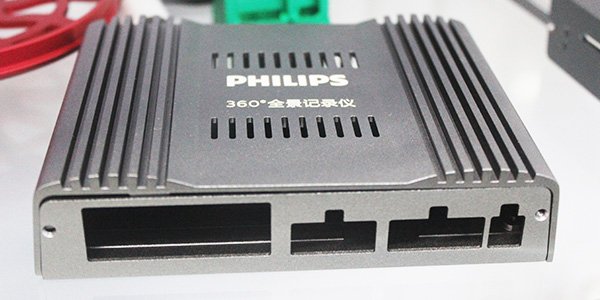
Custom CNC Metal Parts Machining Service
Gazfull CNC Machining, A manufacturer for CNC Machining Metal Parts. We offer metal fabrication service and custom manufactured parts factory service.
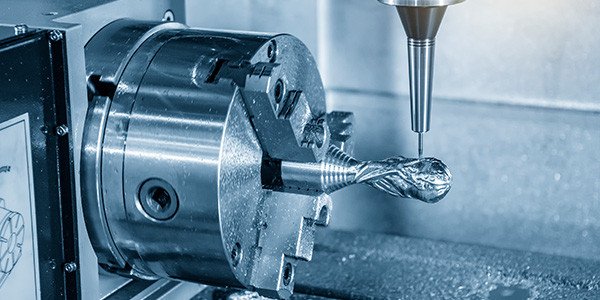
CNC Machining for Low Volume Production
We offer a full suite of CNC capabilities — including 3, 4, and 5-axis milling, Swiss-style turning, conventional turning, and mill-turn machining — to support low volume production.
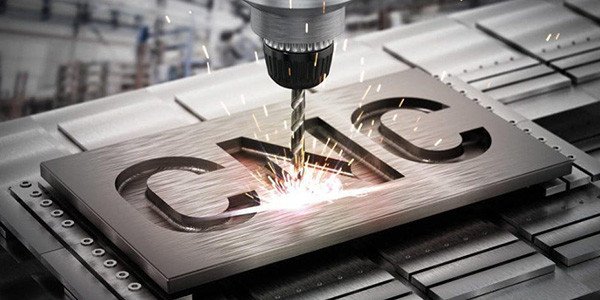
CNC Machining for High Volume Machining
High-volume CNC machining utilizes advanced computer-controlled machines that can execute machining operations at significantly higher speeds than traditional manual methods.
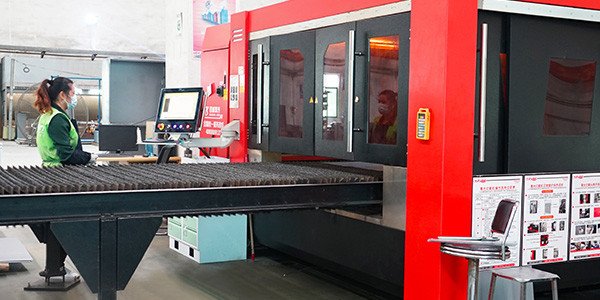
CNC Cutting Service
We are able to provide 2D and 3D product designs in a variety of colors. We excel at laser cutting hard and delicate materials, difficult and complex projects, and both large and small projects.
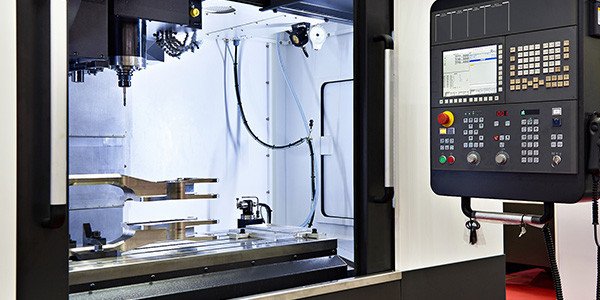
CNC Milling Service
We have dozens of in-house 5-axis CNC milling machines that can easily mill plastic and metal parts with tight tolerances and complex geometries. We also use 3-axis and 4-axis milling machines to provide low-cost machined parts.
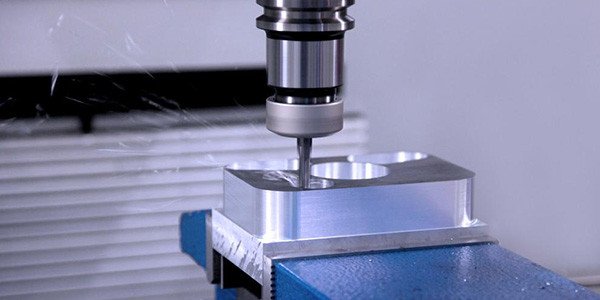
CNC Turning Service
Our commitment to excellence and dedication to transparency and efficiency have made us a key player in promoting the production and delivery of CNC turning parts, further improving the quality and precision of parts in various industries.
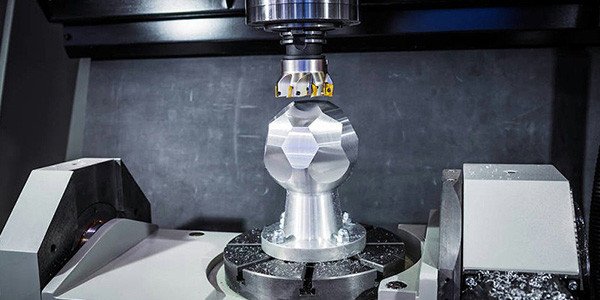
CNC Routing Service
CNC routing offers several advantages over traditional manual routing or other manufacturing methods. For example, plasma or laser cutting.

CNC Product Surface Treatment
CNC product surface treatment involves post-machining processes like anodizing, powder coating, electroplating, and polishing to enhance appearance, corrosion resistance, wear.

CNC Machining Metal Fabrication Service
Providing high-quality CNC Machining Fabricating Services services in China for a wide range of mechanical products, assemblies, and custom parts.
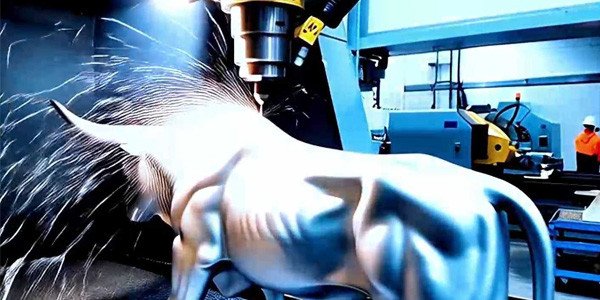
CNC Prototype Machining Service
CNC Rapid prototyping services are essential to modern advanced manufacturing, enabling engineers and product developers to move from concept to functional parts in days rather than months.
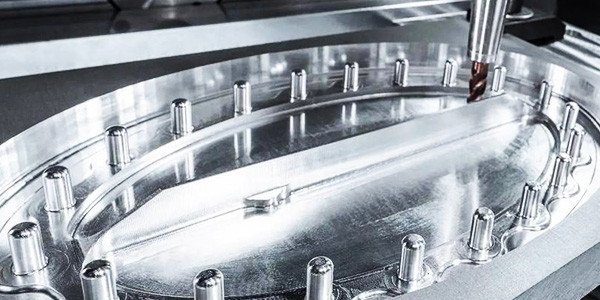
CNC Machining Low Volume Manufacturing
Low volume manufacturing (LVM) is characterized by production runs that are too small for high-volume techniques but too large for one-off prototyping.
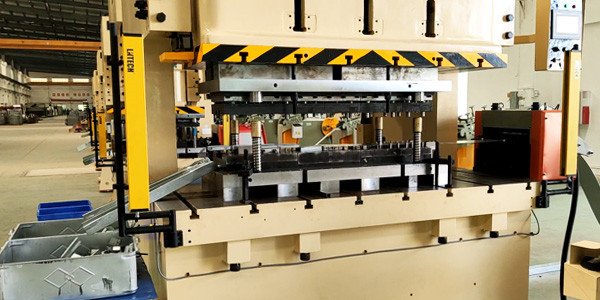
Custom Metal Stamping Service
Metal stamping is a cold-forming fabrication method that’s simple yet versatile. In this process, flat metal strips are fed into stamping equipment with tooling or dies.
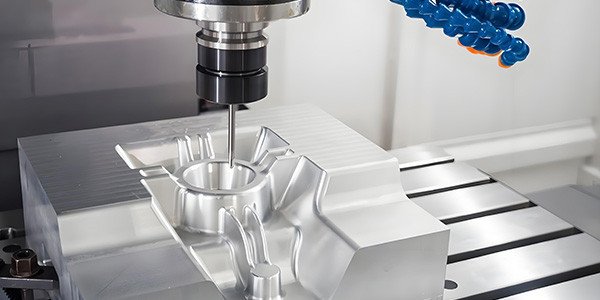
Custom Die Casting Service
Gazfull partners with the leading extrusion suppliers who utilize the most sophisticated technology to deliver high-quality extrusions.
Get a quote
Email:info@gazfull.com
Ready to get started on your next project?
From one part to thousands of parts, we can help you accelerate your sheet metal projects using CNC machining Services in a cost-effective way. Contact us right now! info@gazfull.com