
Gazfull CNC Machining Services
China's leader in precision metal manufacturing for critical supply chains
CNC Machining Low Volume Manufacturing Service

In the dynamic landscape of modern manufacturing, the demand for flexibility, precision, and efficiency has never been higher. Traditional high-volume production methods, such as injection molding or die casting, excel in economies of scale but often fall short when it comes to producing small quantities of parts. This is where CNC (Computer Numerical Control) machining shines, particularly in low volume manufacturing. Low volume manufacturing refers to the production of parts in quantities typically ranging from a few units to several hundred, bridging the gap between prototyping and full-scale production.CNC machining, a subtractive manufacturing process controlled by computer programs, offers unparalleled accuracy and repeatability. It involves using automated tools to remove material from a workpiece to create the desired shape. When applied to low volume runs, CNC machining provides manufacturers with the ability to produce high-quality parts quickly and cost-effectively, without the need for expensive tooling setups required in mass production.This article delves into the intricacies of CNC machining for low volume manufacturing. We will explore its fundamentals, advantages, processes, materials, applications, challenges, and future trends. By the end, readers will gain a thorough understanding of why CNC machining is a cornerstone technology for industries requiring agile production strategies. This piece aims to serve as a valuable resource for engineers, business owners, and enthusiasts alike.
Table of Contents
ToggleUnderstanding CNC Machining
CNC machining traces its roots back to the 1940s and 1950s, when numerical control (NC) systems were first developed for aerospace applications. The integration of computers in the 1970s transformed NC into CNC, allowing for more complex operations through software programming. Today, CNC machines are ubiquitous in manufacturing, encompassing mills, lathes, routers, grinders, and even plasma cutters.At its core, CNC machining operates on a set of instructions encoded in G-code or M-code, which dictate the movement of cutting tools relative to the workpiece. The process begins with a digital design created using Computer-Aided Design (CAD) software. This design is then converted into a manufacturing plan via Computer-Aided Manufacturing (CAM) software, which generates the toolpaths.Key components of a CNC system include:
- Controller: The brain of the machine, interpreting code and sending signals to motors.
- Motors and Drives: Typically stepper or servo motors that provide precise movement along axes (X, Y, Z, and sometimes rotational axes like A, B, C).
- Spindle: Holds and rotates the cutting tool at high speeds.
- Workholding Devices: Fixtures or vises that secure the material.
Defining Low Volume Manufacturing
Low volume manufacturing (LVM) is characterized by production runs that are too small for high-volume techniques but too large for one-off prototyping. Quantities can vary by industry: in aerospace, low volume might mean 10-50 parts; in consumer electronics, it could extend to 500-1000 units. The key driver is customization and speed to market, often necessitated by market testing, regulatory approvals, or niche applications.
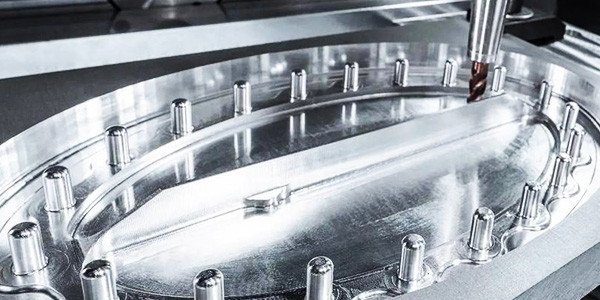
LVM fills a critical niche in the product lifecycle. After prototyping, companies may need to produce limited quantities for validation, pilot testing, or early sales. Traditional methods like injection molding require molds costing tens of thousands of dollars, with lead times of weeks or months. In contrast, LVM methods like CNC machining incur lower upfront costs since no custom tooling is needed beyond the initial programming.Factors influencing the shift to LVM include:
- Supply Chain Disruptions: Events like the COVID-19 pandemic highlighted the risks of relying on high-volume overseas production.
- Customization Demands: Industries such as medical devices and automotive aftermarket parts require tailored solutions.
- Sustainability: Smaller runs reduce waste and inventory overhead.
Advantages of CNC Machining for Low Volume Production
The synergy between CNC machining and low volume manufacturing stems from several inherent advantages:
- Precision and Repeatability: CNC machines achieve tolerances as tight as ±0.001 inches (0.025 mm), ensuring every part in a low volume batch meets exact specifications. This is crucial for industries like aerospace and medical, where consistency is non-negotiable.
- Cost-Effectiveness: Without the need for custom dies or molds, initial costs are limited to design and programming. For low volumes, the per-part cost remains competitive because amortization of tooling isn’t required. Economies come from efficient material use and minimal waste.
- Speed: Setup times are short—often hours rather than days. Modern CNC machines with automatic tool changers (ATCs) and multi-axis capabilities reduce cycle times. For example, a 5-axis CNC mill can machine complex geometries in a single setup, slashing production time for intricate parts.
- Flexibility: CNC allows for easy design iterations. If a prototype reveals flaws, modifications can be made digitally and implemented immediately, ideal for low volume runs where feedback loops are common.
- Material Versatility: CNC handles a wide array of materials, from metals like aluminum and titanium to plastics like ABS and PEEK. This versatility supports diverse applications without switching processes.
- Quality Control Integration: In-line probing and sensors enable real-time monitoring, reducing defects in small batches where rework is costly.
Key Processes in CNC Machining for Low Volume
CNC machining stands as one of the most versatile and precise manufacturing methods, particularly well-suited for low-volume production. Unlike high-volume processes that rely on expensive molds or tooling, CNC machining excels in creating small batches—typically from a single prototype to a few hundred or thousand parts—with minimal setup costs, rapid turnaround times, and exceptional accuracy. It ideal for prototyping, custom components, bridge production, market testing, and specialized applications in industries such as aerospace, medical devices, automotive, electronics, and consumer products.
In low-volume scenarios, the focus shifts from sheer output to flexibility, speed, and quality. Manufacturers can produce functional parts directly from digital designs (CAD files), iterate quickly on modifications, and avoid the prohibitive upfront investments associated with injection molding or die casting. Low-volume CNC machining bridges the gap between conceptual prototyping and full-scale production, enabling companies to validate designs, gather market feedback, and scale efficiently without overcommitting resources.
Core CNC Processes Adapted for Low-Volume Needs
Several key subtractive processes form the backbone of CNC machining, each offering unique strengths for low-volume work:
- Milling remains the most widely used process. It employs rotating multi-point cutting tools to remove material from a stationary or slowly moving workpiece. 3-axis milling is sufficient for many flat or prismatic features, delivering excellent results for straightforward geometries. For more intricate designs involving complex contours, undercuts, or compound angles, 4-axis or 5-axis milling becomes essential. These advanced configurations allow the tool or workpiece to rotate, accessing multiple sides in a single setup. This reduces handling errors, improves surface finish, and shortens overall production time—critical advantages when producing one-off prototypes or small runs of complex aerospace brackets, medical implants, or consumer electronics housings.
- Turning (CNC Lathe) specializes in cylindrical or rotational parts. The workpiece spins rapidly while stationary cutting tools shape it, making it perfect for components like shafts, bushings, pins, fittings, or threaded rods. Modern CNC lathes often incorporate live tooling, which adds milling, drilling, and tapping capabilities on the same machine. This hybrid turning-milling functionality minimizes setups and enables complete parts production in one operation, a major efficiency gain for low-volume jobs where every minute counts.
- Drilling and Tapping create precise holes and threads. These operations integrate seamlessly into milling or turning workflows, often using the same machine. CNC precision ensures accurate hole placement, depth control, and thread quality—vital for assembly-critical parts in low-volume custom machinery or prototypes requiring tight tolerances.
- Electrical Discharge Machining (EDM) serves niche roles in low-volume production. It uses electrical sparks to erode material, excelling with extremely hard materials (like hardened tool steels) or intricate details impossible with traditional cutting tools. While slower than milling or turning, EDM proves invaluable for features like deep cavities, sharp internal corners, or fine microstructures in molds, dies, or high-precision tooling prototypes.
Hybrid and Advanced Approaches in Low-Volume CNC
Low-volume manufacturing thrives on adaptability, leading to popular hybrid approaches. Rather than relying on a single machine, parts often undergo multi-process workflows. For example, roughing operations might occur on a powerful milling center to quickly remove bulk material, followed by precision finishing on a lathe for superior cylindrical accuracy and surface quality. Some facilities combine CNC with complementary technologies, such as using 3D printing for rapid form/fit prototypes before final CNC machining for functional, high-tolerance parts. This hybrid strategy accelerates development cycles while ensuring end-use performance.
Advanced techniques further optimize low-volume efficiency. High-Speed Machining (HSM) employs elevated spindle speeds, lighter chip loads, and optimized toolpaths to achieve faster material removal rates, finer surface finishes, and reduced cycle times—often by 30-50% compared to conventional methods. HSM shines in low-volume settings for aluminum, plastics, and softer alloys, minimizing heat buildup, extending tool life, and enabling rapid turnaround for prototypes or short runs.
The Critical Role of Programming and CAM Software
Effective CNC machining hinges on robust programming. Computer-Aided Manufacturing (CAM) software translates 3D CAD models into precise machine instructions (G-code), simulating toolpaths, detecting potential collisions, and optimizing parameters like feeds, speeds, and depths of cut. Popular platforms include Mastercam, widely used in professional shops for its comprehensive toolpath strategies, and Autodesk Fusion 360, favored for its integrated CAD/CAM environment, affordability, and cloud-based collaboration features.
In low-volume environments, where designs evolve frequently, CAM’s simulation capabilities prevent costly errors and scrap. Cloud-based options enable real-time sharing among designers, engineers, and machinists, facilitating faster iterations and remote approvals. Recent advancements incorporate AI-driven optimizations for toolpath efficiency and predictive maintenance, further reducing programming time and enhancing reliability for small-batch production.
Why CNC Machining Dominates Low-Volume Manufacturing
The advantages compound to make CNC machining the go-to choice for low volumes:
- Cost-effectiveness — No expensive hard tooling means lower upfront costs and flexibility for design changes.
- Speed — Parts can move from CAD to finished product in days, supporting accelerated time-to-market.
- Precision and repeatability — Tight tolerances (often ±0.001 inches or better) and consistent quality across batches.
- Material versatility — Metals (aluminum, steel, titanium), plastics, composites, and more.
- Customization — Ideal for bespoke or highly variable parts without retooling penalties.
Materials Used in CNC Low Volume Manufacturing
Material selection is critical, influencing machinability, cost, and performance:
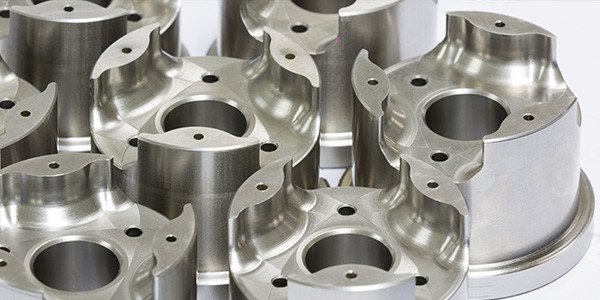
- Metals:
- Aluminum: Lightweight, corrosion-resistant, easy to machine; used in aerospace and electronics.
- Steel: Variants like 1018 (mild) or 4140 (alloy) offer strength; stainless for medical applications.
- Titanium: High strength-to-weight ratio but challenging to machine due to heat generation.
- Brass/Copper: Excellent conductivity for electrical components.
- Plastics:
- ABS: Affordable, impact-resistant for prototypes.
- Nylon: Durable, self-lubricating for gears.
- PEEK: High-temperature resistant for demanding environments.
- Composites: Carbon fiber or fiberglass for lightweight, high-strength parts in automotive.
Applications Across Industries
Low-volume CNC machining delivers high-precision, custom parts in small quantities, making it indispensable across diverse industries. Its ability to produce complex geometries from digital designs without costly tooling enables rapid prototyping, design iteration, functional testing, and limited production runs. This flexibility accelerates innovation, reduces development risks, and supports specialized needs where mass production isn’t viable.
Aerospace
The aerospace sector demands exceptional precision, lightweight materials, and reliability under extreme conditions. Low-volume CNC machining produces critical components like turbine blades, engine brackets, structural fittings, and prototypes for aircraft, satellites, and drones. Tight tolerances (often ±0.0001 inches) and materials such as titanium, aluminum alloys, and high-performance composites ensure parts withstand high stresses and temperatures. Low volumes suit R&D, custom repairs, spare parts for legacy systems, and small-batch production for new designs or unmanned aerial vehicles.
Automotive
In automotive manufacturing, especially for high-performance, electric, and autonomous vehicles, low-volume CNC machining supports custom and specialized parts. Examples include suspension components, battery housings, engine brackets, and prototypes for electric vehicle (EV) drivetrains. It enables quick iterations during testing, lightweighting for efficiency, and bespoke solutions for racing or limited-edition models. Startups and established firms use it to validate concepts before scaling.
Medical Devices
Precision and biocompatibility are paramount in medical applications. Low-volume CNC machining fabricates implants (such as hip or knee replacements), surgical instruments, prosthetics, and diagnostic equipment components from materials like titanium, stainless steel, and medical-grade plastics. It ensures tight tolerances for patient safety, supports custom or patient-specific devices, and facilitates small batches for clinical trials or regulatory approval.
Electronics
The electronics industry relies on low-volume CNC for intricate, compact parts like enclosures, heat sinks, connectors, and housings for prototypes or niche devices. It handles materials such as aluminum and plastics, achieving fine features for thermal management and assembly. This supports rapid development of consumer gadgets, telecom equipment, and specialized hardware.
Consumer Goods
For customized or premium products, CNC machining creates unique items like phone cases, wearables, jewelry, high-end accessories, and personalized tools. Low volumes allow for design variations, limited editions, and market testing without large commitments.
Defense
Defense applications require secure, rapid production of specialized equipment, including weapon components, communication housings, and vehicle parts. CNC machining meets stringent standards for durability, precision, and traceability in low-volume runs for prototypes, upgrades, or mission-specific needs.
Real-World Case Studies
A startup developing electric scooters leveraged low-volume CNC to machine 200 aluminum frames. This approach provided the flexibility to incorporate design changes from real-world testing feedback, enabling a market launch in months instead of years. The process ensured structural integrity and lightweight performance critical for EV efficiency.
In the medical field, a company produced 50 titanium hip implants via CNC for clinical trials. The method delivered precise tolerances essential for fit, biocompatibility, and patient safety, accelerating regulatory progress and validation.
These examples highlight how low-volume CNC machining empowers industries to innovate swiftly and cost-effectively. By minimizing lead times, supporting material versatility, and maintaining high quality in small batches, it bridges prototyping to production across aerospace, automotive, medical, electronics, consumer goods, and defense sectors.
Challenges and Solutions
Despite its strengths, CNC low volume manufacturing faces hurdles:
- Higher Per-Part Costs: Compared to high-volume methods, but offset by no tooling investment.
- Setup Complexity: Programming intricate parts takes time; solution: Use parametric CAD for quick changes.
- Material Waste: Subtractive processes generate scrap; mitigated by nesting parts or recycling.
- Skilled Labor Shortage: Operators need CAD/CAM expertise; training programs and automation help.
- Scalability Limits: For volumes exceeding 1000, hybrid approaches (CNC for prototypes, molding for production) are advisable.
Future Trends in CNC Low Volume Manufacturing
The future is bright, driven by technological advancements:
- Automation and AI: Robotic loading/unloading enables 24/7 operation. AI optimizes toolpaths, predicting failures.
- Industry 4.0 Integration: IoT sensors for predictive maintenance, reducing downtime.
- Hybrid Manufacturing: Combining CNC with additive processes for complex parts.
- Sustainability: Eco-friendly coolants and recycled materials.
- Cloud-Based Collaboration: Remote programming accelerates global supply chains.
Conclusion
CNC machining has revolutionized low volume manufacturing, offering a blend of precision, flexibility, and efficiency that traditional methods can’t match. From aerospace to consumer goods, its applications underscore its versatility. While challenges exist, ongoing innovations promise to address them, paving the way for more agile, sustainable production.As industries evolve, embracing CNC for low volumes will be key to staying competitive. Whether you’re a manufacturer scaling a new product or an engineer prototyping innovations, understanding this technology equips you for success. In an era of rapid change, CNC low volume manufacturing isn’t just a process—it’s a strategic advantage.
Gazful’s CNC machining team specializes in parts with complex geometries, tight tolerances, and rapid iteration cycles.
Ready to get started on your next project?
From one part to thousands of parts, we can help you accelerate your sheet metal projects using CNC machining Services in a cost-effective way. The Gazfull team can provide a range of solutions for your manufacturing needs. Talk to us today about your laser cutting project and how your project can take advantage of its high quality and accuracy.
Get a quote
Email:info@gazfull.com