
CNC Machining for Different Industries
CNC machining technology is widely used in high-tech industries
CNC Machining for Aerospace:
Precision Engineering in the Skies
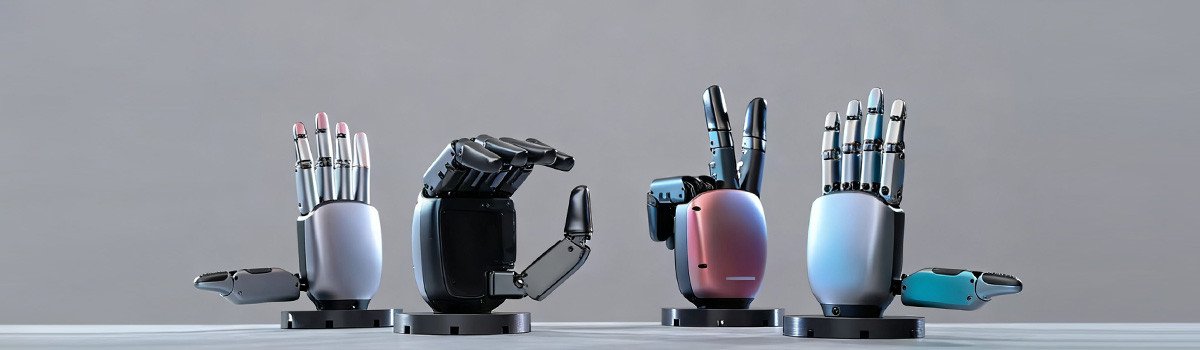
In the rapidly evolving landscape of modern manufacturing, the intersection of CNC (Computer Numerical Control) machining and robotics represents a pivotal advancement in automation technologies. CNC machining, a process that utilizes computer-programmed tools to shape materials with unparalleled precision, has long been a cornerstone of industries requiring high accuracy and repeatability. When integrated with robotics—systems capable of performing complex, repetitive tasks autonomously—this technology unlocks new levels of efficiency, flexibility, and innovation.
The synergy between CNC machining and robotics is particularly transformative in the field of automation, where the demand for faster production cycles, reduced human intervention, and enhanced product quality is ever-increasing. As of 2025, with global manufacturing facing labor shortages, rising costs, and the push toward Industry 4.0, CNC robotics has emerged as a solution that not only addresses these challenges but also propels industries forward. For instance, robotic arms equipped with CNC capabilities can handle intricate tasks like milling, welding, and assembly, allowing human operators to focus on higher-value activities such as design and quality oversight.
This article delves into the fundamentals of CNC machining, its evolution alongside robotics, key components of integrated systems, diverse applications across sectors, benefits, challenges, emerging trends, and future prospects. By exploring these facets, we aim to provide a comprehensive understanding of how CNC machining is revolutionizing robotics and automation, enabling businesses—from small job shops to large-scale manufacturers—to achieve greater productivity and competitiveness. Drawing from recent advancements, such as AI-driven optimizations and collaborative robots, this discussion highlights why CNC robotics is not just a tool but a strategic imperative in today’s automated world.
The adoption of CNC robotics has grown exponentially, with the industrial robotics market valued at over $17 billion in 2023 and projected to reach $32.5 billion by 2028. This growth is fueled by the need to bridge workforce gaps, particularly as skilled workers retire, and to maintain precision in demanding environments. As we proceed, we’ll uncover how this integration is reshaping manufacturing paradigms.
Table of Contents
ToggleBasics of CNC Machining
At its core, CNC machining is a subtractive manufacturing process where computer software directs the movement of factory tools and machinery to remove material from a workpiece, creating precise components. This technology originated in the mid-20th century with numerical control systems using punched tapes, evolving into today’s sophisticated computer-driven setups.
CNC machines operate along multiple axes—typically X, Y, and Z for three-dimensional movement, with advanced models incorporating up to five or more axes for complex geometries. The process begins with a digital design created in CAD (Computer-Aided Design) software, which is then converted into G-code instructions via CAM (Computer-Aided Manufacturing) programs. These codes control parameters like speed, feed rate, and tool paths, ensuring the machine executes tasks with micron-level accuracy.
Common types of CNC machines include mills, which use rotating cutters to shape materials; lathes, which rotate the workpiece against a cutting tool for cylindrical parts; routers for cutting softer materials like plastics and wood; plasma cutters for metals using ionized gas; laser cutters for precise, heat-based cutting; waterjet cutters that employ high-pressure water mixed with abrasives; grinders for surface finishing; and EDM (Electrical Discharge Machining) for hard materials via electrical sparks.
Materials processed range from metals (aluminum, steel, titanium) to plastics, composites, wood, and foam, making CNC versatile for robotics applications. In robotics, CNC is crucial for fabricating components like arms, frames, gears, and housings that demand tight tolerances to ensure seamless operation and durability.
One key advantage is repeatability: once programmed, a CNC machine can produce identical parts indefinitely, minimizing variations that plague manual methods. This is vital in automation, where consistency directly impacts system reliability. Additionally, CNC systems can run 24/7 with minimal downtime, boosting throughput in high-volume production.
However, basics alone don’t capture the full potential; integration with robotics elevates CNC from a standalone process to a dynamic, automated ecosystem. Robotic arms can load/unload parts, change tools, or even perform machining themselves, extending CNC’s reach into flexible manufacturing setups.
Evolution and Integration with Robotics
The evolution of CNC machining intertwined with robotics traces back to the 1940s with early numerical control, but true integration surged in the late 20th century. By the 1960s, computers replaced punched tapes, enhancing flexibility, while the 1970s and 1980s introduced multi-axis control and industrial robots for basic tasks like handling.
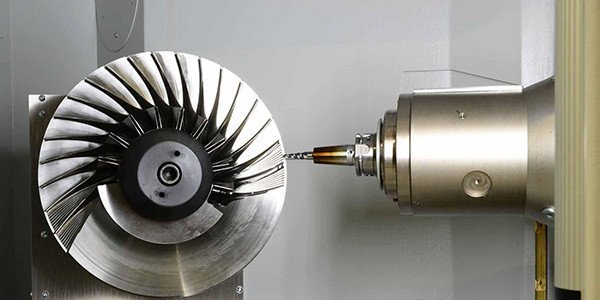
The late 1990s marked a turning point, as engineers fused CNC precision with robotic versatility, enabling autonomous handling, assembly, and inspection. The 21st century brought sensors, AI, and IoT, allowing CNC robots to adapt in real-time—vision systems correct part orientations, and interconnected factories optimize workflows.
Integration methods vary: robotic arms often complement CNC machines by automating peripheral tasks, such as machine tending—loading raw materials, unloading finished parts, or performing secondary operations like deburring. In hybrid systems, robots wield CNC tools directly, like in robotic milling for large or irregular workpieces where traditional CNC setups fall short.
Key differences highlight their synergy: CNC machines excel in fixed, high-speed, rigid operations along defined axes, while robots offer articulated freedom for complex paths and adaptability. Together, they form CNC robotic systems that transcend traditional limits, such as in beam-cutting applications where a 6-axis FANUC arm automates plasma cutting of structural profiles, incorporating laser measuring and simulation software.
This evolution aligns with Industry 4.0, where smart factories leverage data for predictive maintenance and efficiency. Collaborative robots (cobots) further democratize access, allowing safe human-robot interaction in small shops. As a result, CNC robotics has shifted from niche to mainstream, addressing labor shortages and enabling scalable automation.
Key Components of CNC Robotic Systems
CNC robotic systems comprise interconnected elements that ensure precision, efficiency, and safety. Central are the CNC machines themselves—mills, lathes, etc.—which perform core subtractive tasks based on G-code.
Robotic arms and end effectors (EOAT) provide manipulation: arms with multiple degrees of freedom handle parts, while effectors like grippers, welding torches, or milling heads execute specific functions. For instance, in robotics, grippers secure components during assembly, enhancing versatility.
Software and control systems act as the “brain”: CAD/CAM translates designs, PLCs manage operations, and HMIs enable monitoring. Adaptive controls use real-time data to adjust parameters, optimizing for tool wear or material variations.
Sensors are critical for feedback—position sensors align tools, force sensors detect anomalies, and proximity sensors enhance safety by halting operations if humans approach. In automation, these prevent accidents and ensure quality.
Integration often involves IoT for seamless communication, allowing systems to operate in synchronized cells. For example, in a CNC automation cell, robots feed parts into machines, inspect outputs, and sort them, creating a closed-loop process.
Understanding these components reveals how CNC robotics achieves holistic automation, from design to delivery.
Applications in Robotics and Automation
CNC machining finds extensive use across various robotic subsystems, from structural elements to sensory interfaces. Let’s break it down by category.
Structural Components
The skeleton of a robot—frames, arms, and bases—must be lightweight yet strong to minimize inertia while supporting payloads. CNC machined aluminum alloys like 6061-T6 or 7075-T651 are favorites for their high strength-to-weight ratio. For example, in collaborative robots (cobots) like those from Universal Robots, CNC mills produce monolithic arm segments, reducing joints and potential failure points.
In industrial automation, gantry systems for pick-and-place robots rely on CNC-machined linear rails and beams from stainless steel or extruded aluminum, finished to micron-level flatness. Precision is key; even minor deviations can cause vibrations, affecting accuracy in high-speed operations.
Motion and Transmission Systems
Robotics demands flawless power transfer. CNC excels in producing gearboxes, couplings, and actuators. Planetary gear housings, often machined from 4140 steel, require internal bores with tolerances under 0.01 mm to ensure low backlash. Harmonic drives, used in precision robots like surgical arms, involve complex wave generators machined on 5-axis CNC for their flexible splines.
Ball screws and lead screws, critical for linear motion, are turned on CNC lathes with thread whirling attachments for smooth, accurate threads. In automation lines, such as those in automotive assembly, CNC-machined timing pulleys synchronize conveyor belts with robotic welders.
End-Effectors and Tooling
The “hands” of robots—grippers, suction cups, or specialized tools—are customized via CNC. Parallel jaw grippers for warehouse automation might be machined from Delrin plastic for low friction, with CNC ensuring precise jaw alignment. In food processing, stainless steel end-effectors with hygienic designs are CNC-milled to include drainage channels.
Quick-change systems, allowing robots to swap tools rapidly, feature CNC-machined plates with locating pins and pneumatic locks. For advanced applications like drone assembly, CNC produces lightweight carbon fiber composites via routing, enabling agile end-effectors.
Sensor Mounts and Electronics Enclosures
Sensors are the eyes and ears of robots. CNC machining creates mounts for LiDAR, cameras, and IMUs with exact datum features for calibration. Force-torque sensor housings from titanium protect delicate internals while maintaining low weight.
Enclosures for control electronics must be EMI-shielded and environmentally sealed. CNC mills add O-ring grooves, threaded inserts, and heat sinks to aluminum boxes, ensuring IP67 ratings for harsh factory floors.
Prototyping and Customization
In R&D, CNC enables rapid iteration. Startups like Boston Dynamics use CNC for prototyping exoskeletons, machining custom joints from PEEK plastic for biocompatibility. In automation, bespoke fixtures for testing are CNC-produced, accelerating deployment.
Materials in CNC Machining for Robotics
Material selection is paramount, balancing strength, weight, corrosion resistance, and machinability.
- Metals: Aluminum for general use; titanium (Ti-6Al-4V) for aerospace robots due to its 45% lighter weight than steel; stainless steels (304/316) for corrosive environments like underwater ROVs.
- Plastics and Composites: Acetal for sliding parts; PEEK for high-temperature actuators; carbon fiber-reinforced polymers for drone frames, machined with diamond tools to avoid delamination.
- Exotics: Magnesium alloys for ultra-light mobile robots; tool steels (D2) for durable gears, often heat-treated post-machining.
Challenges include chip control in gummy materials like aluminum, mitigated by high-pressure coolant. Sustainability is rising; recycled aluminum is increasingly used, reducing carbon footprint.
Benefits
The benefits of CNC machining in robotics are multifaceted, enhancing operational excellence.
Foremost is increased productivity: systems operate 24/7, reducing cycle times and boosting output. Automation of repetitive tasks like loading frees operators for strategic roles.
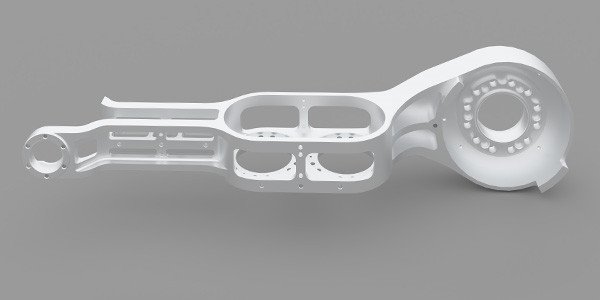
Precision and consistency minimize defects, crucial for robotics where tolerances affect performance. This leads to less rework and higher quality.
Cost savings accrue from lower labor needs, reduced waste via optimized paths, and faster ROI despite initial investments.
Flexibility allows quick reprogramming for custom batches, ideal for job shops handling diverse projects.
Safety improves as robots handle hazardous tasks, reducing injuries from heavy lifting or toxins.Scalability supports growth without proportional infrastructure increases, while predictability aids planning.
In robotics specifically, benefits include faster prototyping, customization for unique applications, and durability in harsh environments.
Overall, these advantages position CNC robotics as a catalyst for efficient, innovative automation.
Processes and Techniques
Beyond basic milling/turning, specialized techniques enhance CNC’s utility.
- High-Speed Machining (HSM): Spindle speeds over 20,000 RPM for faster cycle times on aluminum arms.
- Adaptive Machining: In-process probing adjusts paths for material variations, vital for large titanium parts.
- Hybrid Approaches: Combining CNC with additive manufacturing—print a near-net shape, then CNC finish critical surfaces.
- Automation Integration: Robotic tending systems load CNC machines, enabling lights-out production.
Challenges and Limitations
Despite strengths, CNC robotics faces hurdles. High initial costs for equipment, software, and integration deter small businesses.
Programming complexity requires skilled personnel; integrating disparate systems can lead to compatibility issues.
Accuracy limitations in robots—due to joint play, thermal expansion, or wear—may not match standalone CNC rigidity.
Reliability concerns include downtime from failures, and environmental sensitivity to dust or temperature affects performance.
Space requirements for large setups pose logistical challenges in compact facilities.
Overcoming these involves training, modular designs, and maintenance protocols, but they remain barriers to widespread adoption.
Trends and Future Outlook
Emerging trends include AI and ML for predictive maintenance and real-time optimizations, enhancing decision-making.
Cobots promote safe collaboration, with soft robotics enabling delicate handling.
Swarm robotics coordinates multiple units for large-scale tasks, while compact equipment democratizes access.
Cloud and IoT integrate systems for unified control, boosting efficiency.
Future outlook is optimistic: as markets grow, CNC robotics will address shortages, incorporate advanced materials, and expand into new sectors like renewable energy. Innovations like 3D simulation and hybrid manufacturing will further blur lines between CNC and additive processes.
Case Studies
Case Study 1: Automotive Assembly Robots
In Ford’s factories, CNC-machined components form the backbone of welding robots. Arms from 7075 aluminum, machined on 5-axis mills, enable precise spot welds at 1,500 per hour. This reduced defects by 30%, showcasing CNC’s reliability.
Case Study 2: Medical Robotics
Intuitive Surgical’s da Vinci system uses CNC-machined stainless steel instruments with micro-features. 5-axis machining ensures sterile, precise tools for minimally invasive surgery, improving patient outcomes.
Case Study 3: Warehouse Automation
Amazon’s Kiva robots feature CNC-turned wheels and frames from magnesium, optimizing for speed and energy efficiency. This allows seamless navigation in fulfillment centers.
Case Study 4: Space Exploration
NASA’s Perseverance rover includes CNC-machined titanium chassis parts, withstand extreme Martian conditions. Precision drilling for sample tubes highlights CNC’s role in mission-critical applications.
Emerging Trends and Future Prospects
As of 2025, trends include:
- AI-Enhanced CNC: Machine learning optimizes toolpaths, predicting wear and reducing downtime.
- Sustainable Machining: Eco-friendly coolants and recycled materials.
- Micro/Nano Machining: For swarm robotics, achieving features under 10 μm.
- Integration with Cobots: CNC machines collaborated with robots for flexible manufacturing cells.
- Digital Twins: Virtual simulations mirror physical CNC processes for real-time optimization.
Conclusion
CNC machining is the unsung hero of robotics and automation, providing the precision foundation upon which intelligent machines are built. From structural integrity to sensory precision, its applications are vast and evolving. As industries push towards greater autonomy, CNC will continue to innovate, ensuring robots are not just functional but transformative. For engineers and manufacturers, embracing advanced CNC techniques is key to staying competitive in this dynamic field.
Whether you’re designing the next surgical robot or automating a production line, CNC offers the tools to turn vision into reality. The future is machined with precision.