
CNC Machining for Different Industries
CNC machining technology is widely used in high-tech industries
CNC Machining for Military and Defense
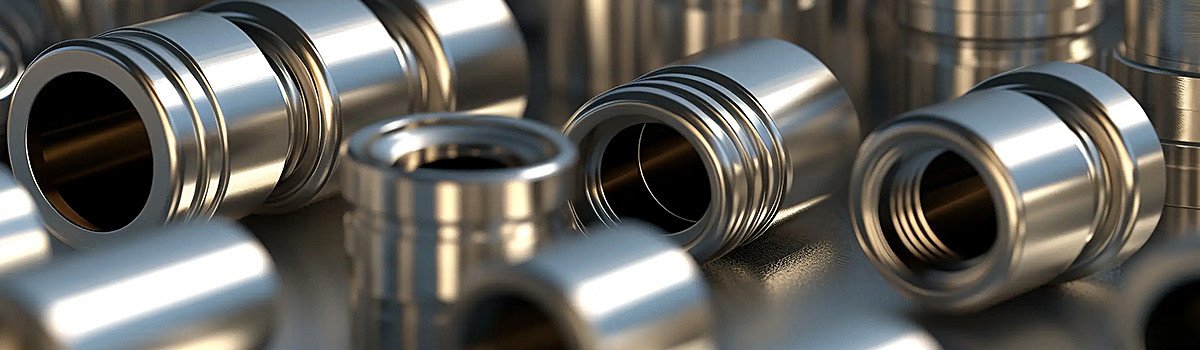
In the high-stakes world of military and defense, where precision can mean the difference between mission success and failure, manufacturing technologies play a pivotal role. Computer Numerical Control (CNC) machining stands out as a cornerstone of modern defense production, enabling the creation of complex, reliable components that meet stringent requirements. CNC machining involves the use of computer-controlled tools to shape materials with exceptional accuracy, automating processes that were once manual and prone to error. This technology has revolutionized how defense contractors produce everything from aircraft parts to weapon systems, ensuring consistency, efficiency, and innovation in an industry where lives and national security are on the line.
The defense sector demands parts that can withstand extreme conditions—high temperatures, corrosive environments, and intense mechanical stress—while adhering to tight tolerances often measured in microns. CNC machining excels here by allowing for the rapid production of prototypes and full-scale components from advanced materials like titanium and Inconel. Companies such as Lockheed Martin, a leader in aerospace and defense, rely heavily on CNC technologies to manufacture critical systems for fighter jets and unmanned aerial vehicles (UAVs). For instance, the Predator drone series by General Atomics uses CNC-machined parts for lightweight yet durable structures, highlighting the technology’s role in modern warfare.
Historically, the adoption of CNC in defense traces back to the mid-20th century, evolving from numerical control systems developed during the Cold War era to support military advancements. Today, it’s integral to supply chains for the U.S. Department of Defense and allies worldwide. With global defense spending projected to exceed $2 trillion annually, the demand for precision manufacturing is surging. CNC not only enhances operational readiness but also drives cost savings through reduced waste and faster turnaround times. However, it comes with challenges like regulatory compliance under ITAR (International Traffic in Arms Regulations) and the need for specialized expertise.
This article delves into the multifaceted role of CNC machining in military and defense applications. We’ll explore its history, operational mechanics, specific uses, materials, advantages, challenges, and future trends. By understanding CNC’s contributions, we gain insight into how this technology bolsters national security and pushes the boundaries of engineering excellence.
Table of Contents
ToggleHistory of CNC Machining in Military and Defense
The story of CNC machining in military and defense begins in the aftermath of World War II, when the need for complex, precise parts surged amid rapid technological advancements in aviation and weaponry. Initially, machining was manual, labor-intensive, and prone to human error, which limited production speed and accuracy. The U.S. Air Force, recognizing these limitations, funded research in the 1940s and 1950s to develop numerical control (NC) systems, the precursors to modern CNC. John T. Parsons, often credited as the father of NC, collaborated with MIT to create punched-tape systems that automated machine tools for helicopter rotor blades, marking a pivotal shift toward automation in defense manufacturing.
By the 1970s, the integration of computers transformed NC into CNC, allowing for more sophisticated programming and real-time adjustments. This evolution was driven by defense needs during the Cold War, where the U.S. and Soviet Union competed in arms development. CNC machines enabled the production of intricate components for fighter jets like the F-16 and submarines, reducing lead times from months to weeks. In the 1980s, advancements in microprocessors further enhanced CNC capabilities, making them essential for precision-guided munitions and stealth technology.
The Gulf War in the 1990s showcased CNC’s impact, as precision parts manufactured via CNC contributed to the effectiveness of smart bombs and advanced radar systems. Post-9/11, the focus shifted to rapid prototyping for counter-terrorism equipment, with CNC facilitating quick iterations of body armor components and drone parts. Today, companies like Baker Industries highlight how CNC has become integral to producing parts for satellites, military vehicles, and unmanned systems.
Globally, nations like Russia have developed import-substituting CNC machines for aircraft and helicopter parts, emphasizing self-reliance in defense production. However, controversies arise, such as allegations against U.S. firm HAAS Automation for supplying CNC parts to Russian military industries despite sanctions, underscoring the technology’s dual-use nature and the challenges of export controls.
The history also reflects economic implications: CNC has reduced waste and maximized material use, making it cost-effective for military budgets. From its roots in wartime innovation to its current status as a backbone of defense manufacturing, CNC machining’s trajectory illustrates a blend of technological progress and strategic necessity.
How CNC Machining Works in Defense Contexts
At its core, CNC machining is a subtractive manufacturing process where computer software directs tools to remove material from a workpiece, shaping it into the desired form. In defense applications, this process is amplified by high-precision machines capable of handling tough materials under strict protocols.
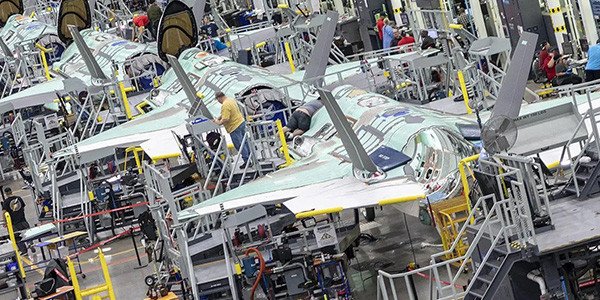
The workflow begins with design: Engineers use CAD (Computer-Aided Design) software to create 3D models of components, such as turbine blades or weapon housings. These models are converted into CAM (Computer-Aided Manufacturing) programs, generating G-code instructions for the CNC machine. Machines like mills, lathes, and routers then execute these commands.
In military settings, multi-axis CNC systems—often 4- or 5-axis—are prevalent, allowing tools to approach the workpiece from multiple angles without repositioning. For example, Swiss machining, a specialized lathe process, enables simultaneous cutting with multiple tools, ideal for high-volume production of small, precise parts like missile guidance pins.
Materials are clamped onto the machine bed, and tools (drills, end mills) rotate at high speeds—up to 20,000 RPM—to carve away excess. Coolants prevent overheating, especially with heat-resistant alloys. Quality control integrates sensors for real-time monitoring, ensuring tolerances as tight as ±0.01mm.Defense-specific adaptations include secure facilities to protect classified designs and ITAR-compliant software to prevent data breaches. This ensures that CNC processes not only produce parts but also safeguard sensitive information.
Fundamentals of CNC Machining
At its core, CNC machining is a subtractive manufacturing process where material is removed from a solid block (workpiece) using rotating tools controlled by computer software. The process begins with a digital model created in CAD software, which is then converted into G-code—a programming language that instructs the machine on movements, speeds, and feeds.
Key components include the machine tool (e.g., mill, lathe, or router), controller, and spindle. Multi-axis machines, such as 5-axis CNCs, allow for complex geometries by moving the tool or workpiece in multiple directions simultaneously, ideal for defense parts with curved surfaces like turbine blades or missile casings. For military applications, high-precision machines minimize vibrations to achieve superior geometric quality.
In defense, CNC often involves specialized setups, such as those from C.R. Onsrud, designed to reduce material handling and fixturing for military-grade materials. The technology supports various operations: milling for flat surfaces, turning for cylindrical parts, and grinding for fine finishes. Integration with software like Siemens’ all-in-one CAD-to-CNC solutions minimizes human error, crucial for high-stakes military production.
Quality assurance is embedded through features like in-process monitoring and post-machining inspections using coordinate measuring machines (CMMs). This ensures compliance with defense standards, where tolerances of ±0.01mm are common for aerospace and missile systems.
Overall, CNC’s fundamentals—automation, precision, and versatility—make it indispensable for defense.
Applications of CNC Machining in Military and Defense
Computer Numerical Control (CNC) machining has become a cornerstone of modern military manufacturing. Its ability to produce highly complex, precise, and repeatable components under the most demanding specifications makes it irreplaceable in defense applications. From fighter jets to submarines, missiles to battlefield medical devices, CNC technology touches nearly every platform and system critical to national security.
Aerospace and Aviation
The aerospace sector is one of the largest consumers of defense-grade CNC machining. Modern fighter aircraft such as the Lockheed Martin F-35 Lightning II and F-22 Raptor depend on thousands of CNC-machined parts. Titanium and aluminum structural components, engine turbine blades, wing spars, landing gear assemblies, and hydraulic manifolds all require tolerances as tight as ±0.0005 inches (12.7 μm). These parts must withstand extreme G-forces, temperature swings from -55°C to over 400°C, and prolonged exposure to corrosive environments.
Fifth-generation stealth aircraft demand even greater precision. Radar-absorbent material (RAM) coatings and edge-alignment features on inlet lips, weapon bay doors, and exhaust nozzles are machined on 5-axis and 7-axis CNC centers to maintain the aircraft’s low observable signature. Lockheed Martin has publicly stated that advanced CNC capabilities reduced F-22 production time by approximately 30% compared to earlier manual and 3-axis methods.
Unmanned aerial vehicles (UAVs) like the MQ-9 Reaper and RQ-4 Global Hawk also rely heavily on CNC-machined airframes, sensor turrets, and composite mounting structures. The lightweight yet rigid requirements of long-endurance drones make multi-axis CNC machining the only viable method for achieving the necessary strength-to-weight ratios.
Ground Vehicles and Armored Systems
Main battle tanks and infantry fighting vehicles operate in some of the harshest environments on Earth. The M1 Abrams, for example, uses CNC-machined 120 mm smoothbore gun barrels, transmission housings, torsion bars, and turret drive components. These parts must survive shock loads, dust ingestion, and thermal cycling while maintaining sub-millimeter accuracy for ballistic performance.
Modernization programs for vehicles like the Bradley Fighting Vehicle and the new XM30 (formerly OMFV) incorporate CNC-machined lightweight aluminum and composite armor attachment points, reducing overall weight without sacrificing protection. Precision-machined suspension components ensure consistent ride height and damping characteristics across thousands of units—a level of repeatability impossible without CNC automation.
Naval and Submarine Applications
Naval platforms present unique challenges: constant exposure to saltwater, extreme pressure at depth, and the need for acoustic quieting. CNC machining produces critical components such as propeller blades, pump impellers, periscopes, sonar domes, and valve bodies from corrosion-resistant alloys like nickel-aluminum bronze, Monel, and duplex stainless steels.
Virginia-class and Columbia-class submarines use CNC-machined titanium and HY-80/100 steel fittings for pressure hull penetrations. These parts must maintain perfect sealing under hundreds of atmospheres while minimizing magnetic signature. General Dynamics Electric Boat and Newport News Shipbuilding operate some of the largest 5-axis gantry mills in the world specifically for these oversized, high-precision components.
Weapon Systems and Munitions
Firearms, missiles, and artillery represent the classic domain of precision machining. Modern service rifles (M4/M16 variants, SCAR, HK416) use CNC-machined 7075-T6 aluminum lower and upper receivers with tolerances that ensure interchangeability across millions of units.
Missile and rocket programs rely on CNC for guidance section housings, fin actuators, nozzle throats, and warhead casings. Hypersonic glide vehicles and boost-glide weapons push CNC technology to its limits, requiring machining of refractory metals and carbon-carbon composites that can survive temperatures above 2,000°C during flight.
Precision-guided munitions such as the JDAM, Small Diameter Bomb, and Excalibur artillery round incorporate CNC-machined control fins and GPS/INS housings that enable circular error probabilities (CEP) of just a few meters.
Electronics, Communications, and Surveillance
Modern warfare is increasingly electronic. Radar arrays, electronic warfare pods, satellite communication antennas, and encrypted radio housings all require intricately machined enclosures that provide EMI/RFI shielding, thermal management, and environmental sealing. CNC milling creates complex internal cooling channels and waveguide structures that would be impossible with traditional methods.
Portable battlefield systems—night-vision devices, drone controllers, tactical satellites, and ruggedized laptops—use CNC-machined magnesium or aluminum cases that balance extreme durability with minimal weight.
Medical and Support Equipment
Even military medicine depends on CNC precision. Portable surgical tools, prosthetic components for wounded warriors, field-deployable X-ray machines, and blood analysis devices all incorporate CNC-machined stainless steel and titanium parts designed for sterilization and repeated use in austere environments.
Emerging and Future Applications
Hypersonic weapons, directed-energy systems, and next-generation space defense platforms are driving new frontiers in CNC machining. Materials such as tungsten, molybdenum, and ceramic matrix composites (CMCs) require specialized tooling, cryogenic cooling, and ultra-high-speed spindles. Meanwhile, hybrid manufacturing—combining additive and subtractive processes—is enabling single-piece assemblies that reduce weight and part count in future platforms.
In summary, CNC machining is not merely a manufacturing process in defense—it is a strategic enabler. It delivers the precision, repeatability, material versatility, and rapid iteration capability that modern military systems demand. From the depths of the ocean to the edge of space, virtually every advanced weapon system fielded today owes its performance, reliability, and survivability to the quiet precision of CNC machines working behind the scenes.
Materials Used in CNC Machining for Defense
Defense applications require materials that offer strength, lightweight properties, and resistance to extreme conditions. Titanium is a staple due to its high strength-to-weight ratio and corrosion resistance, ideal for aircraft frames and missile bodies. Inconel and other nickel alloys provide heat resistance for engine parts and turbine blades.
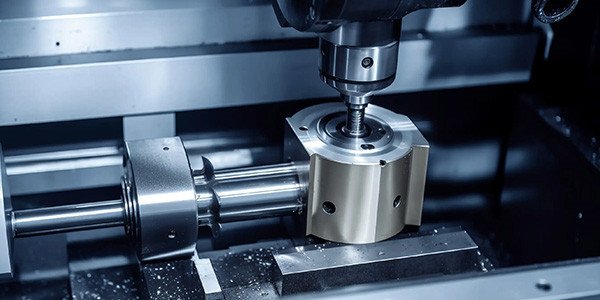
Aluminum alloys, lightweight yet strong, are used in aerospace structures and vehicle components, with companies like Tecnolanema specializing in high-precision machining of these materials. Composites and advanced polymers, machined via CNC, offer stealth properties for radar-absorbing parts.
Steel variants, including stainless and armored steels, are employed for weapon barrels and vehicle armor. Exotic materials like tungsten for penetrators require specialized CNC setups to handle hardness.CNC’s versatility extends to non-metals like foam and plastics for prototypes and lightweight components in military gear. Material selection impacts machinability; high-speed CNC reduces tool wear on tough alloys.
Sustainability trends push for recyclable materials, but defense prioritizes performance. Overall, CNC optimizes material use, minimizing waste in costly defense projects.
Advantages of CNC Machining in Defense
CNC machining offers unparalleled precision and repeatability, crucial for defense where deviations can be catastrophic. Tolerances of ±0.001 inches ensure parts fit perfectly in assemblies like radar systems.Efficiency is another key benefit: Automation reduces labor costs and production time, enabling rapid prototyping for new technologies. This accelerates innovation, as seen in quick iterations for drone designs.
Material versatility allows working with exotic alloys, minimizing waste through optimized tool paths. Scalability supports both low-volume custom parts and high-volume runs, vital for military logistics.Security enhancements include in-house production to protect intellectual property, complying with ITAR. Overall, CNC boosts readiness by delivering reliable, high-performance components.
Challenges and Limitations
Despite its strengths, CNC machining faces hurdles in defense. High initial costs for machines and software can strain budgets, though long-term savings offset this.
Size limitations restrict large parts; heavy components may distort during machining. Human error in programming persists, necessitating skilled operators.
Regulatory compliance, including ITAR and Mil-Spec, adds complexity and delays. Supply chain vulnerabilities, like material shortages, impact production.
Scalability challenges arise in shifting from prototypes to mass production, requiring process adjustments. Cybersecurity threats to CNC systems pose risks in classified environments.
Addressing these involves training, hybrid manufacturing, and robust quality controls.
Future Trends
Looking ahead, AI and machine learning will optimize CNC processes, predicting maintenance and improving efficiency. Additive manufacturing hybrids with CNC will enable complex hybrid parts.
Sustainable practices, like eco-friendly materials, will gain traction. Autonomous CNC systems for remote operations in conflict zones are emerging.
Advancements in 5-axis and beyond will handle more intricate designs. Global shifts toward import substitution will drive innovation.
Conclusion
CNC machining remains a vital force in military and defense, driving precision and innovation. As threats evolve, so will this technology, ensuring superior capabilities for future generations.