
CNC Machining for Different Industries
CNC machining technology is widely used in high-tech industries
CNC Machining for Healthcare:
Revolutionizing Medical Device Manufacturing
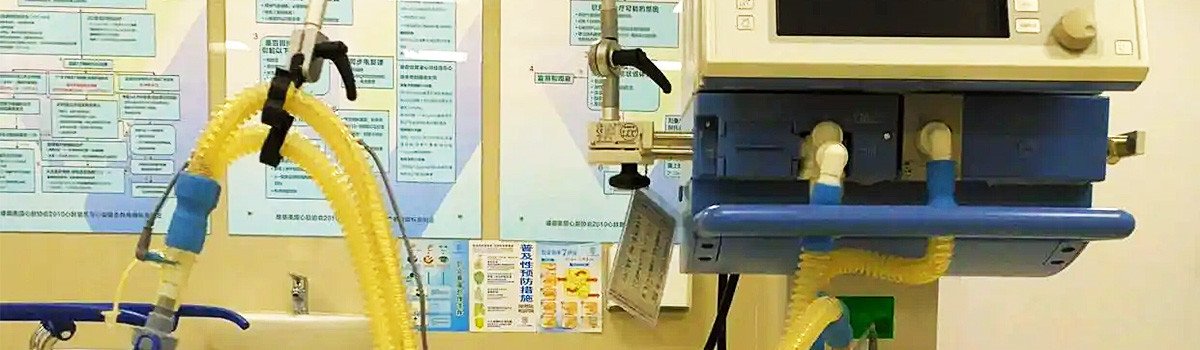
In the fast-paced world of modern healthcare, precision and reliability are paramount. Computer Numerical Control (CNC) machining has emerged as a cornerstone technology, enabling the production of intricate medical components with unparalleled accuracy. CNC machining is an automated manufacturing process where computer software dictates the movement of factory tools and machinery, allowing for the precise shaping of materials into complex parts.
This technology has transformed healthcare by facilitating the creation of everything from surgical instruments to custom implants, ensuring that medical devices meet stringent safety and performance standards.The significance of CNC machining in healthcare cannot be overstated. With an aging global population and rising demand for advanced medical treatments, the need for high-quality, customizable devices is surging. For instance, as the number of Americans aged 65 and older is projected to nearly double from 52 million in 2018 to 95 million by 2060, the healthcare sector faces increased pressure to innovate.
CNC machining addresses this by offering micron-level precision, which is essential for components that interact directly with the human body. Errors in medical devices can have life-altering consequences, making the repeatability and consistency of CNC processes invaluable.
Historically, CNC machining originated in the mid-20th century, evolving from numerical control (NC) systems to sophisticated computer-driven operations. Its adoption in healthcare paralleled advancements in medical technology, allowing for the recreation of complex human anatomies that were previously unattainable through manual methods.
Today, CNC is integral to producing biocompatible parts that enhance patient outcomes, reduce recovery times, and support personalized medicine. This article explores the history, mechanisms, applications, advantages, materials, case studies, challenges, and future trends of CNC machining in healthcare, highlighting its role in shaping the industry’s future.
Table of Contents
ToggleHistory of CNC Machining in the Medical Field
The origins of CNC machining trace back to the post-World War II era, when the need for precise and automated manufacturing surged across industries, including aerospace and automotive. The first prototype of a CNC machine was developed in 1952 by researchers at the Massachusetts Institute of Technology (MIT), funded by the U.S. Air Force. This early system used punched tape to control machine tools, marking a shift from manual operations to computerized precision. By the 1960s, CNC technology had matured enough to enter commercial production, revolutionizing manufacturing by improving accuracy and efficiency.
In the medical field, CNC machining’s adoption began in the 1970s as healthcare demands for complex, high-precision components grew. Early applications focused on producing surgical instruments and basic implants, where traditional methods like manual milling fell short in consistency. The 1980s saw a boom with the rise of computer-aided design (CAD) software, allowing engineers to create detailed 3D models that CNC machines could interpret directly. This era coincided with advancements in biomaterials, enabling the machining of titanium alloys for hip replacements and dental implants.
The 1990s brought further integration as the medical device industry expanded globally. CNC machining became crucial for prototyping and small-batch production, particularly in orthopedics and cardiology. For example, the development of pacemakers and stents required micron-level precision, which CNC delivered reliably. The turn of the millennium introduced multi-axis CNC machines, such as 5-axis systems, which could handle intricate geometries without repositioning the workpiece, reducing errors and production time.
By the 2010s, CNC machining had become synonymous with personalized medicine. The ability to produce custom prosthetics and implants based on patient scans via CAD/CAM integration transformed patient care. During the COVID-19 pandemic, CNC machines were repurposed for rapid production of ventilator parts and PPE components, highlighting their versatility in crisis response. Companies like those specializing in micro-machining pushed boundaries, creating tiny components for minimally invasive surgeries.
Throughout its history, CNC machining in medicine has evolved hand-in-hand with regulatory frameworks. The FDA’s emphasis on quality systems in the 1990s led to enhanced traceability in CNC processes, ensuring every part could be audited. Today, with Industry 4.0, CNC systems incorporate IoT for real-time monitoring, building on decades of innovation. This historical progression underscores CNC’s role in making healthcare more accessible and effective, from rudimentary tools to sophisticated, life-enhancing devices.
How CNC Machining Works
At its core, CNC machining is a subtractive manufacturing process where computer software directs machine tools to remove material from a workpiece, shaping it into the desired form. The process begins with design: Engineers use CAD software to create a digital model of the part. This model is then converted into a CNC program using Computer-Aided Manufacturing (CAM) software, which generates G-code—a language that instructs the machine on movements, speeds, and tool paths.
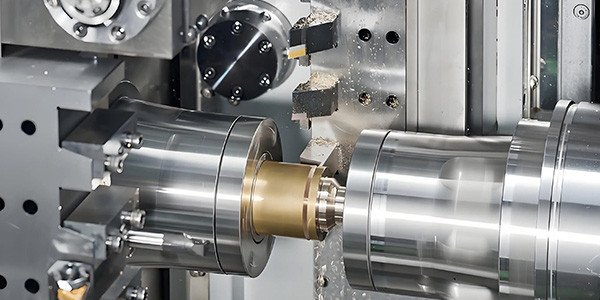
The CNC machine itself typically includes a controller, motors, spindles, and cutting tools. Common types include mills (for flat or curved surfaces), lathes (for cylindrical parts), and routers (for softer materials). In a medical context, 3-axis, 4-axis, or 5-axis machines are used for varying complexity; 5-axis allows simultaneous movement in multiple directions, ideal for intricate implants.
Once programmed, the machine secures the raw material (a block or bar) on a fixture. The cutting tool, often made of carbide or diamond for durability, rotates at high speeds (up to 20,000 RPM) while the workpiece moves along axes. Coolants prevent overheating, especially crucial for biocompatible materials that could warp. Sensors monitor the process for deviations, ensuring tolerances as tight as ±0.001 mm.
Post-machining, parts undergo finishing like polishing or anodizing to enhance surface quality, vital for medical applications to reduce infection risks. Quality control involves coordinate measuring machines (CMM) to verify dimensions. In healthcare, this workflow ensures sterility and compliance, with documentation tracing every step. Overall, CNC’s automation minimizes human error, making it reliable for high-stakes medical production.
Applications in Healthcare
Computer Numerical Control (CNC) machining has become a cornerstone of medical device manufacturing, enabling the production of highly precise, reliable, and patient-specific components across virtually every healthcare discipline. Its subtractive process, combined with multi-axis capabilities and micron-level accuracy, makes it uniquely suited to the stringent demands of medical applications where even minor deviations can affect patient safety and efficacy.
Surgical Instruments and Tools
One of the most visible uses of CNC machining is in the production of surgical instruments. Scalpels, forceps, retractors, clamps, scissors, and bone saws all require razor-sharp edges, smooth surfaces, and perfect balance. CNC turning and milling in stainless steel (typically 17-4 PH or 316L) or titanium ensures that these tools are not only durable and corrosion-resistant but also ergonomically optimized. Multi-axis machining allows complex geometries such as curved jaws or serrated grips to be produced in a single setup, reducing assembly errors and improving sterility. In robotic-assisted surgery (e.g., da Vinci systems), CNC-fabricated end-effectors and wrist mechanisms deliver the sub-millimeter precision required for delicate procedures.
Orthopedic Implants
Orthopedic devices represent one of the largest and most demanding segments. Hip and knee replacements, spinal fusion cages, trauma plates, and intramedullary nails must withstand millions of load cycles while integrating with living bone. CNC 5-axis machining of titanium alloys (Ti-6Al-4V) and cobalt-chrome enables the creation of porous surface structures that promote osseointegration—the direct structural and functional connection between living bone and the implant surface. Patient-specific implants, designed from CT or MRI scans, are now routine; CNC machines translate digital models into physical parts with tolerances as tight as ±0.005 mm, dramatically improving fit and reducing revision rates.
Dental and Craniomaxillofacial Applications
In dentistry, CNC milling has revolutionized restorative and implant procedures. Dental crowns, bridges, abutments, and full-arch frameworks are machined from zirconia, titanium, or cobalt-chrome with exceptional aesthetic and mechanical properties. The rise of same-day dentistry is largely enabled by chairside or lab-based 5-axis CNC mills that finish restorations in minutes. Similarly, craniomaxillofacial surgeons rely on CNC-machined patient-specific plates and guides for reconstructive surgery following trauma or tumor resection.
Cardiovascular and Minimally Invasive Devices
The miniaturization trend in cardiovascular intervention depends heavily on micro-CNC machining. Coronary stents, heart valve frames, pacemaker housings, and catheter components are produced using Swiss-style lathes and wire EDM with feature sizes below 100 microns. Materials such as nitinol (for its superelasticity) and 316LVM stainless steel are precisely cut and electropolished to eliminate microscopic defects that could trigger thrombosis.
Diagnostic and Imaging Equipment
Behind every MRI, CT, or ultrasound machine lies an array of CNC-machined components. Non-magnetic aluminum, titanium, or specialized plastics are used for gradient coils, RF shields, patient tables, and detector mounts. Vibration damping, thermal stability, and electromagnetic compatibility are achieved through intricate internal geometries that only CNC can reliably reproduce at scale.
Prosthetics, Orthotics, and Rehabilitation Devices
Modern prosthetics have shifted from standardized designs to fully customized solutions. CNC machining of carbon-fiber composites, titanium, and medical-grade polymers allows prosthetists to create sockets, pylons, and feet tailored to an individual’s residual limb and gait pattern. Exoskeletons and powered orthoses for stroke or spinal-cord-injury patients incorporate CNC-machined gearboxes, linkages, and sensor mounts that enable natural movement and real-time adjustment.
Emerging and Specialized Applications
The versatility of CNC continues to open new frontiers:
- Microfluidic “lab-on-a-chip” devices for rapid diagnostics feature channels as small as 10–50 μm machined into PMMA, glass, or silicon.
- Ophthalmic surgery benefits from CNC-produced intraocular lenses (IOLs), phacoemulsification handpieces, and femtosecond laser components.
- Drug delivery systems—insulin pumps, implantable ports, and intrathecal pumps—rely on precisely machined gears, valves, and reservoirs for accurate to within microns.
- Veterinary medicine increasingly mirrors human applications, with CNC implants for horses, dogs, and exotic species.
- During the COVID-19 pandemic, machine shops worldwide used CNC to rapidly manufacture ventilator valves, swab handles, and face-shield components when traditional supply chains collapsed.
Hybrid Manufacturing and Future Potential
Many forward-looking manufacturers now combine CNC machining with additive manufacturing. 3D-printed lattice structures can be finished or fitted with threaded inserts via CNC, yielding implants that are both lightweight and mechanically robust. This hybrid approach is particularly valuable for tissue-engineering scaffolds and bioresorbable devices.
In summary, CNC machining’s unmatched precision, repeatability, material versatility, and scalability make it indispensable across the healthcare spectrum—from the operating room to the research laboratory. As personalized medicine and minimally invasive techniques continue to advance, CNC will remain at the heart of innovation, directly translating digital designs into life-improving and life-saving devices.
Materials Used in CNC Machining for Healthcare
Selecting the right materials is paramount in medical CNC machining, as they must be biocompatible, sterilizable, and mechanically robust. Titanium and its alloys, like Ti-6Al-4V, are favorites for implants due to their corrosion resistance, low density, and osseointegration properties. CNC easily shapes titanium into hip stems or dental screws, withstanding body fluids without degrading.
Stainless steel, particularly grades 316L and 304, is widely used for surgical instruments and temporary implants. Its strength, affordability, and ease of sterilization make it ideal for tools like hemostats. Cobalt-chrome alloys offer superior wear resistance for joint replacements, machined via CNC for smooth articulations.
Polymers like PEEK provide alternatives for non-load-bearing parts, such as spinal cages or cranial plates. PEEK’s radiolucency allows clear imaging, and CNC mills it precisely without fracturing. Other plastics, including ABS and polycarbonate, form device housings, offering impact resistance.
Ceramics like alumina and zirconia are CNC-machined for dental restorations, valued for biocompatibility and aesthetics. Advanced composites, blending carbon fibers with resins, create lightweight prosthetics.
Material choice considers factors like machinability—titanium requires slow speeds to avoid work-hardening—and regulatory approval. CNC’s compatibility with these materials ensures healthcare parts meet ISO 13485 standards, balancing performance with safety.
Adding: Biocompatible polymers like UHMWPE (ultra-high-molecular-weight polyethylene) are used in joint bearings for low friction. CNC’s precision prevents burrs that could cause inflammation. In cardiovascular applications, nitinol—a shape-memory alloy—is machined for stents, leveraging its superelasticity.
For diagnostic tools, aluminum alloys provide lightweight frames, anodized for corrosion protection. Emerging materials include bioresorbable polymers like PLA, CNC-machined for temporary scaffolds that dissolve in the body.
Sustainability influences material selection, with recyclable metals reducing environmental impact. Overall, CNC’s versatility with diverse materials drives innovation in healthcare manufacturing.
Advantages of CNC Machining in Healthcare
CNC machining offers numerous benefits that align perfectly with healthcare’s demands. Foremost is precision: Machines achieve tolerances under 0.01 mm, critical for implants fitting seamlessly into the body, reducing complications. Repeatability ensures every part is identical, vital for mass-produced devices like syringes.
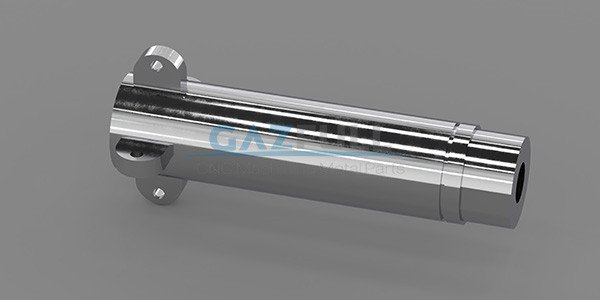
Customization is another key advantage. Patient-specific designs from CT scans allow tailored prosthetics, improving efficacy and comfort. Speed is enhanced; once programmed, CNC produces parts quickly, accelerating prototyping and market entry.
Cost-effectiveness arises from minimal waste and automation, lowering labor costs. For low-volume runs, it’s economical without tooling investments. Versatility with materials—from metals to plastics—supports diverse applications.
In quality control, CNC’s digital nature provides full traceability, aiding FDA compliance. It also enables complex geometries impossible manually, like internal channels in instruments.
Overall, these advantages enhance patient safety, reduce healthcare costs, and foster innovation.
Expanding: Durability of CNC-machined parts withstands repeated sterilization, extending device lifespan. In surgical tools, sharp edges remain consistent, minimizing tissue trauma.
Integration with AI optimizes tool paths, reducing cycle times. For medical research, rapid iteration speeds development of new therapies.
Environmental benefits include less material waste compared to casting. In global supply chains, CNC’s reliability ensures timely delivery during shortages.
Furthermore, CNC supports hybrid manufacturing, combining with additive methods for optimized parts. Its scalability from prototypes to production streamlines workflows, making it indispensable for agile healthcare manufacturing.
Challenges in CNC Machining for Medical Manufacturing
Despite its strengths, CNC machining in healthcare faces several hurdles. Regulatory compliance is foremost; meeting FDA or EU MDR standards requires extensive documentation, validation, and cleanroom environments, increasing costs.
Material limitations pose issues. Biocompatible substances like titanium are hard to machine, causing tool wear and heat buildup, potentially compromising part integrity. Achieving tight tolerances while maintaining efficiency is challenging, especially for micro-parts.
Supply chain disruptions, as seen in pandemics, affect material availability and lead times. Complex geometries may require multiple setups, raising error risks.
Sterility demands post-processing like passivation, adding steps. Skilled labor shortages for programming and operation hinder adoption.
Cost for high-precision machines is prohibitive for small firms. Rapid technological changes require constant upgrades.
Solutions include advanced software for simulation and hybrid approaches to mitigate these.
Expanding: Design constraints limit undercuts or deep cavities, necessitating redesigns. In high-volume production, scaling while preserving quality is tough.
Environmental regulations on coolants and waste add complexity. Intellectual property protection in custom designs is vital.
To address, manufacturers invest in training and automation. Collaborative ecosystems with suppliers streamline chains.
Moreover, validating new materials for biocompatibility takes time. In personalized medicine, data privacy from patient scans is a concern.
Future-oriented strategies like AI-driven predictive maintenance can reduce downtime, helping overcome these challenges.
The rapid pace of medical innovation means CNC must adapt to new device requirements, such as flexible electronics integration, which traditional CNC struggles with.
Case Studies
Case studies illustrate CNC’s real-world impact in healthcare. One notable example is the production of custom orthopedic implants by companies like Stryker, using CNC to machine titanium hip components based on patient MRI data, resulting in better fit and reduced revision surgeries.
In dental, Align Technology employs CNC for Invisalign aligners’ molds, enabling mass customization for millions of patients.During COVID-19, Ford collaborated with GE Healthcare to CNC-machine ventilator parts, ramping production to meet demand.
StarFish Medical and Claris Healthcare used CNC for remote patient monitoring devices, machining precise housings for sensors.
AIP Precision Machining combined CNC with 3D printing for hybrid medical components, improving efficiency in prototypes.
These cases show CNC’s role in innovation, scalability, and crisis response.
Expanding: In another case, Hartford Technologies utilized Swiss CNC for miniature medical balls in valves, ensuring precision for cardiac devices. Owens Industries machined complex components for MRI systems, demonstrating micron accuracy.
3ERP prototyped surgical robots using CNC, accelerating development.
MacFab tackled challenges in medical CNC by optimizing for tight tolerances in prosthetics.
These examples highlight how CNC overcomes industry hurdles to deliver high-quality outcomes.
Furthermore, in a study by DATRON, in-house CNC for medical prototyping reduced lead times by 50%, allowing faster iteration.
Pinnacle Metal’s application in cardiovascular tools showed repeatability in stent production.
Claris Healthcare’s partnership with Michigan CNC for sensor enclosures improved patient monitoring reliability.
Future Trends
The future of CNC machining in healthcare is shaped by integration with AI and robotics. AI will optimize tool paths and predict failures, enhancing efficiency.
Miniaturization for micro-devices like implantable sensors will advance with ultra-precision CNC.
Hybrid manufacturing—merging CNC with additive—will create complex, bioresorbable parts. Sustainability focus will promote eco-friendly materials and processes.
IoT-enabled smart factories will enable real-time quality control. Personalized medicine will expand with AI-driven customization.
By 2030, CNC could revolutionize telemedicine devices and nanotech in healthcare.
Expanding: Emerging trends include quantum computing for simulation and blockchain for supply chain traceability.
Automation will reduce human intervention, minimizing contamination risks.In regenerative medicine, CNC will machine scaffolds for tissue growth.
Global market growth to $95B by 2025 underscores CNC’s essential role.
Advancements in multi-material machining will enable functional gradients in implants.
VR for training CNC operators will accelerate skill development.
The convergence with big data will predict patient needs, driving proactive manufacturing.
Conclusion
CNC machining has profoundly shaped healthcare, offering precision and innovation that save lives. As technology evolves, its role will only grow, promising a future of advanced, accessible medical solutions.
Expanding: From history to future, CNC’s journey reflects human ingenuity in improving health. Despite challenges, its advantages far outweigh, ensuring continued adoption. Stakeholders must invest in R&D to maximize benefits, ultimately enhancing global wellbeing.
In summary, CNC is the backbone of modern medical manufacturing, blending art and science for better patient care.