
CNC Machining for Different Industries
CNC machining technology is widely used in high-tech industries

CNC Machining for Energy Storage:
Precision Manufacturing Powering the Future
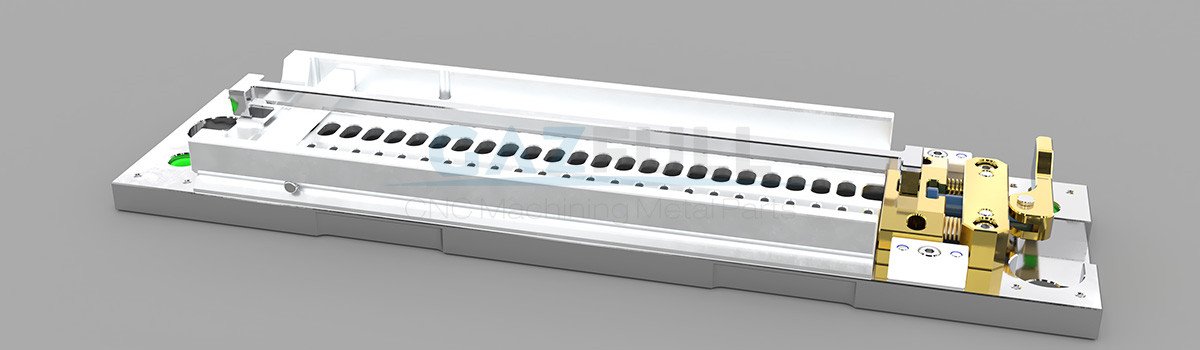
In an era defined by the urgent need for sustainable energy solutions, energy storage technologies have emerged as a cornerstone of the global transition toward renewable power sources. From lithium-ion batteries powering electric vehicles (EVs) to large-scale grid storage systems harnessing solar and wind energy, the ability to store and efficiently release energy is pivotal. However, the effectiveness of these systems relies not just on advanced chemistry or electronics but also on the precision engineering of their physical components. This is where Computer Numerical Control (CNC) machining plays a transformative role.
 
CNC machining is a subtractive manufacturing process that uses computer-controlled tools to remove material from a workpiece, creating intricate parts with high accuracy. Unlike traditional manual machining, CNC systems interpret digital designs—often from CAD (Computer-Aided Design) software—and execute them with minimal human intervention, ensuring repeatability and tight tolerances down to microns. In the context of energy storage, CNC machining enables the production of critical components such as battery enclosures, heat exchangers, electrode holders, and structural frames that must withstand extreme conditions like high temperatures, vibrations, and corrosive environments.
 
The intersection of CNC machining and energy storage is particularly timely. As the world grapples with climate change, governments and industries are investing billions in energy storage infrastructure. According to the International Energy Agency (IEA), global energy storage capacity is projected to grow from 176 GW in 2020 to over 1,000 GW by 2040. This boom demands manufacturing techniques that can scale efficiently while maintaining quality. CNC machining, with its versatility across materials like aluminum, titanium, and advanced composites, fills this gap by enabling rapid prototyping, custom production, and mass manufacturing tailored to energy storage needs.
 
This article delves into the multifaceted role of CNC machining in energy storage. We will explore its historical evolution, key applications, material considerations, advantages over alternative methods, real-world case studies, emerging trends, and future prospects. By understanding this synergy, we can appreciate how precision manufacturing is not just supporting but accelerating the energy revolution.

Historical Evolution of CNC Machining in Energy Storage

The roots of CNC machining trace back to the mid-20th century, when numerical control (NC) systems were developed for aerospace and automotive industries during World War II. By the 1970s, the integration of computers transformed NC into CNC, allowing for more complex operations. Initially, energy storage was a niche field, dominated by lead-acid batteries for automotive starters and basic uninterruptible power supplies (UPS). CNC’s entry into this domain was gradual, coinciding with the rise of advanced batteries in the 1990s.
 
The lithium-ion battery revolution, spearheaded by Sony’s commercialization in 1991, marked a turning point. Early lithium-ion cells required precise casings to prevent leaks and ensure safety—tasks ideally suited for CNC’s accuracy. For instance, the cylindrical cells in early laptops needed aluminum cans machined to exact dimensions to house electrodes and electrolytes securely.
 
As renewable energy gained traction in the 2000s, energy storage systems (ESS) evolved from small-scale to grid-level applications. CNC machining adapted by incorporating multi-axis capabilities (e.g., 5-axis milling) to fabricate complex geometries for flow batteries and supercapacitors. The 2010s saw a surge in EV adoption, with companies like Tesla relying on CNC for battery pack components. Tesla’s Gigafactories, for example, employ automated CNC lines to produce structural elements that integrate cooling channels directly into the battery housing, enhancing thermal management.
 
Parallel advancements in software, such as CAM (Computer-Aided Manufacturing) tools like Mastercam and SolidWorks, have streamlined the design-to-production pipeline. These tools allow engineers to simulate machining processes virtually, reducing waste and time—critical for energy storage where rapid iteration is needed to match evolving chemistries like solid-state batteries.
 
Today, CNC machining is integral to the supply chain of energy storage, from R&D labs prototyping next-gen sodium-ion batteries to factories churning out components for massive pumped hydro storage facilities. This evolution reflects a broader shift toward Industry 4.0, where CNC systems integrate with IoT for real-time monitoring and predictive maintenance.

Energy Storage Technologies: A Brief Primer
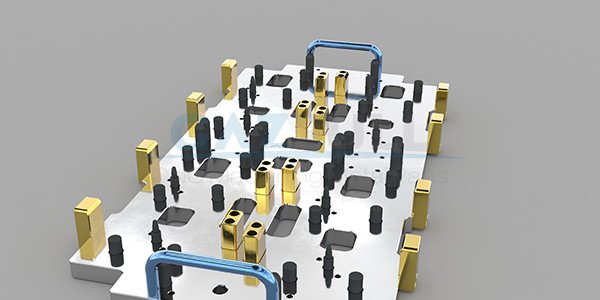
Energy storage is the backbone of a reliable renewable energy future. By capturing surplus electricity when production is high and releasing it when demand peaks or generation drops, storage systems smooth out the intermittency of solar and wind power while enabling electrification of transport and industry. Today’s storage landscape includes four major technology families, each presenting distinct engineering challenges that make precision manufacturing—particularly CNC machining—essential.
1. Electrochemical Storage
This category dominates the market and includes rechargeable batteries and supercapacitors. Lithium-ion batteries remain the workhorse for electric vehicles and grid applications due to their high energy density, while emerging solid-state, sodium-ion, and flow batteries promise improved safety and cost. Supercapacitors, on the other hand, excel at delivering bursts of power in seconds, making them ideal for regenerative braking and grid frequency regulation. All electrochemical devices demand extremely precise components: battery enclosures with integrated liquid-cooling channels, high-conductivity busbars, sealed electrode housings, and explosion-proof end plates. Even micron-level tolerances can affect thermal performance, electrical resistance, and long-term cycle life. CNC machining delivers these requirements consistently, whether milling lightweight aluminum cooling plates or turning copper current collectors.
2. Mechanical Storage

Mechanical systems convert electrical energy into physical potential or kinetic energy. Flywheel energy storage spins a massive rotor at speeds up to 50,000 rpm in a vacuum, delivering instant power for seconds to minutes—perfect for stabilizing grid frequency or powering data centers during outages. Pumped-storage hydropower, the oldest and largest form of grid storage, moves water between reservoirs, while compressed air energy storage (CAES) compresses air into underground caverns or tanks. Flywheels require ultra-precise rotor balancing and high-strength composite or steel hubs machined to tolerances of a few microns to prevent catastrophic failure at extreme speeds. Similarly, large CAES vessels and turbine components need accurate threading, sealing surfaces, and corrosion-resistant coatings—all routine tasks for modern CNC equipment.

3. Thermal Energy Storage

Thermal storage captures heat or cold rather than electricity directly. Concentrated solar power plants use molten salt tanks to store heat collected during the day for nighttime generation. Phase-change materials and chilled-water or ice systems provide low-cost cooling for buildings and industrial processes. These systems rely on robust heat exchangers, insulated vessels, and piping networks that must withstand repeated thermal cycling and corrosive salts. CNC machining produces the intricate finned tubes, manifolds, and containment structures that maximize heat-transfer efficiency while minimizing material use and weight.

4. Chemical Storage (Hydrogen)
Hydrogen is both an energy carrier and a long-duration storage medium. Excess renewable electricity powers electrolyzers to split water into hydrogen and oxygen; the hydrogen is later recombined in fuel cells to generate electricity. Key components include bipolar plates with micro-flow channels, high-pressure composite or metal-lined storage tanks (up to 700 bar), and precision valve bodies. CNC and electrical discharge machining (EDM) are critical for creating the fine channel geometries in bipolar plates and ensuring leak-proof seals in high-pressure systems.
 
Across all four categories, successful energy storage depends on components that are durable, lightweight, thermally efficient, and produced at scale. CNC machining meets these demands with unmatched precision, repeatability, and flexibility. It enables rapid prototyping of next-generation designs, seamless transition to high-volume production, and the ability to work with challenging materials—aluminum, titanium, stainless steel, graphite, and advanced composites. As the global energy storage market surges toward hundreds of gigawatts of new capacity each year, CNC technology will remain a vital enabler, turning innovative concepts into reliable, real-world hardware that accelerates the clean energy transition.

Key Applications of CNC Machining in Energy Storage Systems

As energy storage capacity explodes worldwide—projected to reach over 1 TWh of new installations annually by 2030—the quality, performance, and safety of every component have become non-negotiable. Computer Numerical Control (CNC) machining has emerged as the manufacturing backbone that turns ambitious designs into reliable hardware. Its ability to deliver micron-level accuracy, work with exotic materials, and scale from one-off prototypes to millions of parts makes it uniquely suited to the diverse and demanding world of energy storage. Below are the most critical applications where CNC machining is driving innovation and performance.
1. Battery Components: The Heart of Electrochemical Storage
Lithium-ion batteries remain the dominant technology for electric vehicles, consumer electronics, and grid storage, and CNC machining touches nearly every structural and conductive element inside a modern battery pack.
 
Housings, Casings, and Module Frames
Prismatic, cylindrical, and pouch cells all require precisely machined casings. Aluminum (typically 6061 or 3003 series) is the material of choice for its light weight, thermal conductivity, and recyclability. Multi-axis CNC mills create deep-drawn-style casings with integrated cooling channels, laser-weld preparation grooves, and explosion-proof pressure-relief vents in a single setup. Tolerances as tight as ±0.02 mm ensure perfect cell stacking and compression, which directly affects cycle life and safety.
 
In pouch-cell production, CNC routers trim multi-layer laminates and cut ultra-precise tab-alignment slots so that ultrasonic welding of current-collector tabs achieves near-100% yield. For next-generation solid-state batteries, where ceramic or sulfide electrolytes are brittle and dimensionally sensitive, 5-axis CNC machines with diamond tooling prototype separator frames and cell-to-cell insulation layers at sub-10-micron accuracy—an impossibility with conventional stamping or molding at the R&D stage.
 
Current Collectors, Busbars, and Terminal Posts
High-purity copper and aluminum busbars carry hundreds to thousands of amps. CNC turning and milling produce these parts with knife-edge contact surfaces (Ra ≤ 0.4 μm) to minimize electrical resistance and localized heating. Complex 3D busbar geometries that snake between modules in an EV pack are milled in one piece rather than assembled from multiple welded segments, reducing points of failure. CNC also fabricates nickel-plated terminal posts and threaded studs that withstand vibration and thermal cycling for 15+ years.
 
Electrode Frames and Micro-Feature Machining
Although electrodes themselves are coated in a roll-to-roll process, the stainless-steel or polymer frames that hold them require extreme precision. CNC wire-EDM and micro-milling create tab slots accurate to ±5 μm, ensuring perfect alignment during stacking or winding. In some advanced designs, CNC engraves micro-channels directly into copper current collectors to guide electrolyte flow and reduce concentration polarization, yielding measurable gains in fast-charge capability.
2. Thermal Management Systems: Keeping Energy Storage Cool and Safe
Thermal runaway remains the single greatest risk in large lithium-ion installations. Effective heat removal is therefore a make-or-break requirement, and CNC machining is the go-to process for every high-performance cooling component.
 
Liquid-Cooling Plates and Cold Plates
Modern EV battery packs and grid containers use brazed or friction-stir-welded aluminum cold plates with internal serpentine channels. 5-axis CNC machines mill these channels in a single operation, achieving wall thicknesses as low as 0.8 mm while maintaining burst pressures above 10 bar. Vacuum-brazed assemblies for Tesla, Rivian, and the Ford F-150 Lightning all start as CNC-machined plate pairs.
 
Heat Exchangers for Flow Batteries and Thermal Storage
Vanadium redox flow batteries (VRFBs) and other liquid-electrolyte systems operate with highly corrosive acids. CNC machining fabricates PTFE-lined manifolds, titanium end-plates, and corrosion-resistant heat exchangers that can survive decades of continuous pumping. Precision-drilled injector plates ensure uniform flow distribution across membrane stacks, directly impacting round-trip efficiency.
 
Advanced Heat Sinks and Phase-Change Structures
For air-cooled systems or hybrid packs, CNC produces extruded-aluminum heat sinks with skived or folded fins that are later customized via secondary machining. In emerging immersion-cooled designs, CNC mills polymer or composite trays with precise cell-spacing pockets so that dielectric fluid completely surrounds each module.
3. Structural Elements and High-Stress Components
Energy storage systems often operate in harsh environments—offshore wind farms, desert solar plants, or underground substations—where structural integrity is paramount.
 
Battery Module and Pack Structures
CNC waterjet and large-format milling centers cut carbon-fiber or glass-fiber composite trays and crash frames that absorb impact energy in EVs. These same machines fabricate die-cast aluminum or extruded structural beams that are subsequently CNC-finished for mounting bosses, threaded inserts, and sealing surfaces. The combination of light weight and extreme rigidity is only possible because CNC can handle both composites and metals with equal precision.
 
Flywheel Rotors and Containment Systems
High-speed flywheels (up to 50,000–60,000 RPM) store massive kinetic energy. The rotors—often forged steel or carbon-composite overwrap—are finish-machined on specialized vertical turning centers to achieve dynamic balance better than ISO 1940 G1.0. CNC also produces the multi-layer containment vessels (steel + carbon fiber) with precise interference fits and energy-absorbing geometries that safely contain a rotor burst.
 
Supercapacitor Housings and Electrode Supports
Although supercapacitors are assembled differently from batteries, their aluminum cans and threaded end-caps are classic CNC-turned parts. Internal electrode support grids—sometimes with thousands of laser- or CNC-milled grooves—are required to maximize surface area while maintaining mechanical stability during rapid charge–discharge cycles.
 
Large-Scale Mechanical and Hydraulic Components
Pumped-storage hydropower and compressed-air energy storage (CAES) rely on massive turbine runners, penstocks, and valve bodies. While these start as castings or forgings, final machining of sealing surfaces, impeller blades, and bearing journals is performed on giant gantry CNC mills and boring machines to achieve the hydraulic efficiencies needed for competitive round-trip performance.

Applications in Other Energy Storage Systems
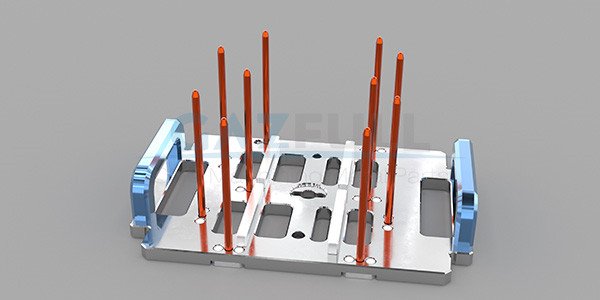
Beyond batteries, CNC machining supports diverse storage technologies. 
 
Supercapacitors: These devices offer rapid charge/discharge for applications like regenerative braking. CNC produces electrode housings and mounts from aluminum, ensuring tight seals to prevent leakage. While electrodes are often printed, casings require precise threading for assembly. Limited direct literature exists, but analogies from battery tech suggest CNC’s precision aids in scaling production for hybrid systems.

Flywheel Energy Storage: Flywheels store kinetic energy in high-speed rotors, ideal for grid stability. CNC machines composite or metal rotors with variable thickness for optimal stress distribution, achieving tip speeds over 1,000 m/s. Hubs from titanium or steel are turned to exact specifications, minimizing vibrations. Containment vessels and bearings also benefit from CNC for vacuum seals and magnetic interfaces. Systems like those from Beacon Power use CNC-machined components for safety, with rotors designed to fail incrementally.

Hydrogen Fuel Cells and Storage: Hydrogen is a promising chemical storage medium. CNC fabricates bipolar plates with micro-channels for gas flow, using EDM for hard materials like graphite or stainless steel. Tolerances of ±0.0005 inches ensure efficient reactions. Storage tanks components, such as valves and liners from aluminum or composites, are machined for high-pressure integrity (up to 700 bar). In fuel cells, CNC produces end plates and manifolds, enhancing stack efficiency.

Thermal Energy Storage: For systems like molten salt in solar plants, CNC machines heat exchangers and pipes from corrosion-resistant alloys. Phase-change material containers are milled with fins for better heat transfer. In compressed air storage, turbines and valves are turned precisely to minimize leaks.

These applications highlight CNC’s versatility, enabling custom solutions for niche technologies.

Materials Used in CNC Machining for Energy Storage
Material selection is crucial, as energy storage components face electrochemical, thermal, and mechanical stresses. CNC machining accommodates a wide range, each chosen for specific properties.
 
Aluminum alloys (e.g., 6061-T6) are popular for battery casings due to their lightweight, corrosion resistance, and machinability. CNC can achieve surface finishes under 0.8 μm Ra, essential for heat transfer.
 
Titanium grades like Ti-6Al-4V are used in high-end applications, such as aerospace energy storage, for their strength-to-weight ratio. CNC’s high-speed machining (HSM) techniques handle titanium’s toughness, producing flywheel rotors or fuel cell bipolar plates.
 
Copper and its alloys excel in conductive parts like busbars. CNC wire EDM (Electrical Discharge Machining) cuts intricate shapes without burrs, maintaining electrical integrity.
 
Advanced composites, including carbon fiber reinforced polymers (CFRP), are machined for lightweight enclosures in EVs. CNC routers with diamond tools prevent delamination.
 
Stainless steel (e.g., 316L) suits corrosive environments in flow batteries. CNC turning ensures precise threading for fittings.
 
Emerging materials like graphene-infused alloys require specialized CNC setups with vibration damping to handle brittleness.
 
Sustainability influences choices; recyclable aluminum reduces the carbon footprint of manufacturing. CNC’s minimal waste—via optimized toolpaths—aligns with green energy goals.

Advantages of CNC Machining Over Alternative Methods

Why choose CNC for energy storage manufacturing? Its advantages are manifold compared to injection molding, 3D printing, or casting.
 
First, precision: CNC achieves tolerances of ±0.001 mm, vital for sealing battery cells where gaps could cause failures. Injection molding struggles with such accuracy in complex geometries.
 
Second, versatility: CNC handles diverse materials without retooling, unlike casting which is material-specific. This allows seamless transitions between prototypes and production.
 
Third, speed and scalability: Modern CNC centers with pallet changers enable lights-out manufacturing, producing thousands of parts daily. For energy storage’s high-volume needs, this outpaces 3D printing’s slower build times.
 
Fourth, cost-effectiveness: While initial setup costs are high, CNC reduces material waste through nesting software, lowering per-unit expenses for mid-to-high volumes. In contrast, additive manufacturing wastes support material.
 
Fifth, customization: Energy storage often requires bespoke designs, like tailored cooling systems for specific climates. CNC’s CAD integration facilitates this without molds.
 
Drawbacks exist—CNC is subtractive, generating scrap, and setup times can be long for one-offs. However, hybrids like CNC-additive combos mitigate these.
 
In energy storage, where reliability is paramount, CNC’s quality control via in-process sensors ensures compliance with standards like ISO 26262 for automotive batteries.

Advantages of CNC Machining in Energy Storage

CNC offers numerous benefits:
  • Precision and Reliability: Tight tolerances reduce failures, crucial for safety in batteries and flywheels.
  • Efficiency and Scalability: Automation cuts production time, supporting rapid market growth.
  • Customization: Enables tailored designs for evolving tech, like solid-state batteries.
  • Cost-Effectiveness: Minimizes waste, lowering costs in high-volume runs.
  • Sustainability: Optimized processes reduce energy use, aligning with green goals.
These advantages make CNC indispensable for advancing energy storage.

Real-World Case Studies

Examining practical implementations highlights CNC’s impact.
 
Tesla’s Battery Production
Tesla’s Nevada Gigafactory uses CNC machining extensively for 4680 cell components. CNC mills create aluminum cans with integrated tabs for welding, reducing resistance and improving efficiency. This has enabled Tesla to scale production to over 1 TWh annually, supporting global EV adoption.
 
Bloom Energy’s Fuel Cells
Bloom Energy employs CNC for solid oxide fuel cell (SOFC) stacks. Precision machining of ceramic interconnects ensures gas-tight seals, achieving 60% efficiency in energy storage. Their systems power data centers, demonstrating CNC’s role in reliable, clean backup power.
 
Grid-Scale Projects: Hornsdale Power Reserve
In Australia’s Hornsdale battery (150 MW), CNC-fabricated structural frames from steel alloys support the modular design. This allowed quick assembly and expansion, showcasing CNC’s contribution to agile infrastructure.
 
Startup Innovations: Ambri’s Liquid Metal Batteries
Ambri uses CNC to prototype antimony-calcium electrodes. The process’s accuracy minimizes impurities, extending cycle life to 20,000+ charges—ideal for long-duration storage.These cases illustrate how CNC drives efficiency, safety, and scalability in diverse settings.

Emerging Trends and Innovations

The future of CNC in energy storage is bright, fueled by technological advancements.
 
Automation and AI integration: Machine learning optimizes toolpaths, predicting wear and reducing downtime. In battery manufacturing, AI-driven CNC adapts to material variations in real-time.
 
Sustainable machining: Dry machining and cryogenic cooling minimize environmental impact, aligning with net-zero goals. Recycled materials are increasingly CNC-machined for circular economies.
 
Hybrid manufacturing: Combining CNC with additive processes creates complex parts, like batteries with embedded sensors.
 
Nanomachining: For next-gen storage like quantum batteries, ultra-precision CNC (e.g., diamond turning) fabricates nanoscale features.
 
Global supply chain shifts: With geopolitical tensions, localized CNC production reduces dependencies, as seen in U.S. CHIPS Act investments.
 
By 2030, CNC could enable terawatt-scale storage, supporting 100% renewable grids.

Challenges and Solutions

Despite advantages, challenges persist. High energy consumption in CNC operations contradicts green energy ethos—solutions include energy-efficient spindles and renewable-powered factories.
 
Skill gaps in operating advanced CNC require training programs. Cybersecurity threats to networked systems demand robust protocols.
 
Material costs for exotics like titanium are rising; alternatives like advanced polymers, machinable via CNC, offer relief.
 
Regulatory hurdles, such as safety certifications for machined parts, necessitate integrated quality assurance.
 
Addressing these ensures CNC’s continued relevance.

Conclusion

CNC machining stands as a silent yet powerful enabler in the energy storage landscape. From crafting the minutiae of battery internals to forging robust grid infrastructures, its precision, versatility, and scalability are unmatched. As we pivot toward a sustainable future, the synergy between CNC and energy storage will only deepen, driving innovations that combat climate change and power societies.
 
Investments in R&D, coupled with ethical manufacturing practices, will amplify this impact. For engineers, manufacturers, and policymakers, embracing CNC means not just building better storage but forging a resilient energy ecosystem. The journey from raw material to reliable power is machined with care, one precise cut at a time.