CNC Machining for Different Industries
CNC machining technology is widely used in high-tech industries

CNC Machining for Aerospace:
Precision Engineering in the Skies
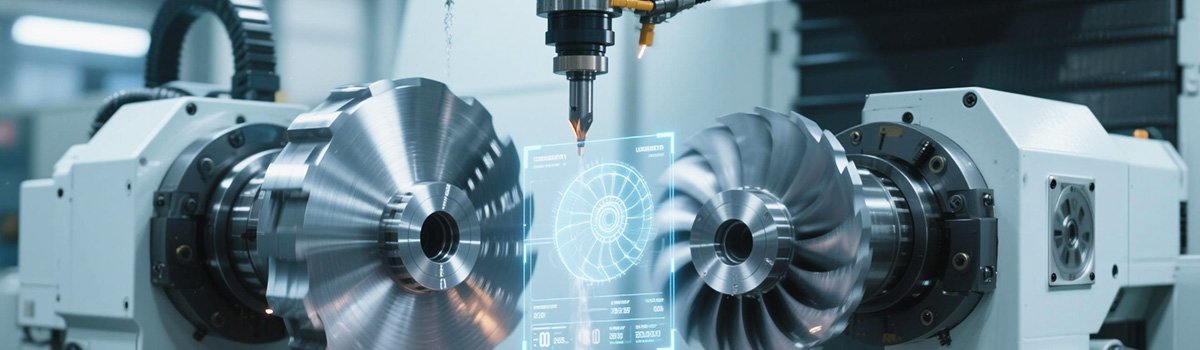
The aerospace industry stands as a pinnacle of human engineering achievement, where the demands for precision, reliability, and innovation are unparalleled. At the heart of this sector lies Computer Numerical Control (CNC) machining, a technology that has revolutionized the way aircraft, spacecraft, and related components are manufactured. CNC machining involves the use of computerized systems to control machine tools, enabling the production of complex parts with exceptional accuracy. In aerospace, where even the slightest deviation can lead to catastrophic failure, CNC machining ensures that components meet stringent tolerances, often down to microns.

This article delves into the multifaceted role of CNC machining in aerospace. We will explore its historical evolution, fundamental principles, materials employed, types of machines utilized, key applications, advantages and challenges, and emerging trends that are shaping its future. By understanding these elements, we gain insight into how CNC machining not only supports current aerospace endeavors but also propels the industry toward new frontiers, such as sustainable aviation and space exploration.

The integration of CNC machining in aerospace dates back to the mid-20th century, but its sophistication has grown exponentially with advancements in computing and materials science. Today, it is indispensable for producing everything from turbine blades to structural frames, contributing to lighter, stronger, and more efficient aircraft. As global air travel and space missions expand, the demand for high-precision manufacturing continues to drive innovation in this field.

Historical Evolution of CNC Machining in Aerospace

The origins of CNC machining trace back to the 1940s and 1950s, when numerical control (NC) systems were first developed to automate machine tools. Initially, these systems used punched tape to input instructions, a far cry from today’s digital interfaces. The aerospace industry was quick to adopt this technology due to its need for repeatable precision in producing complex geometries.
 
In the 1960s, with the advent of computers, NC evolved into CNC, allowing for more flexible programming and real-time adjustments. This shift was crucial during the space race, where NASA and defense contractors required parts for rockets and satellites that traditional manual machining could not reliably produce. For instance, the Apollo program’s components benefited from early CNC techniques, reducing human error and speeding up production timelines.
 
By the 1970s and 1980s, CNC machines became more affordable and widespread, thanks to microprocessor advancements. Aerospace giants like Boeing and Lockheed Martin integrated CNC into their workflows, enabling the mass production of fighter jets and commercial airliners. The introduction of multi-axis machines in the 1990s further enhanced capabilities, allowing for the machining of intricate shapes without multiple setups.
 
Entering the 21st century, CNC machining in aerospace has been transformed by software integrations like Computer-Aided Design (CAD) and Computer-Aided Manufacturing (CAM). These tools simulate machining processes virtually, minimizing waste and optimizing designs before physical production begins.The historical trajectory underscores CNC’s role in making aerospace manufacturing more efficient and innovative, setting the stage for its current dominance.

Fundamentals of CNC Machining

At its core, CNC machining is a subtractive manufacturing process where material is removed from a solid block (workpiece) using rotating tools controlled by a computer. The process begins with a digital model created in CAD software, which is then translated into machine-readable code via CAM software. This code, often in G-code format, dictates the tool’s path, speed, and feed rates.
Key components of a CNC system include the controller, which interprets the code; the drive system, which moves the axes; and the spindle, which holds and rotates the cutting tool. In aerospace applications, precision is paramount, so machines often feature high-resolution encoders and feedback loops to ensure accuracy.
 
The machining process typically involves several steps: roughing to remove bulk material, semi-finishing for shaping, and finishing for surface refinement. Tools like end mills, drills, and reamers are selected based on the material and desired geometry. For aerospace, where parts must withstand extreme conditions, post-machining treatments such as heat treating or coating are common to enhance durability.
 
Understanding these fundamentals highlights why CNC is preferred over manual methods: it offers repeatability, reduces labor costs, and minimizes errors. In an industry where safety is non-negotiable, these attributes are invaluable.

Materials Used in Aerospace CNC Machining

Aerospace components must endure high stresses, temperatures, and corrosive environments, necessitating specialized materials that CNC machines can precisely shape. Common materials include:

  • Aluminum Alloys: Lightweight and corrosion-resistant, alloys like 7075 and 2024 are staples for airframes and panels. CNC machining excels at creating thin-walled structures from these, balancing strength and weight.
  • Titanium Alloys: Known for their high strength-to-weight ratio and heat resistance, titanium (e.g., Ti-6Al-4V) is used in engine components and landing gear. Machining titanium requires specialized tools due to its toughness, but CNC’s controlled parameters prevent tool wear and maintain precision.
  • Stainless Steel: For parts requiring corrosion resistance, like fasteners and hydraulic systems, steels such as 17-4 PH are machined. CNC allows for intricate threading and hole drilling essential in these applications.
  • Composite Materials: Modern aerospace increasingly uses carbon fiber reinforced polymers (CFRP) and other composites for weight reduction. CNC routers with dust extraction systems machine these without delamination, adapting spindle speeds dynamically to material properties.
  • Superalloys: Nickel-based alloys like Inconel are vital for turbine blades, withstanding temperatures over 1000°C. CNC’s ability to handle hard materials through high-speed machining (HSM) techniques is critical here.

Selecting the right material involves considering factors like machinability, cost, and performance. CNC machining’s versatility allows aerospace engineers to experiment with hybrid materials, pushing the boundaries of what’s possible in flight.

Types of CNC Machines in Aerospace

Aerospace CNC machining employs a variety of machine types, each suited to specific tasks:

  • 3-Axis Mills: Basic yet essential for flat or simple curved surfaces, like wing spars. They move along X, Y, and Z axes.
  • 5-Axis Machines: These offer rotation around two additional axes (A and B), enabling complex geometries without repositioning the workpiece. Advantages include reduced setup time, improved surface finishes, and efficient material removal—ideal for turbine blades and impellers.
  • CNC Lathes: For cylindrical parts like shafts and bushings, lathes rotate the workpiece while tools cut symmetrically.
  • Swiss-Style Lathes: Advanced for small, high-precision parts, these support simultaneous operations, reducing cycle times for aerospace fasteners.
  • Wire EDM (Electrical Discharge Machining): A non-traditional CNC variant using electrical sparks to erode material, perfect for hard metals and intricate shapes like gear teeth.
  • CNC Routers: Specialized for composites and large panels, with vacuum tables to hold materials securely.

In aerospace, machines often integrate with robotic arms for automated loading/unloading, enhancing throughput. The choice of machine depends on part complexity, material, and production volume, with multi-axis systems dominating for their efficiency.

Applications of CNC Machining in Aerospace

Computer Numerical Control (CNC) machining has become the backbone of modern aerospace manufacturing. Its ability to produce parts with extraordinary precision, repeatability, and complexity—often to tolerances of just a few microns—makes it irreplaceable in an industry where the smallest deviation can have catastrophic consequences. From commercial airliners to cutting-edge spacecraft and unmanned aerial vehicles, virtually every aerospace platform relies on CNC-machined components.
 
1. Aircraft Structures: Building the Skeleton with Precision
The airframe—the structural skeleton of an aircraft—must simultaneously be lightweight, incredibly strong, and aerodynamically efficient. CNC machining excels at producing the frames, ribs, longerons, bulkheads, and wing/fuselage skins that make up this skeleton.
 
Aluminum alloys such as 7075 and 2024 remain popular because of their excellent strength-to-weight ratio, but increasingly, carbon-fiber-reinforced polymers (CFRP) and advanced aluminum-lithium alloys are used. Five-axis and even seven-axis CNC machines mill monolithic (single-piece) components from solid billets, eliminating thousands of fasteners that would otherwise add weight and potential failure points.
 
A landmark example is Boeing’s 787 Dreamliner. Approximately 50% of its primary structure is composite, but the remaining metallic parts—including wing spars, floor beams, and titanium fuselage frames—are extensively CNC-machined. Boeing’s adoption of high-speed machining and monolithic design reduced the total part count by roughly 1,500 per aircraft and cut the fastener count by 50,000, contributing to the 20% fuel-efficiency improvement over the 767. The precision of CNC also allows “pocket milling” that removes material only where it is not needed, shaving additional kilograms that directly translate into payload and range.
 
2. Engine Components: Where Microns Matter Most
Aerospace engines—whether turbofans for airliners or rocket engines for spaceflight—operate under extreme thermal, mechanical, and aerodynamic loads. Turbine disks, blades, blisks (bladed disks), compressor rotors, and casings demand tolerances often tighter than 0.0005 inches (12.7 μm).
 
Nickel-based superalloys such as Inconel 718 and single-crystal CMSX-4 dominate hot-section components because they retain strength above 1,200 °C. Machining these materials is notoriously difficult—they work-harden rapidly and generate tremendous heat. Modern CNC machines equipped with ceramic or CBN tooling, high-pressure through-tool coolant (up to 1,000 bar), and adaptive control systems can reliably produce the complex cooling channels and thin-walled airfoils required for efficiency.
 
GE Aviation’s LEAP engine, powering the Airbus A320neo and Boeing 737 MAX, contains CNC-machined ceramic matrix composite (CMC) turbine shrouds and 3D-printed fuel nozzles, but the 19 fuel-swirl nozzles in each LEAP are still finish-machined on multi-axis CNC centers to achieve the exact spray pattern needed for complete combustion and lower NOx emissions. Similarly, the integrally bladed rotors (blisks) in military engines like the Pratt & Whitney F135 are five-axis machined from a single forging, eliminating mechanical joints and improving fatigue life dramatically.
3. Landing Gear: Strength Under Extreme Loads
Landing gear experiences some of the highest stresses in aviation—touchdown loads can exceed 6g, and components must survive millions of cycles without cracking. High-strength materials such as 300M steel, AerMet 100, and titanium alloys (Ti-6Al-4V and Ti-5553) are the norm.
 
CNC turning and milling centers produce massive forgings into finished struts, pistons, torque links, and brake housings. Deep-hole drilling for hydraulic passages and precision grinding of bearing journals are routine. The Airbus A350’s landing gear, supplied by Safran and Liebherr, contains titanium components that are CNC-machined to net shape, reducing buy-to-fly ratios (the weight of raw material versus finished part) from 15:1 down to 4:1 or better—an enormous cost and material saving.
4. Avionics Housings and Electronic Enclosures
Modern aircraft contain hundreds of line-replaceable units (LRUs)—black boxes for flight management, radar, communication, and electronic warfare. These sensitive electronics must be shielded from electromagnetic interference (EMI), vibration, and temperature extremes.
 
CNC machining produces lightweight yet rigid housings from aluminum 6061 or magnesium alloys, often with integral cooling fins, threaded inserts, and conductive gaskets. Five-axis machining allows complex internal geometries and thin walls (sometimes <0.5 mm) while maintaining structural integrity. Military programs such as the F-35 Lightning II rely on thousands of precision-machined avionics chassis that meet stringent MIL-STD-810 environmental requirements.
5. Spacecraft and Launch Vehicle Components
Space introduces additional challenges: vacuum, radiation, cryogenic temperatures, and the absolute need for reliability. CNC machining is used for everything from satellite structural panels to rocket engine turbopumps and nozzles.
 
SpaceX has pushed CNC technology to new limits. The grid fins on Falcon 9 and Falcon Heavy are investment-cast in Inconel, but their intricate lattice internal structure and final airfoil profiles are CNC-machined to exacting tolerances. These fins deploy during re-entry and steer the booster for pinpoint landings, enabling the unprecedented reuse of orbital-class rockets. The SuperDraco thruster combustion chambers for Dragon spacecraft are also CNC-machined from Inconel, with internal cooling channels that would be impossible by any other method.
 
NASA’s Space Launch System (SLS) uses massive five-axis CNC gantry mills to machine the 27-foot-diameter (8.4 m) aluminum-lithium orthogrid panels for the core stage liquid hydrogen tank. These panels are friction-stir-welded together, but the orthogrid stiffeners are entirely CNC-machined, reducing weight while maintaining the strength needed to hold 730,000 gallons of cryogenic propellant.
6. Drones and Unmanned Aerial Vehicles (UAVs)
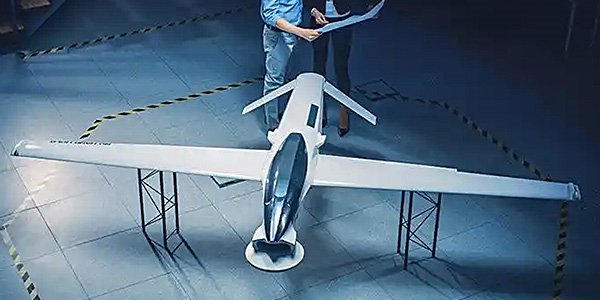
The rapid development cycle of military and commercial drones benefits enormously from CNC’s ability to go from CAD model to finished part in hours rather than weeks. Lightweight frames, propeller hubs, gimbal mounts, and sensor housings are commonly machined from aluminum, carbon composite tooling boards, or engineering plastics.Companies like General Atomics (Predator/Reaper series) and startup eVTOL firms use CNC for rapid prototyping and low-rate initial production before committing to expensive composite molds. The ability to iterate designs overnight—adjusting winglets, battery trays, or antenna mounts—accelerates development timelines dramatically.
 
CNC machining is far more than a manufacturing process in aerospace; it is an enabling technology that directly influences performance, safety, and economics. It allows engineers to push material limits, eliminate unnecessary weight, incorporate complex internal features, and maintain reliability in the harshest environments imaginable.
 
From the monolithic aluminum frames of the Boeing 787 that reduced weight by 20%, to SpaceX’s reusable grid fins and SuperDraco engines, to the ceramic-shrouded turbines of the world’s most efficient jet engines, CNC machining lies at the heart of modern aerospace achievement. As materials advance—whether lighter composites, stronger superalloys, or heat-resistant ceramics—CNC machines will continue evolving with more axes, smarter software, and hybrid additive-subtractive capabilities, ensuring that aerospace remains one of the most technically demanding and innovative industries on (and off) Earth.

Advantages of CNC Machining in Aerospace
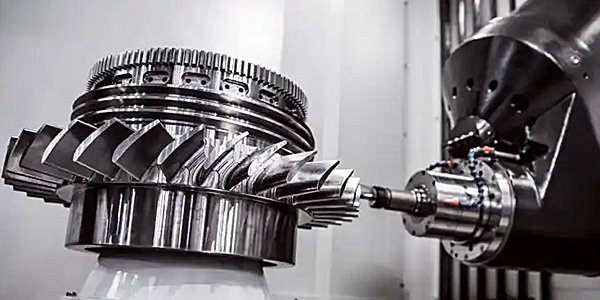
In an industry where safety margins are measured in microns and failure is not an option, CNC machining has become the gold standard for producing aerospace components. Its advantages over conventional manual or dedicated-fixture machining are profound, delivering measurable gains in quality, cost, speed, and design freedom.
1. Unmatched Precision and Accuracy
Aerospace components routinely demand tolerances of ±0.001 in (25 μm) or tighter—sometimes as low as ±0.0002 in for critical engine and flight-control parts. CNC machines, guided by digital models and closed-loop feedback systems, achieve this level of accuracy consistently. Temperature-compensated machining centers, probe-based in-process inspection, and adaptive control software correct for tool wear and thermal expansion in real time. This precision ensures interference-free assembly of complex airframes, eliminates shimming during final assembly, and guarantees aerodynamic and structural performance exactly as designed.
2. Dramatic Efficiency and Cost Reduction
Automation is the cornerstone of CNC’s economic advantage. Once programmed, a CNC machine can run unattended—“lights-out” manufacturing—24 hours a day, seven days a week. High-speed spindles (up to 30,000 rpm or more) and optimized toolpaths reduce cycle times by 50–70% compared to manual methods. Material utilization has also improved dramatically: advanced nesting software and near-net-shape starting stock (forgings, extrusions, or additively pre-formed blanks) have pushed buy-to-fly ratios from 20:1 down to 3:1 or better on titanium and aluminum parts. Fewer rivets, less scrap, and lower labor costs translate directly into millions of dollars saved on large programs such as the Boeing 787 or Airbus A350.
3. Design Flexibility and Rapid Iteration
Traditional manufacturing required expensive hard tooling—dies, jigs, and fixtures—that locked designs for years. CNC eliminates most of that burden. A design change requires only a revised CAD/CAM program, often implementable in hours rather than months. This agility is invaluable during prototyping, certification testing, and mid-program upgrades. eVTOL startups and UAV manufacturers can machine a new wing spar or motor mount overnight, test it the next day, and refine the design immediately. Even established OEMs benefit: when the FAA mandates a modification, CNC allows suppliers to respond in weeks instead of quarters.
4. Ability to Produce Complex Geometries
Five-axis and even seven-axis CNC machines can tilt and rotate the workpiece or tool simultaneously, reaching undercuts, deep pockets, and compound angles impossible with three-axis or manual methods. Turbine blades with twisted airfoils and internal cooling passages, integrally bladed rotors (blisks), thin-walled monolithic wing ribs, and lattice-structured grid fins on reusable rockets are all routine products of modern CNC centers. These geometries improve aerodynamic efficiency, reduce weight, and enhance cooling—directly contributing to better fuel economy, higher thrust-to-weight ratios, and longer component life.
5. Absolute Repeatability and Traceability
Regulatory bodies such as the FAA and EASA, along with quality standards like AS9100, demand rigorous process control and documentation. CNC provides both. Every toolpath, spindle load, and dimensional measurement is logged digitally, creating an unbroken audit trail from raw material to finished part. Batch-to-batch variation is virtually eliminated, ensuring that the 10,000th landing-gear strut is identical to the first. This repeatability is essential not only for safety but also for predictive maintenance programs that rely on consistent wear characteristics across fleets.
6. Broad Material Versatility
Aerospace pushes material limits: aluminum-lithium alloys, titanium Ti-6Al-4V, Inconel 718, René 41, ceramic matrix composites (CMCs), and carbon-fiber tooling boards all appear on the same shop floor. CNC machines equipped with the right tooling, coolant strategies, and vibration damping can handle them all. As new heat-resistant alloys and composites emerge, CNC adapts quickly—often requiring only new cutting parameters rather than entirely new machinery.
Real-World Impact
These advantages converge to deliver shorter lead times, greater supply-chain resilience, and the ability to incorporate late design changes without catastrophic delays. During the 2020–2022 pandemic disruptions, manufacturers with heavy CNC capacity recovered faster because they could reallocate machines to urgent parts rather than waiting for specialized fixtures or overseas tooling. Programs like the F-35, GE9X engine, and SpaceX Starship continue to push performance envelopes precisely because CNC gives engineers the freedom to design without traditional manufacturing constraints.
 
In summary, CNC machining is not merely a production method in aerospace—it is a strategic enabler of lighter, stronger, safer, and more efficient flight. Its combination of micron-level precision, cost efficiency, flexibility, and material versatility ensures that it will remain at the heart of aerospace innovation for decades to come.

Challenges in Aerospace CNC Machining

Despite its strengths, CNC machining faces hurdles:

  • High Initial Costs: Advanced machines and software require significant investment, though ROI is realized through efficiency.
  • Material-Specific Issues: Hard materials like titanium cause tool wear, necessitating frequent replacements and coolant systems.
  • Thermal Management: Heat generated during machining can distort parts, requiring precise control.
  • Skill Gaps: Operators need expertise in programming and troubleshooting, leading to training demands.
  • Regulatory Compliance: Aerospace parts must undergo rigorous testing, adding time and cost.
  • Sustainability Concerns: Waste from subtractive processes prompts a shift toward eco-friendly practices.

Addressing these involves ongoing R&D, such as adaptive machining that adjusts parameters in real-time to mitigate issues.

Future Trends in CNC Machining for Aerospace

The future of CNC in aerospace is bright, driven by technological integrations:

  • Automation and AI: Robotic cells and AI-optimized toolpaths reduce human intervention and predict failures.
  • Hybrid Manufacturing: Combining CNC with additive methods (e.g., 3D printing) for near-net-shape parts, minimizing machining time.
  • High-Speed Machining (HSM): Faster spindles and advanced coatings allow quicker production without sacrificing quality.
  • Sustainable Practices: Recycling chips and using bio-based coolants align with green aviation goals.
  • Digital Twins: Virtual simulations mirror physical processes, enabling predictive maintenance and design optimization.
  • Nanomachining: For ultra-precise features in next-gen sensors and microsatellites.

These trends promise to make aerospace manufacturing smarter, faster, and more sustainable, supporting ambitions like hypersonic flight and Mars missions.

Conclusion

CNC machining has become the backbone of aerospace manufacturing, blending precision with innovation to conquer the skies and beyond. From its humble beginnings to cutting-edge applications, it continues to evolve, addressing challenges while capitalizing on new technologies. As the industry pushes toward electrification, autonomy, and space commercialization, CNC will remain pivotal, ensuring that every component is engineered to perfection. The ongoing advancements underscore a future where aerospace achievements are limited only by imagination, powered by the relentless accuracy of CNC machining.