
CNC Machining for Different Industries
CNC machining technology is widely used in high-tech industries
CNC Machining for Marine Applications:
Precision Engineering Beneath the Waves
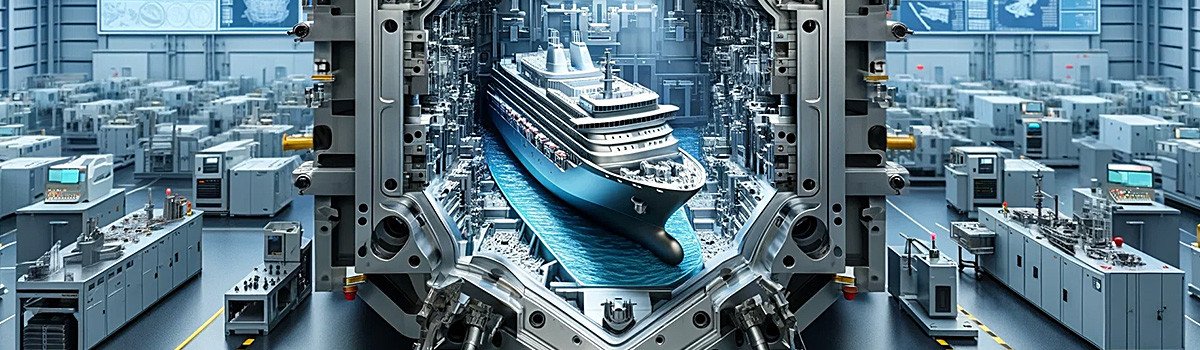
Computer Numerical Control (CNC) machining represents a cornerstone of modern manufacturing, where computer-guided tools precisely shape materials into complex components. In the marine industry, which encompasses everything from commercial shipping vessels and naval ships to recreational boats and offshore platforms, CNC machining plays a pivotal role in producing parts that must endure extreme conditions such as corrosive saltwater, high mechanical stress, and fluctuating temperatures. The marine environment demands unparalleled durability, precision, and reliability, as even minor defects can lead to catastrophic failures at sea. CNC technology addresses these challenges by enabling the fabrication of intricate parts with micrometer-level accuracy, ensuring optimal performance and safety.
The importance of CNC machining in the marine sector stems from its ability to handle diverse materials and geometries that traditional manual methods struggle with. For instance, marine vessels require components like propellers that optimize hydrodynamic efficiency, hull structures that maintain structural integrity under immense pressure, and engine parts that operate reliably in harsh conditions. Without CNC, achieving the tight tolerances necessary for these elements would be inefficient and error-prone. According to industry insights, CNC machining allows manufacturers to produce components such as shafts and hull parts with extreme precision, which is crucial for withstanding maritime rigors. This precision not only enhances vessel performance but also contributes to longevity, reducing maintenance costs and downtime.
Historically, the marine industry relied on labor-intensive processes like casting and manual milling, which were time-consuming and inconsistent. The advent of CNC in the mid-20th century revolutionized this, with its adoption accelerating in the 1980s as computer technology advanced. Today, with multi-axis CNC machines, the industry can produce everything from large-scale hull reinforcements to delicate navigation equipment. This shift has been driven by the need for scalability— from prototyping custom yacht fittings to mass-producing parts for commercial fleets. In an era where sustainability is key, CNC’s efficiency in minimizing material waste aligns with environmental goals, making it indispensable for eco-conscious shipbuilding.
Moreover, the marine industry’s growth, projected to reach new heights with increasing global trade and offshore energy exploration, underscores CNC’s relevance. As vessels become more sophisticated, incorporating advanced materials and designs, CNC machining ensures that innovation keeps pace. This article delves into the mechanics of CNC machining, its specific applications in marine contexts, materials employed, benefits, challenges, real-world examples, and emerging trends, providing a comprehensive overview of how this technology sails the industry forward.
Table of Contents
ToggleUnderstanding CNC Machining
CNC machining operates on the principle of subtractive manufacturing, where material is removed from a solid block (or workpiece) to form the desired shape. The process begins with digital design using Computer-Aided Design (CAD) software, which creates a 3D model of the part. This model is then translated into machine instructions via Computer-Aided Manufacturing (CAM) software, generating G-code that dictates tool paths, speeds, and feeds. The CNC machine—equipped with tools like mills, lathes, or routers—follows these instructions precisely, controlled by servo motors and sensors for accuracy.
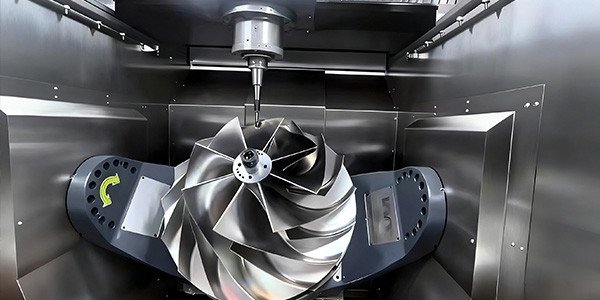
There are several types of CNC machines relevant to marine applications. 3-axis machines move along X, Y, and Z axes, suitable for simpler parts like flat hull panels or basic fittings. 4-axis adds rotation around one axis, ideal for cylindrical components such as shafts. However, 5-axis CNC machines, which allow simultaneous movement across five axes, are particularly valuable in marine manufacturing for creating complex geometries like propeller blades with curved surfaces. These machines enable undercuts and intricate angles without repositioning the workpiece, reducing errors and production time.
In marine contexts, CNC integrates with other technologies for enhanced functionality. For example, large-scale 5-axis machines are used for trimming hulls and decks, ensuring seamless fits without gaps. Automation minimizes human intervention, allowing 24/7 operation and consistency across batches. Quality control is bolstered by Coordinate Measuring Machines (CMM) that verify dimensions post-machining, ensuring compliance with stringent marine standards like those from the American Bureau of Shipping (ABS).
The workflow in a marine CNC setup typically involves material selection, fixturing the workpiece securely to prevent vibrations, executing the machining cycle, and finishing processes like deburring or coating for corrosion resistance. Advanced features, such as adaptive control systems, adjust parameters in real-time based on tool wear or material variations, further optimizing output. This level of sophistication makes CNC indispensable for producing parts that must perform under the ocean’s unforgiving conditions, where precision directly translates to safety and efficiency.
History and Evolution of CNC Machining in Marine
The roots of CNC machining trace back to the 1940s, when numerical control (NC) systems were developed for aerospace during World War II. By the 1950s, the U.S. Air Force pioneered punched-tape controls for milling machines, laying the groundwork for computer integration in the 1970s. In the marine sector, adoption was slower due to the industry’s reliance on large-scale forging, but by the 1980s, shipyards began incorporating CNC for precision tasks like propeller shaping.
Early marine applications focused on naval vessels, where secrecy and superiority demanded flawless components. Submarine hulls, for example, required seamless welding of machined parts to withstand immense pressures. The 1990s saw a boom with CAD/CAM software, allowing designers to simulate marine environments and optimize parts for hydrodynamics.
In the 2000s, globalization amplified marine trade, pushing for cost-effective production. CNC evolved with 5-axis machines, capable of complex contours for turbine blades in marine engines. Offshore oil platforms benefited from CNC-fabricated risers and anchors, resistant to deep-sea corrosion.
Today, CNC in marine integrates with Industry 4.0, featuring IoT sensors for real-time monitoring and predictive maintenance. From wooden boat molds in traditional yards to titanium fittings in luxury yachts, the evolution reflects a blend of tradition and technology. Key milestones include the use of CNC in the America’s Cup races, where teams like Oracle employed machined carbon-fiber components for speed advantages.
This progression has democratized access; small boatyards now use desktop CNC mills for custom fittings, while giants like Maersk leverage automated lines for fleet maintenance. The shift from analog to digital has not only enhanced precision but also reduced environmental impact by optimizing material usage in an industry under scrutiny for emissions.
Applications of CNC Machining in the Marine Industry
CNC machining has become indispensable in modern marine manufacturing, delivering the precision, repeatability, and complexity required for components that must perform flawlessly in one of the harshest environments on Earth. From massive commercial vessels to high-performance yachts and offshore platforms, CNC technology is applied across nearly every system on a ship or boat. The following sections highlight the most critical marine applications where CNC machining delivers unmatched value.
1. Propulsion Systems: Propellers and Shafts
The heart of any vessel’s performance lies in its propulsion system, and CNC machining plays a starring role here. Marine propellers, especially large fixed-pitch or controllable-pitch designs, demand highly complex blade geometries to maximize thrust while minimizing cavitation, noise, and fuel consumption. Five-axis CNC milling machines are the tool of choice because they can sculpt intricate, twisted blade surfaces and varying pitch angles in a single setup. Tolerances as tight as 0.001 inches (25 μm) ensure perfectly smooth hydrodynamic profiles that reduce drag and vibration.Propeller shafts, shaft lines, and stern tubes also rely heavily on CNC turning centers. These long, heavy components require absolute concentricity and balance to prevent vibration at high RPM. CNC lathes with live tooling can machine keyways, threads, flanges, and taper sections in one continuous operation, eliminating the alignment errors common in manual methods. The result is smoother power transmission, longer bearing life, and reduced maintenance downtime.
2. Hull and Structural Components
Modern hull construction—whether aluminum, steel, or advanced composites—depends on CNC precision for both strength and weight optimization. Large 5-axis gantry mills and routers trim and shape hull plating, bulkheads, decks, and superstructures with exceptional accuracy. CNC nesting software maximizes material yield by optimally arranging dozens of parts on a single sheet or plate, often reducing waste by 15–30%.
In composite boat building, CNC machines cut precise molds and patterns for fiberglass, carbon fiber, or epoxy-infused hulls. The resulting molds guarantee uniform laminate thickness and perfect fairness, critical for withstanding repeated wave impacts without delamination. Ribs, stringers, and transverse frames—whether wooden in traditional craft or foam-cored composites in modern yachts—are also CNC-routed to exact dimensions, ensuring seamless assembly and structural integrity.
3. Marine Engine and Powertrain Components
Marine diesel and gas turbine engines operate under extreme loads and corrosive conditions, so every internal component must meet rigorous specifications. CNC machining produces crankshafts, cylinder liners, pistons, connecting rods, camshafts, and fuel injection parts with microscopic precision. Multi-axis machining centers create complex cooling passages, oil galleries, and combustion chamber features that would be impossible or prohibitively expensive with conventional methods. The tight tolerances improve combustion efficiency, reduce emissions, and extend engine life in saltwater environments.
4. Deck Hardware and Fittings
From massive container ship mooring bits to sleek yacht winches, deck hardware demands both strength and corrosion resistance. CNC turning and milling produce cleats, bollards, fairleads, hawse pipes, and custom anchor pockets from duplex stainless steel, bronze, or titanium. Intricate designs—such as self-tailing winches with internal gears and ratchets—are machined complete in one setup, ensuring perfect alignment and smooth operation under heavy loads.
5. Interior Fit-Out for Luxury and Commercial Vessels
In superyachts and passenger ships, aesthetics are as important as function. CNC routers and mills craft exquisite interior joinery: teak or carbon-fiber paneling, marble and granite countertops, curved staircases, and custom furniture. Three- and five-axis machines create flawless edges, inlays, and 3D carvings that blend luxury with durability. Even soft materials like high-density foam for seating and insulation are precisely cut to fit complex hull curvatures.
6. Offshore and Subsea Applications
Offshore oil & gas platforms and deep-sea submersibles push material and precision limits further. CNC machining produces critical components such as ROV (remotely operated vehicle) frames, titanium pressure housings, high-pressure valve bodies, and subsea connectors. These parts often require exotic alloys (Inconel, Monel, 6Al-4V titanium) machined to tolerances under 0.0005 inches while maintaining perfect sealing surfaces to prevent leaks at depths exceeding 3,000 meters.
7. Recreational and Small Craft Manufacturing
Kayaks, surfboards, stand-up paddleboards, and small sailing dinghies benefit from CNC precision as well. High-speed 3-axis and 5-axis routers shape EPS foam blanks for surfboards or cut accurate molds for carbon-fiber kayaks. Custom sailboat hardware—traveler tracks, mast fittings, and carbon tillers—is milled or turned quickly and repeatably, allowing small builders to compete with larger manufacturers.
The versatility of CNC machining allows it to serve every corner of the marine industry, from one-off custom yacht components to high-volume production for commercial fleets. Whether the goal is hydrodynamic efficiency, structural lightness, corrosion resistance, or aesthetic perfection, CNC delivers repeatable, high-quality results that manual methods simply cannot match. As vessels grow larger, faster, and more technologically sophisticated, CNC machining will remain the backbone of marine manufacturing excellence.
CNC Machining Processes in Marine Applications
CNC machining encompasses several processes tailored to marine needs, each offering specific benefits for durability and performance.
CNC milling is predominant, using rotating cutters to remove material from workpieces. In marine, it’s ideal for creating flat surfaces on deck fittings or intricate channels in heat exchangers. 3-axis mills handle basic parts, while 5-axis versions tackle curved propeller hubs, allowing simultaneous multi-angle cuts for smoother finishes.
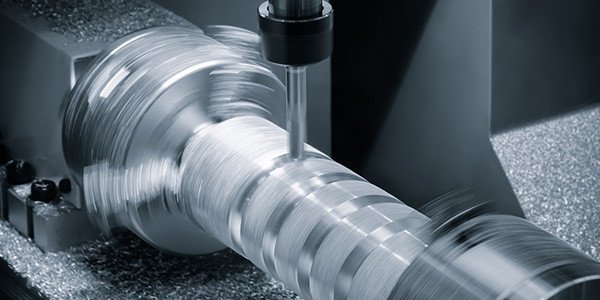
Turning, via CNC lathes, rotates the workpiece against a stationary tool, perfect for cylindrical components like shafts and pistons in marine engines. High-speed turning ensures concentricity, crucial for vibration-free operation in rough seas.
Drilling and boring refine holes in manifolds or valve bodies, with CNC ensuring precise alignment to prevent leaks in hydraulic systems.
For larger marine structures, CNC routing excels in cutting composites for boat interiors or foam molds for fiberglass hulls. Plasma or waterjet CNC cutting handles thick plates for ship hulls, minimizing heat distortion in sensitive alloys.
Advanced processes like EDM (Electrical Discharge Machining) are used for hard materials in subsea tools, eroding metal with sparks for fine details.
In practice, marine shops combine these in hybrid setups. For instance, a propeller might start with milling for rough shaping, followed by turning for balance, and finishing with grinding for polish. Software like Mastercam simulates these, optimizing tool paths to reduce cycle times by up to 50%.
Quality control integrates CMM (Coordinate Measuring Machines) for post-machining verification, ensuring compliance with marine certifications.
Materials Used in CNC Machining for Marine Parts
Selecting materials for marine CNC machining is critical, balancing strength, corrosion resistance, and machinability against harsh oceanic conditions.
Stainless steel, particularly 316L grade, dominates due to its molybdenum content resisting pitting from saltwater. It’s machined into fittings, pumps, and fasteners, with CNC handling its toughness via carbide tools and coolants to prevent work hardening.
Aluminum alloys like 5083 or 6061 offer lightweight alternatives, ideal for superstructures and hulls to improve fuel efficiency. Their excellent machinability allows high-speed CNC operations, but anodizing post-machining enhances corrosion protection.
Titanium, with its superior strength-to-weight ratio and immunity to corrosion, is used in critical components like propeller shafts and underwater housings. Though challenging to machine—requiring low speeds to avoid galling—CNC with specialized coatings manages it effectively for naval and deep-sea applications.
Bronze and brass provide self-lubricating properties for bearings and valves, machined precisely to tolerances that ensure leak-proof seals.
Composites, such as carbon fiber reinforced polymers (CFRP), are increasingly CNC-routed for lightweight decks and masts in racing yachts. These require dust extraction during machining to maintain shop safety.
Plastics like ABS or Delrin serve in non-structural parts, offering chemical resistance for instrument casings.
Emerging materials include superalloys for high-temperature engine parts and bio-based composites for eco-friendly vessels. Material selection often involves FEA (Finite Element Analysis) to predict performance under marine stresses.
Advantages of CNC Machining in Marine
CNC machining offers transformative benefits for the marine industry, foremost being precision and repeatability. Parts produced meet exact specifications every time, crucial for safety in vessels carrying thousands of tons. This consistency reduces assembly errors and extends component lifespan.
Efficiency is another key advantage; automation slashes production times, allowing rapid response to market demands like fleet expansions. Compared to manual methods, CNC cuts labor costs by 30-50% while minimizing waste through optimized nesting.
Complex geometries are achievable, enabling innovative designs like hydrodynamic hulls that improve fuel economy by 10-15%. In harsh environments, CNC-fabricated parts with tight tolerances ensure reliability, preventing failures that could cost millions in downtime.
Customization is effortless; from one-off prototypes for concept boats to batch production for standardized fittings, CNC adapts seamlessly.
Sustainability gains include reduced material scrap and energy use via efficient tool paths. Integration with 3D printing for hybrids further enhances eco-friendliness.
Finally, quality assurance through in-process monitoring upholds marine standards, fostering trust in global supply chains.
Challenges in CNC Machining for Marine Applications
Despite advantages, challenges persist in marine CNC machining.Corrosion resistance demands specialized materials, but machining them—like titanium—generates heat, risking tool wear and part distortion. Coolant management is essential, yet in marine shops, saltwater proximity complicates contamination.
Large part sizes pose logistical issues; ship components exceed standard machine beds, requiring oversized equipment or segmented machining, increasing costs.
Environmental factors, such as humidity, affect machine accuracy, necessitating climate-controlled facilities.
Skill gaps in operators for complex marine designs lead to errors; training is vital but time-consuming.
Regulatory compliance, with certifications like DNV-GL, adds layers of inspection, delaying production.
Supply chain vulnerabilities, especially for exotic alloys, can halt operations amid global disruptions.Finally, high initial investments in CNC tech deter smaller yards, though leasing models mitigate this.Addressing these requires innovation, like AI-optimized machining to reduce wear.
Case Studies
Real-world examples illustrate CNC’s impact.Beneteau, a leading yacht manufacturer, integrated CMS machining centers to produce precise hull molds, reducing build times by 40% and enhancing vessel performance.
In naval, Rolls-Royce used CNC for submarine components in the U.S. Navy’s CSTRS program, achieving micron tolerances that improved stealth capabilities.
A Vancouver Island boat builder employed CNC for custom marine equipment, boosting local economy and precision in fishing vessels.
These cases highlight CNC’s role in efficiency and innovation.
Future Trends in CNC Machining for Marine
Looking ahead, AI integration will predict tool failures, optimizing marine production. Hybrid manufacturing, combining CNC with additive methods, will create complex subsea parts.
Sustainability drives bio-materials machining, while autonomous CNC systems enable 24/7 operations on ships.
Multi-axis advancements and IoT will enhance real-time adjustments for dynamic marine conditions.
Electrification in vessels will demand CNC for battery housings and electric motors.Global trends like autonomous shipping will rely on CNC for sensor integrations.
Conclusion
CNC machining is indispensable for the marine industry, blending precision with resilience to conquer oceanic challenges. As technology evolves, it promises safer, greener seas. Embracing these advancements will propel the sector forward, ensuring humanity’s enduring bond with the ocean.