
CNC Machining for Different Industries
CNC machining technology is widely used in high-tech industries

CNC Machining for Automobiles:
Revolutionizing Precision Manufacturing
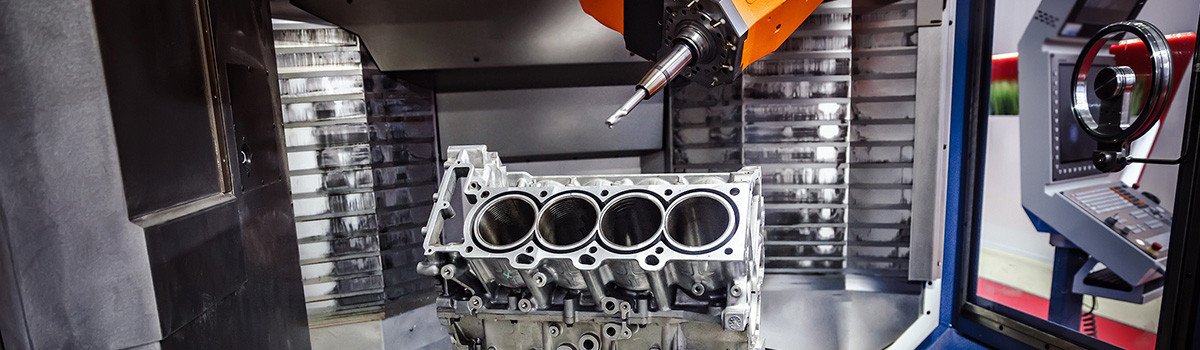
The automotive industry stands as one of the most dynamic and technologically advanced sectors in modern manufacturing. From the assembly lines of Henry Ford to the electric vehicles of today, innovation has been the driving force behind its evolution. At the heart of this progress lies Computer Numerical Control (CNC) machining, a technology that has revolutionized how automotive parts are designed, prototyped, and produced. CNC machining involves the use of computer-controlled machines to remove material from a workpiece, creating precise components with minimal human intervention. In the automotive realm, this technology is indispensable for crafting everything from engine blocks to intricate interior components.
 
The integration of CNC machining into automotive production began in earnest during the mid-20th century, but its impact has grown exponentially with advancements in software, robotics, and materials science. Today, as the industry shifts toward electrification, autonomous driving, and sustainable manufacturing, CNC machining plays a pivotal role in meeting demands for lighter, stronger, and more complex parts. This article delves into the fundamentals of CNC machining, its applications in automobiles, advantages over traditional methods, emerging trends, challenges, and future prospects. By exploring these facets, we aim to provide a thorough understanding of how CNC machining is shaping the vehicles of tomorrow.
 
With the global automotive market projected to reach trillions in value, the precision and efficiency offered by CNC are not just beneficial—they are essential. As we navigate through this topic, we’ll uncover why CNC has become synonymous with automotive excellence.

What is CNC Machining?

To appreciate CNC’s role in automobiles, it’s crucial to understand its core principles. CNC machining is a subtractive manufacturing process where pre-programmed computer software dictates the movement of factory tools and machinery. Unlike additive methods like 3D printing, CNC starts with a solid block of material and carves away excess to form the desired shape.
 
The process begins with Computer-Aided Design (CAD) software, where engineers create digital models of parts. These models are then converted into Computer-Aided Manufacturing (CAM) instructions, generating G-code—a language that tells the CNC machine how to move, at what speed, and with what tools. Common CNC machines include mills, lathes, routers, and grinders, each suited for specific tasks like cutting, drilling, or shaping.
 
In the automotive context, CNC’s precision is paramount. Tolerances as tight as 0.001 inches are routine, ensuring parts fit seamlessly in complex assemblies. This level of accuracy stems from the elimination of human error; once programmed, the machine executes tasks repetitively without fatigue. Moreover, modern CNC systems incorporate sensors and feedback loops for real-time adjustments, enhancing reliability.
 
Historically, CNC evolved from Numerical Control (NC) systems developed in the 1940s for aerospace. By the 1970s, microprocessors made CNC affordable for automotive use, transforming factories from labor-intensive to automated hubs. Today, multi-axis CNC machines (up to 5 or more axes) allow for complex geometries that were once impossible, such as turbine blades or curved dashboards.

History of CNC Machining in the Automotive Industry

The roots of CNC machining trace back to the mid-20th century, born out of wartime necessities for precision manufacturing. During World War II, the demand for accurate aircraft parts spurred innovation in automation. John T. Parsons, often hailed as the father of numerical control, collaborated with Frank L. Stulen in the 1940s to develop the concept of using punched cards to control machine tools. This early work, funded by the U.S. Air Force, aimed at producing complex helicopter blades with consistent quality, laying the groundwork for what would become CNC technology.
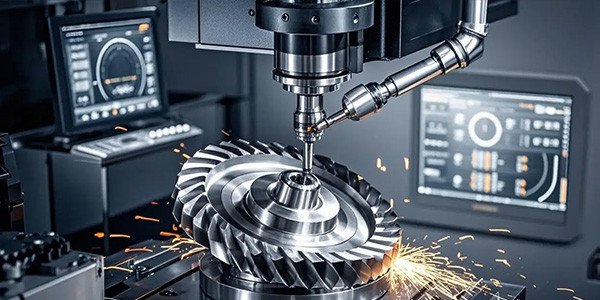
In 1952, the Massachusetts Institute of Technology (MIT) unveiled the first numerical control (NC) machine—a modified Cincinnati Hydrotel milling machine that used punched tape to execute commands. This breakthrough shifted manufacturing from manual operation to automated precision, reducing errors and increasing speed. By the late 1950s, commercial NC machines were available, primarily in aerospace, but the automotive industry soon recognized their potential.
 
The 1960s marked the true transition to CNC with the integration of computers. In 1967, the Electronic Data Control Company introduced the first CNC milling machine, featuring an integrated computer system for multi-axis control. This allowed for more intricate parts, crucial for automotive applications like engine components. Microprocessors in the 1970s further democratized the technology, making machines smaller, cheaper, and more accessible to automotive manufacturers.
 
Automotive adoption accelerated in the late 1970s and 1980s, driven by the need for mass production of complex parts with tight tolerances. Companies like General Motors and Ford began incorporating CNC for engine blocks and transmission gears, replacing labor-intensive methods. The integration of Computer-Aided Design/Computer-Aided Manufacturing (CAD/CAM) systems in the 1980s streamlined the process, allowing seamless transitions from design to production. This era saw CNC evolve from rudimentary NC systems to sophisticated setups capable of handling diverse materials.
 
By the 1990s, CNC had become ubiquitous in automotive plants, enabling just-in-time manufacturing and reducing inventory costs. The 2000s brought further advancements with robotics and AI, enhancing efficiency for high-volume runs. In automotive, this meant faster prototyping for new models, such as SUVs and sedans, and customization for performance vehicles.
 

Today, CNC’s history in automobiles reflects a journey from wartime innovation to indispensable tool, enabling the shift toward EVs and smart cars. Key impacts include reduced production times, improved part consistency, and support for sustainable practices through minimized waste.

How CNC Machining Works

Understanding CNC machining requires breaking down its operational framework, which combines software, hardware, and precise mechanics. The process starts with design: Engineers use CAD software to create a 3D model of the automotive part, such as a cylinder head or suspension arm. This model specifies dimensions, tolerances, and features.
 
Next, Computer-Aided Manufacturing (CAM) software converts the CAD file into G-code, the machine’s instructional language. G-code dictates tool paths, spindle speeds, feed rates, and coordinates. For example, in milling a crankshaft, the code might instruct a 5-axis machine to rotate the workpiece while cutting along multiple planes.
 
The CNC machine itself comprises several components: the controller (the “brain” interpreting G-code), spindle (holding the cutting tool), axes (X, Y, Z for linear movement, plus A and B for rotation in multi-axis systems), and worktable (securing the workpiece). Materials are clamped, and tools like end mills or drills are selected based on the operation—milling for flat surfaces, turning for cylindrical shapes, drilling for holes.
 
Once programmed, the machine runs autonomously. Sensors provide real-time feedback, adjusting for variables like tool wear or temperature to maintain accuracy. In automotive contexts, this ensures parts like brake calipers meet exact specifications for safety.
 
Post-machining involves inspection using coordinate measuring machines (CMM) to verify tolerances. Finishing processes, such as polishing or coating, may follow.
 
Multi-axis CNC (3- to 5-axis) is common in automobiles for complex geometries, reducing setups and errors. Hybrid machines combining CNC with additive manufacturing are emerging for hybrid parts.
 
Overall, CNC’s workflow—from design to finished part—emphasizes precision, repeatability, and efficiency, making it ideal for automotive demands.

Applications in the Automotive Industry

CNC machining’s versatility shines in automotive applications, where it produces critical components across various systems. In engine manufacturing, CNC is used for blocks, cylinder heads, pistons, crankshafts, camshafts, valves, and connecting rods. These parts require tight tolerances to ensure optimal combustion and durability. For instance, aluminum engine blocks are milled to precise specifications, reducing weight while maintaining strength.
 
Transmission systems benefit from CNC for gears, shafts, clutches, and bearings. The process creates intricate tooth profiles on gears, essential for smooth power transfer. In EVs, CNC fabricates battery housings and electric motor components, supporting the shift to electrification.
 
Suspension and steering parts, including control arms, tie rods, ball joints, steering knuckles, and wheel hubs, are CNC-machined for precision alignment and handling. These components must withstand high stresses, and CNC’s accuracy prevents vibrations or failures.
 
Brake systems rely on CNC for calipers, rotors, brackets, and master cylinders. Rotors, for example, are turned to achieve flat surfaces for even braking.Exhaust systems use CNC for manifolds, headers, catalytic converters, and mufflers, optimizing flow and emissions compliance.
 
Interior and exterior elements, such as dashboard panels, door handles, grilles, emblems, and trim, are produced with CNC for aesthetic and functional precision. Chassis frames, brackets, and body panels are machined for structural integrity.
 
Electrical components like connectors, sensor housings, and control modules are CNC-fabricated for reliability in harsh environments.
 
Prototyping is a key application, allowing rapid iteration of designs for new models or custom modifications, such as performance upgrades in racing cars.
 
In EVs, CNC supports lightweight composites for battery enclosures and cooling systems, enhancing range and efficiency.
 
Overall, CNC enables mass production, customization, and innovation, from luxury interiors to high-performance powertrains.
 
CNC machining’s versatility makes it ideal for a wide array of automotive applications. Let’s explore key areas where it excels.
Engine Components
Engines are the heart of any vehicle, and CNC ensures their reliability. Cylinder heads, pistons, and crankshafts are machined with exacting precision to optimize combustion and reduce emissions. For example, CNC milling creates intricate cooling channels in cylinder blocks, improving thermal management. In high-performance cars like Ferraris, CNC turns exotic alloys into lightweight camshafts that enhance RPM capabilities.
 
Transmission parts, such as gears and shafts, benefit from CNC’s ability to produce complex tooth profiles. Automated CNC lathes can churn out thousands of these daily, maintaining consistency across models.
Chassis and Suspension
The chassis forms the vehicle’s skeleton, requiring strength without excess weight. CNC machines fabricate frame components from steel or aluminum, using processes like plasma cutting for initial shapes and milling for fine details. Suspension arms and knuckles are CNC-machined to tight tolerances, ensuring stable handling.
 
In off-road vehicles, CNC creates custom reinforcements, allowing for bespoke designs that traditional methods can’t match.
Interior and Exterior Parts
Beyond mechanicals, CNC shapes aesthetic elements. Dashboard panels, door handles, and grilles are routed from plastics or metals, often with intricate patterns for branding. For luxury brands like BMW, CNC engraves logos on leather-wrapped components with laser precision.
 
Lighting systems, including LED housings, rely on CNC for reflective surfaces that maximize illumination efficiency.
Prototyping and Customization
CNC shines in rapid prototyping, enabling quick iterations during design phases. Automotive startups use CNC to create one-off parts for concept cars, testing aerodynamics or ergonomics. In customization, services like aftermarket tuning employ CNC for personalized exhaust systems or alloy wheels.
 

According to industry insights, CNC facilitates 11 key techniques in automotive, including drilling for fuel injectors and grinding for brake rotors. Specific applications include:

  • Brake Systems: Calipers and discs machined for optimal friction.
  • Fuel Systems: Injectors with micron-level nozzles.
  • Exhaust Systems: Manifolds shaped to reduce backpressure.
  • Electrical Components: Housings for sensors and ECUs.

This breadth underscores CNC’s integral role in vehicle assembly.

Advantages of CNC Machining in Automobiles

CNC machining offers numerous advantages that make it a preferred method in automotive manufacturing. Foremost is precision: Machines achieve tolerances as low as ±0.001 inches, ensuring parts fit perfectly and perform reliably, critical for safety in vehicles.
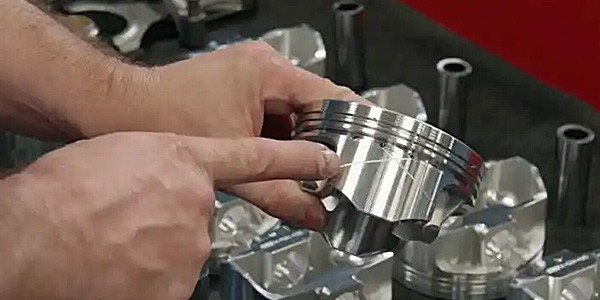
Speed and efficiency are key; once programmed, CNC runs continuously with minimal downtime, producing parts faster than manual methods. This supports high-volume production, like the 81 million cars made annually, with short lead times for prototypes.
 
Repeatability ensures every part is identical, eliminating variations from human error and enhancing quality control. This consistency is vital for automotive standards like ISO/TS 16949.
 
Cost savings arise from reduced labor, as automation minimizes operator involvement, and optimized tool paths cut material waste. Over time, this lowers per-part costs, especially in large runs.
 
Flexibility allows quick design changes without new tooling, ideal for customizing vehicles or adapting to market trends. Material versatility handles metals, plastics, and composites, enabling lightweight designs for better fuel efficiency.
 
Compared to traditional methods, CNC reduces errors, waste, and rework, while supporting complex geometries impossible manually. It also promotes sustainability by minimizing energy use and scrap.
 
In summary, these advantages drive automotive innovation, from efficient production to superior product quality. CNC offers numerous benefits that align with automotive demands for quality, speed, and cost-effectiveness.
Precision and Accuracy
Human-operated machines are prone to variances, but CNC achieves repeatability within microns. This is critical for mating parts, preventing failures like oil leaks.
Production Speed and Efficiency
CNC operates 24/7, drastically reducing cycle times. High-speed spindles cut materials faster, boosting throughput. Automation integrates with robotics for lights-out manufacturing, where factories run unmanned.
Cost Savings
While initial setup costs are high, CNC minimizes waste through optimized tool paths. It also reduces labor needs, lowering overheads. For bulk production, economies of scale make CNC economical.
Flexibility and Customization
Switching programs allows quick adaptation to new designs, ideal for model year updates. This agility supports mass customization, like Tesla’s variable battery packs.
Enhanced Quality Control
Integrated metrology checks parts in-process, ensuring compliance with standards like ISO 9001. This reduces defects and recalls.
 
Overall, advantages include increased accuracy, repeatability, production speed, automation, and customization.

Materials Used in CNC Machining for Automobiles

CNC machining accommodates a wide array of materials tailored to automotive needs. Metals dominate, with aluminum alloys (e.g., 6061, 7075) favored for their lightweight properties in engine blocks and cylinder heads, improving fuel efficiency without sacrificing strength.
 
Steel alloys, such as 4340 or stainless steel, provide durability for crankshafts, gears, and chassis components, resisting wear and corrosion.
 
Titanium alloys offer high strength-to-weight ratios for turbochargers and exhaust parts in high-performance vehicles, though they require specialized tooling due to hardness.
 
Copper alloys are used for bearings and electrical components, valued for conductivity.
 
Plastics like ABS, polycarbonate, and nylon are machined for interiors—dashboards, trims, and lighting—offering flexibility and insulation.
 
Composites, including carbon fiber reinforced polymers (CFRP) and glass fiber reinforced polymers (GFRP), enable lightweight body panels and spoilers, enhancing aerodynamics.
 
Wood, such as walnut, is CNC-machined for luxury interiors.
 
Material selection balances factors like strength, weight, cost, and machinability, with CNC’s precision ensuring optimal performance.
 
Material selection is key to CNC success. Common ones include:
  • Metals: Aluminum for lightweight engine parts; steel for durable chassis; titanium for high-stress aerospace-inspired components in sports cars.
  • Plastics and Composites: ABS for interiors; carbon fiber for body panels, machined with diamond tools to avoid delamination.
  • Alloys: Brass for fittings; magnesium for weight reduction in EVs.
CNC adapts to material properties, using coolant for heat-sensitive ones and dry machining for others to prevent contamination.

CNC Machining Processes in Automotive

Various processes cater to different needs:
  • Milling: Removes material with rotating cutters, ideal for flat surfaces.
  • Turning: Spins the workpiece against a tool, perfect for cylindrical parts.
  • Drilling and Tapping: Creates holes for fasteners.
  • Grinding: Achieves fine finishes on hardened steels.
Advanced variants like 5-axis machining handle undercuts, while EDM (Electrical Discharge Machining) complements CNC for hard materials.

Case Studies:

Real-World ImplementationsConsider Volkswagen’s use of CNC in Golf production. CNC mills produce gearbox housings, enabling a 20% weight reduction while maintaining strength.
 
In EVs, Rivian employs CNC for battery trays, ensuring precise alignments for cell integration. This has cut assembly time by 30%.
 
Aerospace crossovers, like in Formula 1, use CNC for monocoque chassis, influencing road cars like McLarens.
 

These examples highlight CNC’s transformative impact.

Future Trends in CNC Machining for Automobiles

Looking to 2025 and beyond, CNC machining in automobiles is set for transformative trends. Automation and robotics will integrate deeply, with AI-driven systems optimizing tool paths and performing quality checks in real-time.
 
Industry 4.0 practices, including IoT and digital twins, will enable predictive maintenance and connected factories, reducing downtime.
 
AI and machine learning will predict tool wear, adapt processes, and enhance efficiency, particularly for EV components like battery housings.
 
Sustainability will drive energy-efficient machines and recycled materials, aligning with net-zero goals.On-demand manufacturing will support customization, while hybrid CNC-additive methods create complex parts.
 
EV trends will emphasize lightweight composites and precise thermal management components.
 
These trends promise smarter, greener automotive production

Conclusion

CNC machining has indelibly shaped the automotive industry, from enhancing precision to enabling innovation in EVs and beyond. Its applications span critical components, offering advantages in speed, cost, and quality that traditional methods can’t rival. As trends like AI and sustainability take hold, CNC will drive the next era of mobility—safer, greener, and more efficient.
 
Looking ahead, the synergy between CNC and emerging technologies promises vehicles that are not only faster to produce but also superior in performance. For manufacturers, embracing CNC is not optional; it’s imperative for staying competitive in a rapidly evolving market.