
CNC Machining for Different Industries
CNC machining technology is widely used in high-tech industries
CNC Machining for Scientific Instruments
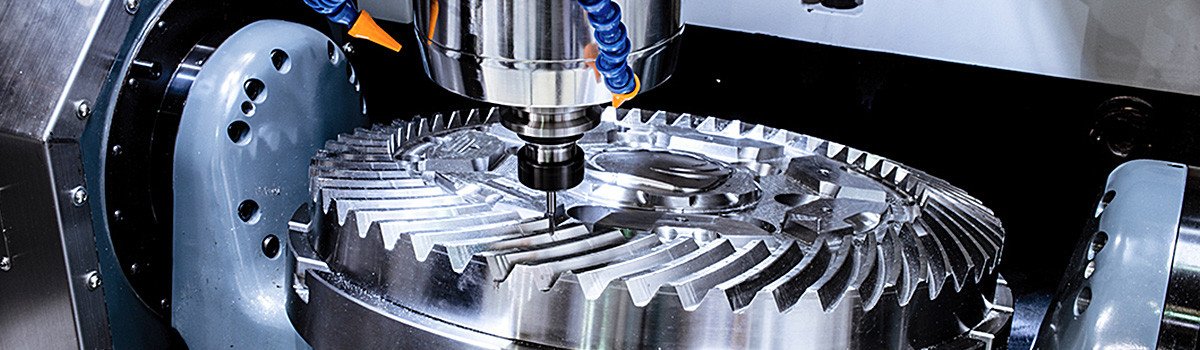
Computer Numerical Control (CNC) machining has revolutionized the manufacturing landscape, particularly in fields requiring unparalleled precision and complexity. At its core, CNC machining involves the use of computerized systems to control machine tools, allowing for the automated production of parts from a variety of materials. This technology translates digital designs—often created using Computer-Aided Design (CAD) software—into physical components through precise movements of cutting tools, lathes, and mills. In the realm of scientific instruments, where accuracy can mean the difference between groundbreaking discoveries and experimental failures, CNC machining plays a pivotal role.
Scientific instruments encompass a broad array of devices used in research and experimentation, including spectrometers, telescopes, microscopes, particle detectors, and laboratory equipment for biology, physics, chemistry, and medicine. These tools demand components with tolerances as tight as microns, surfaces free from imperfections, and materials that withstand extreme conditions such as high vacuum, cryogenic temperatures, or corrosive environments. Traditional machining methods often fall short in achieving such standards consistently, but CNC machining excels by offering repeatability, customization, and efficiency.
The integration of CNC machining in scientific instrument production dates back to the late 20th century, evolving alongside advancements in computing and materials science. Today, it supports everything from prototype development in university labs to high-volume manufacturing for commercial scientific equipment. For instance, in analytical instruments like mass spectrometers, CNC-machined parts ensure precise alignment of optical and electronic components, directly impacting data accuracy. Similarly, in medical diagnostics, CNC technology fabricates surgical tools and implants that save lives.
This article delves into the intricacies of CNC machining for scientific instruments. We will explore its fundamental principles, the materials employed, key applications across scientific disciplines, the benefits and challenges it presents, and emerging trends shaping its future. By understanding CNC machining’s contributions, we can appreciate how it underpins modern scientific progress, enabling researchers to push the boundaries of knowledge.
Table of Contents
ToggleFundamentals of CNC Machining
At its core, CNC machining involves the use of computerized controls to operate and manipulate machine tools. The process begins with a digital design, typically created using Computer-Aided Design (CAD) software. This design is then translated into a set of instructions via Computer-Aided Manufacturing (CAM) software, which generates the G-code—a programming language that directs the machine’s movements.
Key components of a CNC system include the machine itself (such as mills, lathes, routers, or grinders), the controller that interprets the code, and the drive system that powers the tools. For example, in a CNC mill, the workpiece is fixed while the cutting tool moves along multiple axes—typically three (X, Y, Z) but up to five or more for complex operations. This multi-axis capability allows for intricate geometries that are essential in scientific instruments, like the curved surfaces in optical lenses or the precise channels in fluidic devices.
Types of CNC machines relevant to scientific instrument production include:
- CNC Milling Machines: These remove material from a stationary workpiece using rotating cutters. They are ideal for creating flat surfaces, slots, and pockets in components like spectrometer housings.
- CNC Turning Machines (Lathes): Here, the workpiece rotates while the tool remains stationary, perfect for cylindrical parts such as telescope tubes or microscope barrels.
- CNC EDM (Electrical Discharge Machining): Uses electrical sparks to erode material, suitable for hard metals in particle detector components where traditional cutting might fail.
- CNC Grinding Machines: Provide ultra-fine finishes, crucial for optical elements requiring sub-micron surface roughness.
In scientific instrument manufacturing, CNC processes often incorporate advanced features like real-time feedback sensors and adaptive control systems to further enhance accuracy. This foundational understanding sets the stage for appreciating why CNC is indispensable in crafting tools that probe the mysteries of the universe.
Importance in Scientific Instruments
Scientific instruments demand levels of precision that traditional manufacturing methods simply cannot consistently achieve. The importance of CNC machining in this domain lies in its ability to produce parts with exacting specifications, ensuring that instruments function as intended in controlled environments.
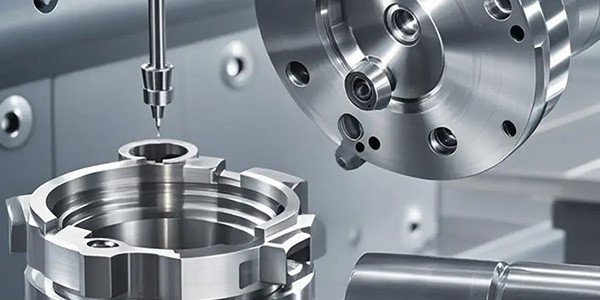
Consider the field of optics: Microscopes and telescopes require lenses and mirrors with flawless surfaces to minimize aberrations. CNC machining, particularly diamond turning, allows for the creation of aspheric optics that correct for distortions, enhancing image clarity. In spectroscopy, precise alignment of gratings and slits is critical for accurate wavelength measurements; any misalignment could lead to erroneous data interpretation.
In particle physics, detectors like those in accelerators (e.g., CERN’s Large Hadron Collider) rely on CNC-machined components for sensor housings and support structures. These parts must withstand extreme conditions while maintaining dimensional stability.
Laboratory equipment, such as pipettes, incubators, and analytical balances, also benefits from CNC’s precision. For instance, the intricate gears and pivots in balances are machined to ensure minimal friction and high sensitivity.
Beyond precision, CNC enables customization. Scientific research often involves bespoke instruments tailored to specific experiments. CNC’s flexibility allows rapid prototyping and iteration, accelerating the pace of innovation. Moreover, it supports the use of advanced materials like titanium alloys for corrosion resistance in chemical analyzers or ceramics for thermal insulation in high-temperature spectrometers.
The scalability of CNC—from prototyping to mass production—further underscores its importance. In an era where scientific funding is competitive, efficient manufacturing reduces costs without compromising quality. Ultimately, CNC machining empowers scientists to focus on discovery rather than fabrication limitations.
Key Applications
Computer Numerical Control (CNC) machining has become a cornerstone technology in the fabrication of scientific instruments. Its ability to produce components with sub-micron tolerances, flawless surface finishes, and perfect repeatability is not merely convenient — it is often mandatory when experimental success depends on mechanical precision. From the largest telescopes on Earth to the smallest microfluidic chips that sequence DNA, CNC machining quietly enables many of the tools that drive modern science. This article examines four major fields where CNC plays an indispensable role.
1. Optical Instruments: Microscopes and Telescopes
Optical systems are unforgiving: a deviation of even one micrometer can scatter light, reduce resolution, or introduce aberrations that ruin data. CNC machining meets these exacting demands across the entire spectrum of optical instrumentation.
In advanced light microscopy, CNC mills and lathes produce objective lens barrels, precision XY stages, z-focus mechanisms, and nosepiece assemblies with coaxiality often better than 2 µm. Fluorescence and confocal systems require black-anodized aluminum or invar parts to minimize thermal drift and stray light. For electron microscopes (SEM, TEM, and cryo-EM), vacuum-compatible sample holders, aperture strips, grid boxes, and pole pieces are machined from 316L stainless steel, titanium, or oxygen-free copper. These components must survive repeated cycles to 10⁻⁸ mbar while maintaining geometric stability to prevent specimen drift during hours-long acquisitions.
Astronomical telescopes represent some of the most impressive examples of large-scale precision CNC work. Primary mirror cells for 8–10 m class telescopes are machined from low-expansion castings, with mounting pads held flat and parallel to within 10–15 µm across several meters. The Thirty Meter Telescope (TMT) alone requires over 2,000 CNC-machined segment support assemblies, each positioned to a few micrometers and aligned to nanometers after figuring. Space telescopes such as Hubble and the James Webb Space Telescope used CNC-fabricated deployment mechanisms, mirror alignment fixtures, and sunshields where weight, thermal stability, and launch-survival were non-negotiable.
Adaptive optics (AO) systems push CNC technology to its limits. Deformable mirrors with hundreds of actuators demand thin-face sheets and complex back structures machined on 5- or 7-axis machines. Diamond turning — a single-point CNC process — directly generates optical surfaces with roughness below 5 nm RMS on metals, germanium, or silicon, eliminating traditional polishing steps for infrared optics. These capabilities allow ground-based telescopes to achieve near-diffraction-limited performance despite atmospheric turbulence.
2. Spectroscopy and Analytical Instrumentation
Spectroscopic instruments translate physical phenomena into precise wavelength or mass data, and any mechanical imperfection directly translates into noise or calibration error.
Diffraction gratings, the heart of most spectrometers, are now routinely ruled or holographically mastered on CNC-controlled platforms that achieve groove densities exceeding 6,000 lines/mm with blaze-angle errors under 1 arc-minute. Monochromator housings, slit assemblies, and mirror mounts are 5-axis machined so that optical axes remain aligned to a few arc-seconds over years of thermal cycling.
Mass spectrometry places even stricter demands on mechanical precision. Quadrupole rods must be parallel to within 3–5 µm over their entire length and round to better than 1 µm — tolerances that only high-end CNC grinding and turning can reliably deliver. Ion optics, RF shields, and time-of-flight drift tubes are machined from stainless steel or ceramic-coated aluminum, then lapped or electro-polished to achieve vacuum integrity below 10⁻¹⁰ mbar·L/s. Orbitrap and FT-ICR analyzers use intricately machined outer electrodes where field uniformity determines resolution exceeding 1,000,000.
In separation science, ultra-high-performance liquid chromatography (UHPLC) relies on CNC-turned stainless or PEEK fittings with zero-dead-volume geometry and surface finishes below Ra 0.2 µm. Microfluidic chips for capillary electrophoresis or droplet-based assays are milled with channels as small as 10–20 µm using micro-endmills or ultrasonic machining. The dimensional accuracy of these channels governs separation efficiency, detection limits, and reproducibility across thousands of runs.
3. Particle Detectors and High-Energy Physics Accelerators
Few environments are as mechanically demanding as the experiments at CERN, Fermilab, SLAC, or KEK. Detectors must operate for decades in radiation fluxes that degrade most materials, yet maintain sub-millimeter alignment in structures spanning tens of meters.
The ATLAS and CMS detectors at the Large Hadron Collider contain hundreds of thousands of CNC-machined parts. Silicon pixel and strip modules are mounted on carbon-fiber or aluminum support structures whose cooling channels are directly milled into the part to remove heat from radiation-damaged sensors. Positional accuracy of ±10 µm over meter-long ladders was achieved only through extensive use of 5-axis machining and in-process metrology.
Calorimeters use alternating layers of absorber (lead, tungsten, or steel) and active material (scintillator or liquid argon). Absorber plates are high-speed CNC-milled to thickness tolerances of ±20 µm so that energy resolution remains below 1%. Scintillating tiles are routed and drilled on CNC routers to accept wavelength-shifting fibers with micron-level precision.
Neutrino experiments such as DUNE and NOvA employ massive liquid-argon TPCs housed in cryostats built from thousands of precision-machined aluminum or stainless components. Field cage rings must be flat to 100 µm over 10 m diameters to preserve electron drift linearity. Superconducting magnet cryostats for accelerators require vacuum vessels, thermal shields, and support posts machined from high-purity materials with integrated cooling circuits and tolerances measured in tens of micrometers at 4 K.
4. General Laboratory and Biotechnology Equipment
Even routine lab instruments depend on CNC precision for safety and performance.
Ultra-centrifuges spin at 150,000 rpm; their titanium or aluminum rotors must be balanced to within micrograms — a feat possible only with CNC turning and dynamic balancing. Autoclavable incubators and environmental chambers use CNC-machined door seals and shelf supports to maintain temperature gradients below ±0.1 °C across large volumes.
The explosion of lab-on-a-chip and organ-on-chip technologies has created massive demand for micro-machined fluidic devices. CNC micro-milling in PMMA, COC, PDMS, or glass produces networks of channels, valves, mixers, and droplet generators with feature sizes down to 10 µm. These chips enable single-cell trapping, high-throughput drug screening, and real-time imaging of living tissues. Next-generation DNA sequencers (Illumina, PacBio, Oxford Nanopore) contain hundreds of CNC-machined flow cells, manifolds, and optical interfaces that ensure nanoliter-scale reagent delivery with zero cross-contamination.
Automated liquid handlers, plate readers, and robotic sample preparation systems all rely on precision-machined rails, grippers, and pipette heads that guarantee sub-microliter accuracy day after day.
Materials Used in CNC Machining for Scientific Instruments
The choice of materials in CNC machining directly influences the performance, durability, and compatibility of scientific instruments. Materials must often exhibit properties like high strength-to-weight ratios, thermal stability, chemical resistance, or optical clarity.
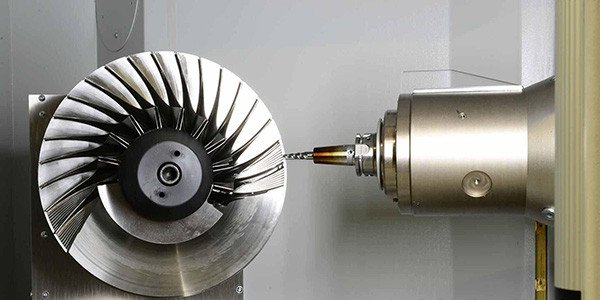
Metals are predominant due to their machinability and robustness. Aluminum alloys (e.g., 6061) are lightweight and corrosion-resistant, used in instrument housings and mounts. Stainless steels (316L) offer biocompatibility for medical devices, while titanium (Ti-6Al-4V) provides strength for high-stress applications like orthopedic tools in research labs. Exotic metals like Invar (low thermal expansion) are machined for precision instruments in physics, such as interferometers, to maintain accuracy across temperature variations. Refractory metals like tungsten and molybdenum handle extreme heat in vacuum chambers or particle accelerators.
Plastics and polymers cater to applications requiring insulation or flexibility. PEEK (polyether ether ketone) is favored for its chemical resistance and sterilizability, used in fluidic components for chromatographs. Acrylic (PMMA) and polycarbonate provide optical transparency for lenses and covers in microscopes.
Ceramics and composites address specialized needs. Alumina and zirconia offer hardness for wear-resistant parts in analytical devices, while glass and quartz are CNC-machined for optical elements in telescopes. Advanced composites, like carbon fiber-reinforced polymers, reduce weight in portable scientific tools.
Material selection involves considering machinability—hard materials require diamond tools or slow feeds to avoid cracking. Surface treatments, such as anodizing or coating, enhance properties post-machining. In biotech, biocompatible materials ensure no contamination in lab equipment.
Challenges and Limitations
Despite its strengths, CNC machining faces challenges in scientific applications.
High initial costs for equipment and software can be prohibitive for small labs.
Programming complexity requires skilled operators, potentially leading to bottlenecks.
Material limitations exist; very brittle materials may chip during machining.
Size constraints: Large instruments like telescope mirrors may exceed machine capacities, necessitating alternative methods.
Maintenance and downtime can disrupt production, and environmental factors like vibration affect precision.
Overcoming these involves investing in training, advanced machines, and hybrid manufacturing approaches.
Future Trends
Looking ahead, CNC machining for scientific instruments will integrate with AI for predictive maintenance and optimized designs.
Additive manufacturing hybrids will allow for more complex structures.
Nanomachining advancements will enable even finer features for quantum devices.
Sustainability trends will focus on eco-friendly materials and energy-efficient processes.
These evolutions promise to further elevate scientific capabilities.
Conclusion
CNC machining stands as a pivotal technology in the creation of scientific instruments, blending precision, efficiency, and versatility to fuel discoveries. From optical wonders to particle probes, its impact is profound. As challenges are addressed and innovations emerge, CNC will continue to shape the future of science, ensuring instruments that unlock new frontiers of knowledge.