
CNC Machining for Aerospace:
Precision Engineering in the Skies
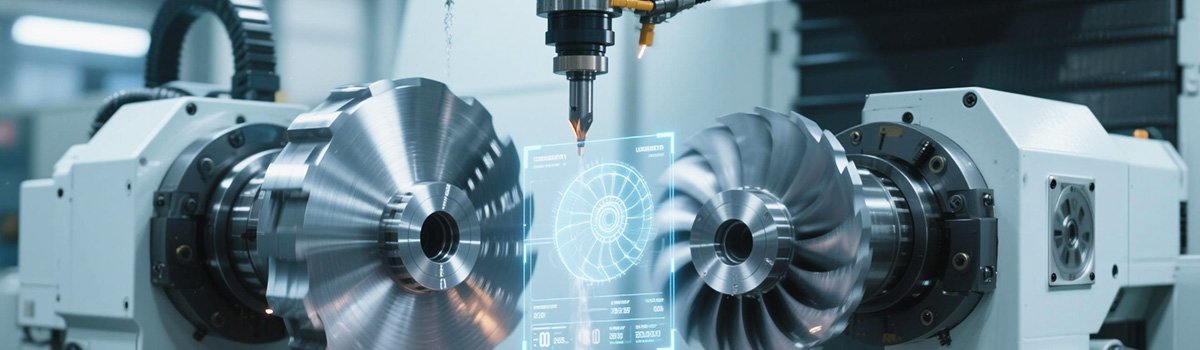
The aerospace industry stands as a pinnacle of human engineering achievement, where the demands for precision, reliability, and innovation are unparalleled. At the heart of this sector lies Computer Numerical Control (CNC) machining, a technology that has revolutionized the way aircraft, spacecraft, and related components are manufactured. CNC machining involves the use of computerized systems to control machine tools, enabling the production of complex parts with exceptional accuracy. In aerospace, where even the slightest deviation can lead to catastrophic failure, CNC machining ensures that components meet stringent tolerances, often down to microns.
This article delves into the multifaceted role of CNC machining in aerospace. We will explore its historical evolution, fundamental principles, materials employed, types of machines utilized, key applications, advantages and challenges, and emerging trends that are shaping its future. By understanding these elements, we gain insight into how CNC machining not only supports current aerospace endeavors but also propels the industry toward new frontiers, such as sustainable aviation and space exploration.
The integration of CNC machining in aerospace dates back to the mid-20th century, but its sophistication has grown exponentially with advancements in computing and materials science. Today, it is indispensable for producing everything from turbine blades to structural frames, contributing to lighter, stronger, and more efficient aircraft. As global air travel and space missions expand, the demand for high-precision manufacturing continues to drive innovation in this field.
Table of Contents
ToggleHistorical Evolution of CNC Machining in Aerospace
Fundamentals of CNC Machining
Materials Used in Aerospace CNC Machining
Aerospace components must endure high stresses, temperatures, and corrosive environments, necessitating specialized materials that CNC machines can precisely shape. Common materials include:
- Aluminum Alloys: Lightweight and corrosion-resistant, alloys like 7075 and 2024 are staples for airframes and panels. CNC machining excels at creating thin-walled structures from these, balancing strength and weight.
- Titanium Alloys: Known for their high strength-to-weight ratio and heat resistance, titanium (e.g., Ti-6Al-4V) is used in engine components and landing gear. Machining titanium requires specialized tools due to its toughness, but CNC’s controlled parameters prevent tool wear and maintain precision.
- Stainless Steel: For parts requiring corrosion resistance, like fasteners and hydraulic systems, steels such as 17-4 PH are machined. CNC allows for intricate threading and hole drilling essential in these applications.
- Composite Materials: Modern aerospace increasingly uses carbon fiber reinforced polymers (CFRP) and other composites for weight reduction. CNC routers with dust extraction systems machine these without delamination, adapting spindle speeds dynamically to material properties.
- Superalloys: Nickel-based alloys like Inconel are vital for turbine blades, withstanding temperatures over 1000°C. CNC’s ability to handle hard materials through high-speed machining (HSM) techniques is critical here.
Selecting the right material involves considering factors like machinability, cost, and performance. CNC machining’s versatility allows aerospace engineers to experiment with hybrid materials, pushing the boundaries of what’s possible in flight.
Types of CNC Machines in Aerospace
Aerospace CNC machining employs a variety of machine types, each suited to specific tasks:
- 3-Axis Mills: Basic yet essential for flat or simple curved surfaces, like wing spars. They move along X, Y, and Z axes.
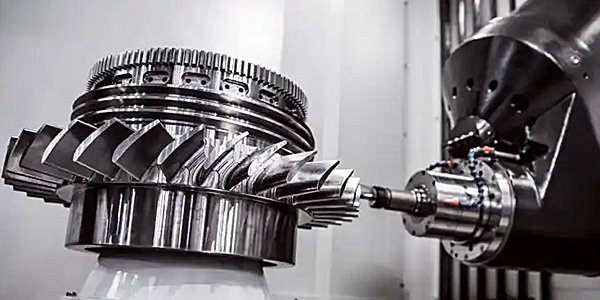
- 5-Axis Machines: These offer rotation around two additional axes (A and B), enabling complex geometries without repositioning the workpiece. Advantages include reduced setup time, improved surface finishes, and efficient material removal—ideal for turbine blades and impellers.
- CNC Lathes: For cylindrical parts like shafts and bushings, lathes rotate the workpiece while tools cut symmetrically.
- Swiss-Style Lathes: Advanced for small, high-precision parts, these support simultaneous operations, reducing cycle times for aerospace fasteners.
- Wire EDM (Electrical Discharge Machining): A non-traditional CNC variant using electrical sparks to erode material, perfect for hard metals and intricate shapes like gear teeth.
- CNC Routers: Specialized for composites and large panels, with vacuum tables to hold materials securely.
In aerospace, machines often integrate with robotic arms for automated loading/unloading, enhancing throughput. The choice of machine depends on part complexity, material, and production volume, with multi-axis systems dominating for their efficiency.
Applications of CNC Machining in Aerospace
1. Aircraft Structures: Building the Skeleton with Precision
2. Engine Components: Where Microns Matter Most
3. Landing Gear: Strength Under Extreme Loads
4. Avionics Housings and Electronic Enclosures
5. Spacecraft and Launch Vehicle Components
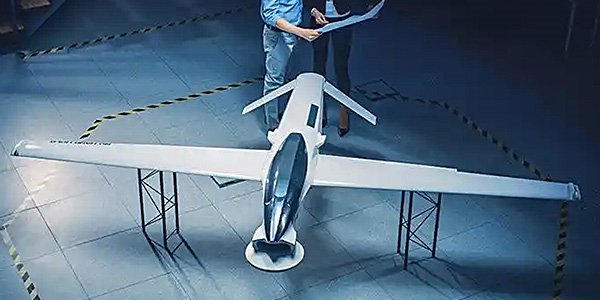
6. Drones and Unmanned Aerial Vehicles (UAVs)
Advantages of CNC Machining in Aerospace
1. Unmatched Precision and Accuracy
2. Dramatic Efficiency and Cost Reduction
3. Design Flexibility and Rapid Iteration
4. Ability to Produce Complex Geometries
5. Absolute Repeatability and Traceability
6. Broad Material Versatility
Real-World Impact
Challenges in Aerospace CNC Machining
Despite its strengths, CNC machining faces hurdles:
- High Initial Costs: Advanced machines and software require significant investment, though ROI is realized through efficiency.
- Material-Specific Issues: Hard materials like titanium cause tool wear, necessitating frequent replacements and coolant systems.
- Thermal Management: Heat generated during machining can distort parts, requiring precise control.
- Skill Gaps: Operators need expertise in programming and troubleshooting, leading to training demands.
- Regulatory Compliance: Aerospace parts must undergo rigorous testing, adding time and cost.
- Sustainability Concerns: Waste from subtractive processes prompts a shift toward eco-friendly practices.
Addressing these involves ongoing R&D, such as adaptive machining that adjusts parameters in real-time to mitigate issues.
Future Trends in CNC Machining for Aerospace
The future of CNC in aerospace is bright, driven by technological integrations:
- Automation and AI: Robotic cells and AI-optimized toolpaths reduce human intervention and predict failures.
- Hybrid Manufacturing: Combining CNC with additive methods (e.g., 3D printing) for near-net-shape parts, minimizing machining time.
- High-Speed Machining (HSM): Faster spindles and advanced coatings allow quicker production without sacrificing quality.
- Sustainable Practices: Recycling chips and using bio-based coolants align with green aviation goals.
- Digital Twins: Virtual simulations mirror physical processes, enabling predictive maintenance and design optimization.
- Nanomachining: For ultra-precise features in next-gen sensors and microsatellites.
These trends promise to make aerospace manufacturing smarter, faster, and more sustainable, supporting ambitions like hypersonic flight and Mars missions.