
CNC Machining in the Medical Industry:
Precision Engineering for Life-Saving Innovations
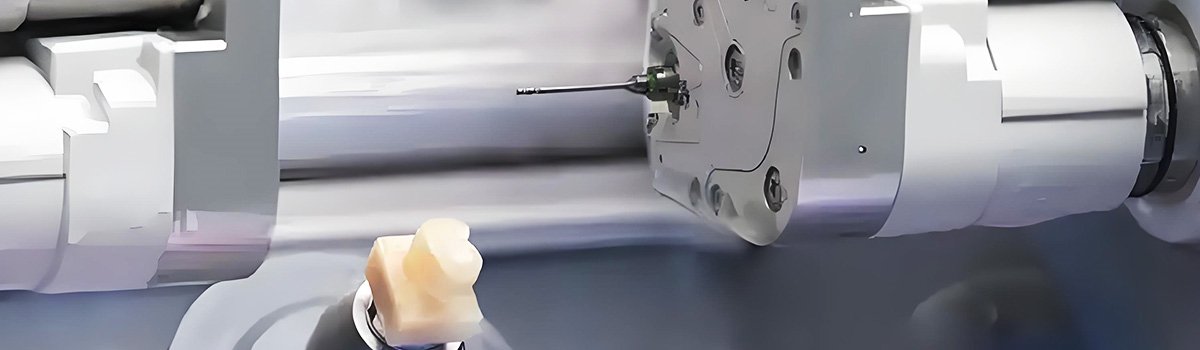
This article delves into the multifaceted role of CNC machining in the medical field. We will explore its core processes, key applications, advantages, commonly used materials, inherent challenges, real-world examples, and emerging trends. By understanding how CNC machining bridges engineering excellence with medical innovation, we can appreciate its essential contribution to improving healthcare delivery and patient safety in 2025 and beyond.
Table of Contents
ToggleWhat is CNC Machining?
Applications in the Medical Field
Advantages of CNC Machining in Medical Manufacturing
In the highly regulated and life-critical world of medical device manufacturing, few technologies match the impact of Computer Numerical Control (CNC) machining. Its combination of extreme precision, repeatability, flexibility, and efficiency has made it the gold standard for producing surgical instruments, implants, diagnostic equipment components, and countless other medical products. Below are the key advantages that explain why CNC machining remains indispensable in modern healthcare manufacturing.
- Unmatched Precision and Repeatability
Medical components frequently require tolerances as tight as ±0.0001 inches (2.5 µm) or even finer. Examples include orthopedic screws, cardiovascular stents, and spinal fixation hardware, where the smallest deviation can compromise fit, function, or patient safety. CNC machines achieve this level of accuracy through computer-controlled servo motors, high-resolution encoders, and rigid machine construction that virtually eliminates human variability.
Once a program is proven, CNC delivers identical parts from the first piece to the millionth. This repeatability is essential for regulatory compliance (FDA 21 CFR Part 820, ISO 13485) and for ensuring consistent clinical performance. Batch-to-batch uniformity reduces the risk of recalls and liability while giving surgeons complete confidence in the instruments and implants they use.
- Superior Production Efficiency and Speed-to-Market
CNC automation dramatically shortens manufacturing cycles compared to manual machining. Multi-axis (4- and 5-axis) machines perform complex operations—milling, turning, drilling, and threading—in a single setup, eliminating time-consuming repositioning and reducing cumulative error.
Advanced CAM software optimizes toolpaths, minimizes air cutting, and enables high-speed machining with spindle speeds exceeding 30,000 RPM. What once took days or weeks can now be accomplished in hours. This rapid throughput is invaluable for:
- Quick-turn prototyping of new designs
- Scaling production during public health emergencies (e.g., ventilator components in 2020)
- Meeting tight regulatory submission timelines
Shorter lead times translate directly into faster regulatory approvals and earlier patient access to innovative devices.
- Broad Material Compatibility and Biocompatibility Support
Medical-grade CNC machines handle virtually every material required in healthcare:
- Titanium and titanium alloys (Ti-6Al-4V ELI)
- Medical stainless steels (316LVM, 17-4PH)
- Cobalt-chrome alloys
- PEEK (polyether ether ketone) and other high-performance polymers
- Ceramics (zirconia, alumina)
- Shape-memory alloys such as Nitinol
This versatility allows engineers to select the optimal material for each application—whether maximum strength for joint replacements, radiolucency for spinal implants, or superelasticity for self-expanding stents—without changing manufacturing platforms. Coolant strategies, sharp cutting tools, and rigid setups prevent heat-affected zones that could compromise biocompatibility.
- True Customization and Patient-Specific Solutions
The shift toward personalized medicine relies heavily on CNC’s ability to produce one-off or low-volume custom parts economically. Using patient CT or MRI data, engineers generate 3D models, convert them to toolpaths, and machine implants that match individual anatomy exactly. Custom cranial plates, maxillofacial reconstruction meshes, patient-matched knee implants, and dental implant abutments are now routine. This customization improves surgical outcomes, reduces operating time, and enhances implant longevity. - Significant Cost Reduction Over the Product Lifecycle
Although initial CNC equipment investment is high, long-term costs are lower than traditional methods:
- Minimal material waste through precise stock removal
- Reduced labor costs via lights-out (unattended) machining
- Lower scrap and rework rates due to first-part correctness
- Extended tool life with modern coatings and predictive maintenance
- Energy-efficient servo drives and spindle designs
For high-value, low-to-medium volume medical parts, CNC often proves more economical than injection molding (which requires expensive tooling) or additive manufacturing (which may lack mechanical properties or regulatory acceptance).
- Built-In Quality Assurance and Traceability
Modern CNC systems integrate in-process monitoring—tool wear sensors, probe-based measurement, and real-time statistical process control (SPC). Deviations trigger automatic stops before defective parts are produced. Every cut, spindle load, and coordinate is logged, providing full traceability demanded by FDA and EU MDR. This digital thread from design to finished part simplifies validation (IQ/OQ/PQ) and audit trails. - Seamless CAD/CAM Integration and Design Freedom
Today’s workflow begins with CAD models (SolidWorks, Creo, NX) that flow directly into CAM software (Mastercam, hyperMILL, PowerMill). Complex freeform surfaces, thin walls, deep pockets, and internal cooling channels—geometries impossible or prohibitively expensive with manual methods—are programmed in minutes. Iterative design changes are implemented quickly without new fixtures or hard tooling, accelerating development cycles and encouraging innovation. - Scalability and Future-Proofing
CNC bridges prototyping and full-scale production on the same platform. A prototype machined on a 5-axis milling center can transition to series production simply by adding automation (pallet pools, robotic loading) without re-validating an entirely new process. As demand grows or designs evolve, manufacturers scale capacity confidently and cost-effectively. - Sustainability Benefits
Optimized toolpaths and near-net-shape starting stock minimize raw material consumption. Dry or minimum-quantity lubrication (MQL) machining reduces coolant use and disposal. Many medical manufacturers now recycle titanium and stainless-steel chips, further lowering environmental impact while meeting corporate sustainability goals.
Materials Used in Medical CNC Machining
Challenges in CNC Machining for Medical Devices
Case Studies and Examples
Future Trends
Sustainability will drive eco-friendly practices, with energy-efficient machines and recyclable materials. Personalization will advance through data-driven designs, supported by big data and 3D modeling. By 2030, the CNC market is expected to reach $126 billion, with medical applications leading growth through these innovations.