
CNC Metal Lathe Machining for High-Precision Custom Parts
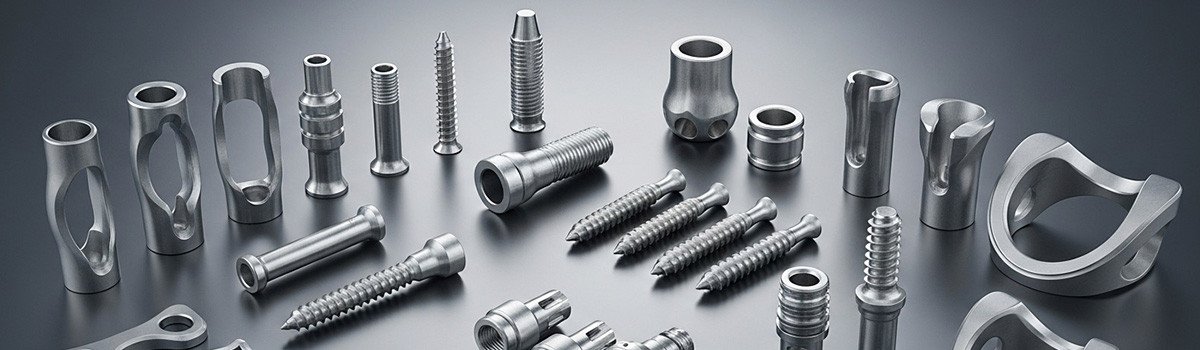
CNC metal lathe machining creates high-precision custom parts by rotating a workpiece against a computer-controlled cutting tool, ideal for cylindrical components like shafts, fittings, and complex parts, offering superior accuracy, repeatability, and efficient material removal for diverse materials (aluminum, steel, titanium) and demanding industries (aerospace, medical). Modern multi-axis lathes combine turning and milling, enabling intricate features, tighter tolerances (±0.0001″), and faster production by completing complex parts in a single setup.
CNC metal lathe machining stands as a pinnacle of modern manufacturing, transforming raw metal into high-precision custom parts with unparalleled accuracy and efficiency. At its core, this process involves computer numerical control (CNC) systems that automate the rotation of a workpiece while precisely guiding cutting tools to remove material, creating symmetrical components like shafts, bushings, pins, and threaded fittings. Unlike traditional manual lathes, CNC versions rely on programmed instructions—typically G-code derived from computer-aided design (CAD) models—to ensure consistency across prototypes, small batches, or large production runs. This automation eliminates human error, reduces lead times, and minimizes waste, making it indispensable for industries demanding tight tolerances, such as aerospace, automotive, medical, and energy sectors.
The demand for high-precision custom parts has surged with advancements in technology, where even minor deviations can lead to system failures. For instance, in aerospace, turbine blades must withstand extreme conditions without variance, while medical implants require biocompatible surfaces with micron-level accuracy. CNC metal lathes address these needs by achieving tolerances as tight as ±0.0002 inches (±0.005 mm), often with surface finishes smoother than Ra 0.4 micrometers. These machines handle complex geometries, including undercuts, threads, and grooves, in a single setup, enhancing productivity.
Table of Contents
ToggleKey Benefits for Custom Parts
CNC metal lathe machining—also known as CNC turning—stands out as a premier method for producing high-precision custom parts. By rotating a workpiece against precisely controlled cutting tools under computer numerical control, it delivers exceptional results for components used in aerospace, medical devices, automotive systems, robotics, and instrumentation. The core advantages include unparalleled accuracy, broad material compatibility, the ability to create intricate designs efficiently, reduced production costs through optimization, and superior surface quality ready for advanced finishes.
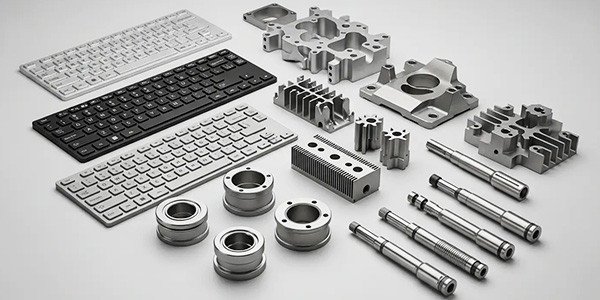
1. High Accuracy and Repeatability
The foundation of CNC lathe machining’s value lies in its high accuracy and repeatability. Digital control via G-code eliminates variability introduced by manual operation, such as inconsistent feed rates, tool pressure, or measurement errors. Every movement is executed with micron-level precision, guided by high-resolution encoders, rigid machine frames, and advanced servo systems.
Typical tolerances reach ±0.0001 inches (2.5 microns), with many shops routinely holding ±0.0002 to ±0.0005 inches for critical dimensions. This precision ensures perfect fit and function in assemblies—vital for items like turbine shafts, surgical instrument components, or optical mounts. Repeatability guarantees consistency across production runs: the 500th part matches the first within the same tight band, minimizing inspection time, scrap, and rework. Features like automatic tool compensation and in-process gauging further enhance reliability, even during long unattended runs.
2. Versatility in Materials and Part Configurations
CNC lathes accommodate an extensive range of materials, making them highly versatile for custom applications. Common choices include stainless steel (for corrosion resistance and strength), titanium (ideal for lightweight, high-performance needs), brass (excellent machinability and conductivity), aluminum alloys (lightweight with good strength), and various tool steels or superalloys. Some setups also handle engineering plastics like PEEK or acetal for low-friction or insulating properties.
This material flexibility allows designers to optimize for specific requirements—biocompatibility in medical parts, heat resistance in aerospace components, or cost-effectiveness in consumer electronics—without switching manufacturing processes. CNC turning produces a wide variety of shapes: simple shafts and bushings, stepped diameters, tapers, contoured profiles, threaded sections, and more. Whether creating a single prototype or a batch of custom fittings, the process adapts seamlessly.
3. Ability to Produce Complex Geometries
Modern CNC turning centers go far beyond basic cylindrical shapes thanks to advanced capabilities. Live tooling equips the turret with rotating tools (end mills, drills, taps), enabling milling, drilling, slotting, and tapping operations directly on the lathe. Y-axis movement supports true off-center machining, while sub-spindles allow simultaneous or back-side operations. Some machines incorporate full 4- or 5-axis functionality for even greater complexity.
These features produce intricate parts—such as shafts with milled flats, radial holes, keyways, or contoured pockets—in a single setup. Eliminating transfers between machines preserves alignment, reduces cumulative errors, and shortens lead times. What once required multiple fixtures and operations can now be completed efficiently, making CNC lathes ideal for sophisticated custom designs like valve bodies, connectors with hybrid features, or precision spindles.
4. Enhanced Efficiency and Minimal Waste
Efficiency drives the economic appeal of CNC metal lathe machining. Optimized tool paths from CAD/CAM software minimize unnecessary movements, reduce cycle times, and extend tool life through high-speed strategies. Multi-tasking machines combine turning with secondary operations, slashing setup times from hours to minutes and enabling faster turnaround for custom orders.
Material utilization is excellent: precise control removes only required stock, generating less scrap than manual methods or less advanced processes—especially valuable with expensive alloys like titanium. Automated features such as bar feeders, robotic part handling, and lights-out capability support cost-effective production from prototypes to medium volumes.
5. Superior Surface Finish and Seamless Post-Processing
CNC turning achieves outstanding as-machined surface finishes, often 32 microinches (Ra 0.8 μm) or better with optimized feeds, sharp inserts, and proper coolant use. Many parts require minimal secondary finishing, saving time and cost while maintaining precision.
When enhanced properties are needed, post-processing integrates effortlessly. Anodizing adds corrosion resistance and color to aluminum parts, plating (nickel, chrome) boosts durability, passivation improves stainless steel’s performance, and bead blasting or polishing refines appearance. These treatments enhance wear resistance, aesthetics, and environmental resilience without compromising dimensional accuracy.
In conclusion, CNC metal lathe machining offers a compelling combination of precision, versatility, complexity handling, efficiency, and finish quality that makes it the go-to solution for high-precision custom parts. Its ability to deliver consistent, high-performance components quickly and cost-effectively supports innovation and reliability across demanding industries.
Common Applications
CNC turning serves critical roles across diverse industries where high-precision cylindrical or contoured parts are essential.
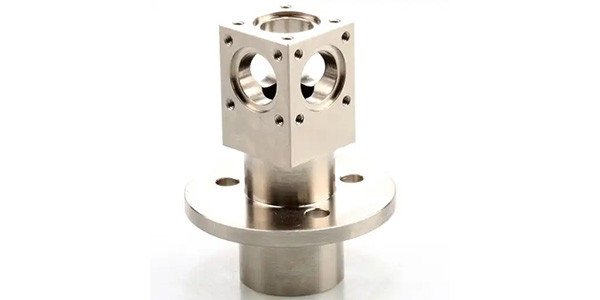
1.Aerospace: The sector relies heavily on CNC-turned components for their strength-to-weight ratio and dimensional precision. Typical parts include turbine shafts, which must withstand high rotational speeds and temperatures while maintaining perfect balance; structural fittings that connect airframe elements with minimal weight; and various engine components like compressor rotors, fuel system fittings, and landing gear shafts. These parts often require tolerances down to ±0.0001 inches and materials like titanium or Inconel to meet stringent FAA and aerospace standards.
2.Automotive: In high-performance and standard vehicles, CNC turning produces durable, precise parts that handle torque, vibration, and wear. Key examples are transmission parts (gears, shafts, and synchronizers), drive shafts that transmit power efficiently, and high-performance engine components such as crankshafts, camshafts, and custom pistons. These parts ensure smooth operation, fuel efficiency, and longevity in demanding conditions like racing or heavy-duty trucks.
3.Medical: Biocompatibility, precision, and smooth finishes are paramount here. CNC turning fabricates surgical instruments (forceps, retractors, drill bits), orthopedic implants (hip stems, bone screws, spinal hardware), and device housings for implants or diagnostic tools. Materials like titanium and stainless steel are common, with parts often requiring mirror-like finishes to minimize tissue irritation and ensure sterility.
4.Energy & Heavy Equipment: This field demands robust parts for harsh environments involving high pressure, corrosion, and heavy loads. Common components include pump housings, valve bodies for oil/gas or hydraulic systems, generator shafts, and agricultural machinery elements like axles or couplings. These parts often feature complex contours, threads, and large diameters while maintaining structural integrity.
How It Works (CNC Turning)
The CNC turning process transforms raw material into finished high-precision parts through a systematic, computer-controlled sequence.
1.Programming: It begins with a detailed CAD model of the part. CAM software then generates optimized toolpaths, calculating feeds, speeds, depths of cut, and sequences to minimize cycle time and tool wear. The output is G-code—a series of precise instructions that dictate every machine movement, spindle speed, and tool change. Simulation verifies the program to avoid collisions or errors before production starts.
2.Workpiece Setup: Raw material, typically round bar stock, is loaded into the lathe’s chuck (often a precision three-jaw or collet chuck for high accuracy). The chuck grips the bar securely while allowing rotation. For longer parts, a tailstock or steady rest provides additional support to prevent deflection. Bar feeders automate material supply for high-volume runs.
3.Rotation & Cutting: The spindle rotates the workpiece at high speeds (often 1,000–6,000 RPM or more, depending on material and diameter). A stationary cutting tool, mounted in the turret, advances along programmed paths (primarily X-axis for diameter reduction and Z-axis for length). Material is removed in layers via operations like roughing (bulk removal), finishing (precision sizing), facing (flat ends), threading, grooving, or parting-off. Coolant flushes chips and cools the tool/workpiece interface.
4.Multi-Axis & Live Tooling: Advanced CNC turning centers incorporate live tooling—rotating tools powered within the turret—for milling, drilling, slotting, or tapping without removing the part. Y-axis enables off-center features, while sub-spindles allow back-side machining. Multi-axis setups (including C-axis for indexing) produce complex geometries like milled flats, cross-holes, or keyways in a single clamping, reducing setup time and improving accuracy by eliminating transfer errors.
5.Quality Control: Precision is verified throughout. In-process probing measures critical dimensions in real time, adjusting for tool wear or thermal effects. Post-machining inspections use CMMs, optical comparators, or surface profilometers to confirm GD&T (geometric dimensioning and tolerancing) compliance, surface finishes (often Ra 0.8 μm or better), and material integrity. Traceability records ensure compliance with industry standards like ISO 9001 or AS9100.
CNC metal lathe machining combines speed, precision, and flexibility to deliver custom parts that meet the rigorous demands of today’s high-tech industries. From prototypes to production volumes, its ability to handle complex designs efficiently makes it indispensable for engineers seeking reliable, high-performance components.
Benefits and Advantages
CNC metal lathe machining offers myriad benefits, particularly for high-precision custom parts. Foremost is exceptional accuracy and repeatability—programs ensure every part matches the design, eliminating variations from manual operations. This is crucial for tolerances under ±0.01 mm, where consistency prevents assembly issues.
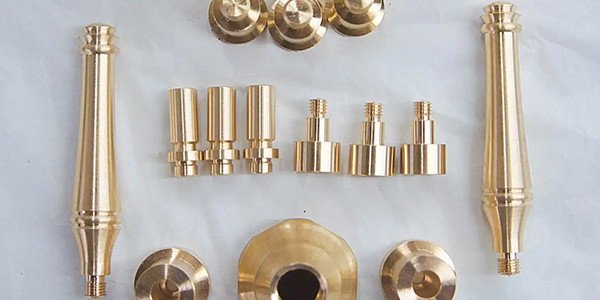
Automation reduces labor costs and human error, allowing operators to oversee multiple machines. Lead times shrink dramatically; complex parts that took days manually are completed in hours. Material wastage is minimized through optimized tool paths, and rapid program changes facilitate custom orders without downtime.
Versatility shines in handling diverse materials and geometries. Multi-axis lathes perform turning, milling, and drilling in one setup, reducing handling errors and improving efficiency. For custom parts, this means seamless prototyping to production scaling.Safety improves with enclosed operations and automated monitoring, detecting tool wear or vibrations early. Economic advantages include lower per-part costs in batches, making it viable for small runs. Surface finishes are superior, often requiring no secondary processing.
Compared to other methods like milling or casting, CNC lathes excel in cylindrical symmetry, offering faster cycle times for rotational parts. Integration with CAM software enables simulation, catching errors pre-production. Overall, these advantages make CNC metal lathe machining a cost-effective, reliable choice for high-precision custom fabrication.
Materials Selection for High-Precision Custom Parts
Selecting the right material is critical in CNC metal lathe machining, influencing machinability, durability, and performance. Common choices include aluminum, valued for its lightweight nature, corrosion resistance, and ease of machining—ideal for aerospace components with smooth finishes.
Brass offers excellent conductivity and machinability, suiting electrical connectors and decorative fittings.Steel variants, like carbon and alloy steels, provide strength for automotive shafts and tools, though harder grades require robust tooling. Stainless steel, with its corrosion resistance, is preferred for medical and marine parts, achieving tight tolerances despite challenges. Titanium stands out for its strength-to-weight ratio and biocompatibility, essential in implants and turbine blades, but demands precise speeds to avoid work hardening.
Other materials like copper for thermal conductivity, Inconel for high-temperature resistance, and composites for specialized applications expand options. Factors include thermal properties to manage heat buildup, ductility to prevent cracking, and compatibility with coolants.
For high-precision, materials with stable microstructures minimize distortion. Certifications like ASTM ensure traceability. Testing on scraps verifies machinability, optimizing feeds and speeds. Ultimately, material choice aligns with part function, balancing cost, performance, and process efficiency.
Design and Programming: CAD/CAM Integration
Design and programming form the backbone of CNC metal lathe machining. It starts with CAD software like SolidWorks or Fusion 360, where engineers model parts with precise dimensions, tolerances, and features. For custom high-precision work, designs incorporate draft angles, radii to reduce stress, and tool access considerations to avoid undercuts that complicate machining.
CAM software then translates CAD models into G-code, defining tool paths, speeds, feeds, and sequences. Programs like Mastercam or SolidCAM simulate operations, identifying collisions or inefficiencies. G-codes control motions (e.g., G01 for linear cuts), while M-codes manage auxiliaries (e.g., M08 for coolant).
For complex custom parts, multi-axis programming enables simultaneous operations, reducing setups. Optimization tools adjust parameters for material-specific performance, ensuring minimal vibration and optimal chip removal.
Prototyping involves iterative simulations, validating designs before machining. Documentation includes tool lists and setup sheets for repeatability. This integration streamlines from concept to production, crucial for high-precision custom parts where accuracy is non-negotiable.
Machine Types and Setup for Precision Machining
CNC metal lathes vary by type, each suited to specific custom part needs. Two-axis lathes handle basic cylindrical operations like turning and threading, economical for small-medium parts in steel or aluminum. Multi-axis (3-5+ axes) add Y-axis and live tooling for complex geometries in one setup, ideal for aerospace.
Swiss-type lathes, with sliding headstocks and guide bushings, excel in slender, high-precision parts like medical pins, supporting up to 10 axes for titanium or stainless steel. Vertical lathes manage heavy, large parts with stability, while horizontal ones offer versatility for efficient chip removal.
Setup begins with mounting the workpiece in chucks or collets, ensuring alignment to prevent runout. Tools are indexed in turrets, calibrated for height and offset. Spindle speeds (e.g., 1000-4000 RPM) and feeds (0.002-0.01 in/rev) are set based on material. Coolant systems and chip conveyors are configured. Calibration with dial indicators guarantees precision, setting the stage for flawless machining.
Machining Processes and Operations
Core operations in CNC metal lathe machining include turning, where the tool removes material to create diameters or contours, achieving ±0.01 mm tolerances. Roughing cuts bulk, finishing refines surfaces to Ra 0.8 microns.
Facing squares ends, essential for flat mating surfaces. Threading cuts external/internal threads synchronously, vital for fasteners. Drilling and boring create/enlarge holes with ±0.005 mm accuracy.
Grooving/parting forms recesses or separates parts, while knurling adds grip patterns. For custom precision, operations sequence minimizes deflection—e.g., support long parts with tailstocks.
Live tooling enables off-axis features like slots. Monitoring via sensors adjusts for wear, ensuring quality. Deburring follows, often automated, for smooth edges. These processes deliver intricate custom parts efficiently.
Quality Control and Inspection
Quality control is paramount, employing tools like micrometers, calipers, and coordinate measuring machines (CMM) for dimensional verification. Surface roughness testers assess finishes, while optical comparators check profiles.
Statistical process control (SPC) monitors variations, maintaining high Cpk values. In-process inspections detect issues early, with post-machining checks ensuring compliance.
For custom parts, traceability via material certs and lot numbers is key. Common defects like chatter or burrs are mitigated through tool sharpness and vibration damping. This rigorous approach guarantees high-precision outcomes.
Applications Across Industries
In aerospace, CNC lathes produce turbine housings and fasteners from titanium, ensuring lightweight strength. Automotive uses include shafts and gears for durability.
Medical applications yield implants and tools with biocompatible finishes. Energy sector benefits from valves and couplings in harsh environments.
Industrial tooling creates custom holders, while electronics feature precise connectors. Case studies show reduced lead times and costs, highlighting versatility for custom high-precision needs.
Challenges and Solutions
Challenges include tool wear on hard materials, solved by carbide inserts and coolants. Vibration in slender parts is addressed with guide bushings.
Programming complexity for multi-axis is mitigated by advanced CAM. Material distortion from heat requires controlled feeds. Solutions like AI optimization and hybrid machining enhance reliability for custom parts.
Future Trends
Emerging trends include AI for predictive analytics, additive integration for hybrids, and sustainable practices like recycled materials. 5G-enabled remote monitoring and nanotechnology for ultra-precision promise advancements in custom machining.
Conclusion
CNC metal lathe machining revolutionizes high-precision custom parts production, blending automation with craftsmanship. From aerospace to medical, its precision drives innovation. As technology evolves, it remains essential for reliable, efficient manufacturing.