CNC Machining Information
Keep leveling up our CNC machining technology and production expertise

Superalloys for CNC Machining Materials
Superalloys, also known as high-performance alloys, represent a pinnacle of materials engineering, designed to thrive in environments where ordinary metals would fail catastrophically. These advanced metallic materials are engineered for exceptional resistance to extreme temperatures, corrosion, oxidation, and mechanical stress. Predominantly based on nickel, cobalt, or iron, superalloys maintain their structural integrity and mechanical properties even at temperatures exceeding 500°C, making them indispensable in high-stakes industries. Their development traces back to the early 20th century, with initial applications in gas turbine components during the 1920s, combining elements like nickel, titanium, and aluminum to address the demands of emerging technologies such as jet engines.
 
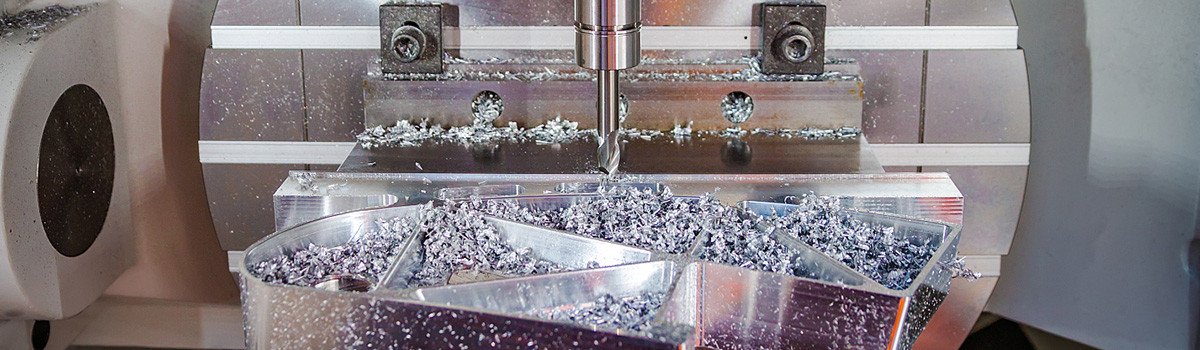
In the context of manufacturing, Computer Numerical Control (CNC) machining plays a critical role in shaping superalloys into precise components. CNC machining involves automated control of machine tools via computer programs, enabling high-precision milling, turning, drilling, and other operations. However, superalloys pose unique challenges to CNC processes due to their inherent properties, which, while beneficial for end-use performance, complicate material removal and tool longevity.
 
This article delves into the world of superalloys, exploring their definitions, properties, types, and the intricacies of CNC machining them. We will examine the challenges encountered, best practices for overcoming them, key applications, and emerging trends. By understanding these aspects, engineers and manufacturers can better harness superalloys to push the boundaries of innovation in fields like aerospace, energy, and beyond.
 
The global demand for superalloys is surging, driven by the need for more efficient, reliable, and environmentally sustainable technologies. Industries are investing in infrastructure that can withstand harsher conditions, and superalloys’ versatility— from aerospace jet engines to medical implants—positions them as a cornerstone of modern engineering. As we explore CNC machining specifically, it’s clear that while these materials offer unparalleled benefits, they require specialized techniques to machine effectively, balancing productivity with precision.

What Are Superalloys?

Superalloys are a class of alloys specifically formulated to perform under extreme conditions, including high temperatures, corrosive environments, and significant mechanical loads. They are often defined by their ability to retain strength and resist degradation at temperatures where conventional alloys would soften or oxidize. Primarily, superalloys are nickel-based, but variants include cobalt-based and iron-based compositions, incorporating alloying elements such as chromium, molybdenum, tungsten, aluminum, titanium, and niobium to enhance specific properties.

The term “superalloy” emerged from the need for materials in high-stress, high-temperature applications like gas turbines, where even minor structural changes from phenomena like creep could lead to failure. Creep refers to the slow deformation of a material under constant stress at elevated temperatures, and superalloys are engineered to minimize this. Their microstructure, often featuring a face-centered cubic (FCC) crystal lattice stabilized by nickel, allows for the precipitation of strengthening phases like gamma prime (γ’), which contributes to their remarkable high-temperature performance.

Historically, superalloys evolved from simple nickel-chromium alloys to complex multi-element systems. For instance, Inconel, a well-known nickel-based superalloy, combines nickel with chromium for enhanced corrosion resistance. Today, they constitute 40-50% of the weight in commercial jet engines, underscoring their critical role in aviation. Beyond aerospace, superalloys are vital in solar thermal power plants, heavy-duty heat exchangers, and rocket engines, where they enable operations in corrosive or high-heat settings that would otherwise be impossible.

In manufacturing contexts, superalloys are selected for their ability to maintain dimensional stability and mechanical integrity. However, this comes with trade-offs in machinability, as their very strengths—such as hardness and low thermal conductivity—make them resistant to traditional cutting processes.

Understanding superalloys begins with appreciating their composition: nickel provides the base for thermal stability, while additives like aluminum and titanium form intermetallic compounds that bolster strength.

Properties of Superalloys

The exceptional properties of superalloys stem from their carefully engineered compositions, enabling them to outperform standard alloys in demanding environments. Key properties include:

  • High-Temperature Strength and Stability: Superalloys retain tensile, yield, and fatigue strengths at temperatures up to 870°C or higher. For example, nickel-based alloys like Rene 41 exhibit outstanding strength for rocket engines. This is achieved through solid-solution strengthening and precipitation hardening, where phases like γ’ resist dislocation movement.
  • Corrosion and Oxidation Resistance: Elements such as chromium form protective oxide layers, preventing degradation in harsh atmospheres. Hastelloy C-276, for instance, excels in chemical processing due to its resistance to pitting and stress-corrosion cracking.
  • Creep Resistance: Superalloys minimize deformation under prolonged high-stress conditions, crucial for turbine blades that operate continuously at high temperatures.
  • Mechanical Toughness: They offer high wear resistance and biocompatibility, making them suitable for medical implants.Cobalt-based alloys, like Stellite, provide superior fatigue life.
  • Low Thermal Conductivity and Expansion: This property helps in thermal management but poses challenges during machining, as heat concentrates in the cutting zone.
  • Abrasive and Adhesive Nature: While beneficial for durability, these traits accelerate tool wear in CNC operations.

These properties make superalloys ideal for applications requiring longevity and reliability, but they also demand advanced machining strategies to handle issues like work hardening, where the material becomes harder during deformation.

Overall, the balance of strength, resistance, and stability positions superalloys as essential for pushing technological limits.

Types of Superalloys

Superalloys are categorized based on their primary base metal, each type offering unique advantages for specific applications. Elimold, a machining service provider, highlights five main types: nickel-based, iron-based, cobalt-based, titanium-based, and niobium-based.

  • Nickel-Based Superalloys: The most common, comprising at least 50% nickel with additions like aluminum, titanium, and chromium. Examples include Inconel 718 (used in aerospace for its creep-rupture strength) and Hastelloy C-22 (for corrosion resistance in chemical environments). They excel in high-temperature corrosion resistance, ideal for turbine blades and jet engines. Series like Monel and Nimonic offer variants for specific needs, such as Monel K500 for marine applications.
  • Iron-Based Superalloys: These blend iron with nickel or chromium, offering cost-effectiveness and wear resistance. They are used in aircraft bearings and components subject to friction. Examples like Incoloy 909 provide good strength but are less heat-resistant than nickel variants.
  • Cobalt-Based Superalloys: Containing 50-60% cobalt with chromium and tungsten, these alloys boast higher strength at extreme temperatures and excellent corrosion resistance. Stellite series, such as Stellite 6, are applied in gas turbine parts exposed to atmosphere. They have superior fatigue life compared to iron- or nickel-based types.
  • Titanium-Based Superalloys: Featuring titanium with molybdenum to reduce elastic modulus, these are known for high hardness. Ti6Al4V is widely used in aerospace and biomedical fields for its biocompatibility and strength-to-weight ratio.
  • Niobium-Based Superalloys: Often niobium-nickel blends, they retain strength better at high temperatures than pure nickel alloys, though with lower overall strength. They find use in jet engines and rockets for their thermal resistance.

Other notable alloys include Waspaloy (nickel-based for gas turbines) and Rene series (for high-temperature aerospace). Each type requires tailored CNC approaches due to varying hardness and thermal properties. Selecting the right type involves balancing cost, performance, and machinability.

CNC Machining Overview

CNC machining is a subtractive manufacturing process where computer-controlled tools remove material from a workpiece to create precise parts. It encompasses operations like milling (rotating cutters for complex shapes), turning (rotating workpiece against a stationary tool), drilling, and more advanced techniques such as 5-axis machining for intricate geometries.

For superalloys, CNC is essential due to the need for high accuracy in components like turbine blades. Services like those from Elimold include 3- to 5-axis milling, Swiss machining for slender parts, and wire EDM for tight tolerances (±0.0001″).

High-rigidity machines with robust spindles are crucial to handle the materials’ toughness.

Challenges in Machining Superalloys

Machining superalloys via CNC is notoriously difficult due to their properties. Key challenges include:

  • Work Hardening: The material hardens rapidly at the cutting point, increasing tool wear.
  • High Cutting Forces: Their strength demands greater force, stressing tools and machines.
  • Thermal Management Issues: Low thermal diffusivity traps heat in the cutting zone, leading to tool degradation and workpiece distortion.
  • Abrasive Chips and Built-Up Edge: Gummy chips stick to tools, forming edges that compromise finish and accuracy.
  • Tool Wear Acceleration: Hard carbides and intermetallics cause rapid wear, shortening tool life.
  • Vibration and Residual Stress: High forces induce chatter, affecting tolerances, while heat generates stresses reducing fatigue life.

Traditional CNC equipment often fails with these materials, requiring specialized knowledge. Alternatives like PECM offer no-contact machining to avoid these issues, producing smooth surfaces without heat-affected zones.

Machining Techniques and Best Practices

To overcome challenges, employ these strategies:

  • Tool Selection: Use coated carbide inserts for roughing, ceramics for finishing, and PCBN for ultra-precision. Positive rake angles and chip breakers reduce forces.
  • Optimized Parameters: Lower speeds (to prevent heat buildup), moderate feeds, and controlled depths. Iterative testing is key.
  • Coolant Strategies: High-pressure (70+ bar) through-tool coolant for cooling and chip evacuation; MQL for eco-friendly lubrication.
  • Machine and Fixturing: High-stiffness CNC machines with vibration dampening; robust fixtures to minimize chatter.
  • Design and Post-Processing: DFM with generous radii; post-machining heat treatments for stress relief; NDT for quality.
  • Alternatives: Consider investment casting for near-net shapes to reduce CNC needs. Modern carbide tools and advanced coolants are transforming the field.

Applications
Superalloys represent a class of high-performance metallic materials engineered to excel under extreme conditions. These alloys maintain exceptional mechanical strength, resistance to thermal creep deformation, oxidation, and corrosion at temperatures often exceeding 1,000°C (1,800°F). Primarily based on nickel, with cobalt- and iron-based variants, superalloys incorporate elements like chromium, molybdenum, titanium, and aluminum to enhance their properties. Common examples include nickel-based Inconel (e.g., Inconel 718 and 625), Hastelloy, Waspaloy, and René alloys, which dominate demanding applications.
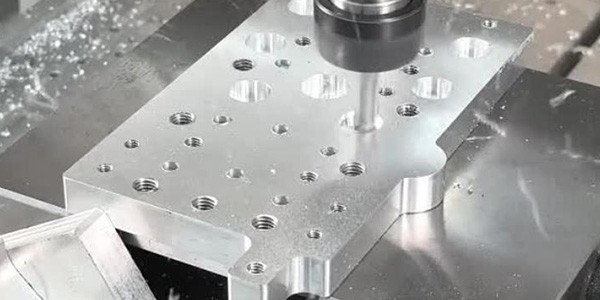
The role of CNC machining in superalloy components cannot be overstated. Computer Numerical Control (CNC) processes allow for the precise fabrication of complex geometries with tight tolerances, essential for parts that must withstand harsh operational stresses. However, superalloys pose significant machining challenges due to their hardness, low thermal conductivity, and tendency to work-harden. These traits lead to rapid tool wear, high cutting forces, and heat buildup. Best practices include using rigid machine tools, carbide or coated inserts, high-pressure coolants, moderate feeds and speeds, and shallow depths of cut to mitigate these issues.
 
Despite these hurdles, CNC-machined superalloy parts deliver unparalleled reliability across critical industries.
Aerospace Applications
In aerospace, superalloys are indispensable for components exposed to extreme heat and mechanical loads in jet engines and gas turbines. Turbine blades, disks, combustors, and engine casings frequently utilize Inconel 718 or single-crystal variants like René N5 for their ability to retain strength at high temperatures while resisting oxidation.
 
These parts endure centrifugal forces equivalent to tons of load and temperatures nearing the alloy’s melting point. CNC machining ensures intricate cooling channels and airfoil shapes are produced accurately, improving engine efficiency and reducing emissions. Over 50% of modern aircraft engine weight often comprises superalloys, underscoring their dominance in this sector.
Power Generation
Power generation relies on superalloys for gas turbines, steam turbines, and nuclear reactors. Components like rotors, casings, and blades in industrial gas turbines use alloys such as Hastelloy X or Haynes 282 to handle prolonged exposure to high temperatures and corrosive exhaust gases. In nuclear applications, their radiation resistance and stability make them ideal for reactor internals.
 
CNC-machined superalloy parts enhance turbine durability and efficiency, supporting cleaner energy production. For instance, advanced coatings combined with precise machining allow these components to operate reliably in environments exceeding 1,200°F.
Medical Sector
In medicine, superalloys contribute to biocompatible implants and surgical instruments. Cobalt-based alloys like Stellite or certain nickel variants provide excellent wear resistance, corrosion resistance in bodily fluids, and high strength for load-bearing applications such as orthopedic implants (e.g., hip or knee replacements) and dental prosthetics.
 
CNC machining achieves the smooth surfaces and precise dimensions required for biocompatibility and longevity, minimizing rejection risks and ensuring patient safety.
Oil and Gas Industry
The oil and gas sector demands materials that resist corrosive sour gases (e.g., hydrogen sulfide), high pressures, and elevated temperatures in downhole environments. Hastelloy C-276 and Inconel 625 are frequently chosen for downhole tools, valves, wellheads, and subsea connectors.
 
These CNC-machined components withstand aggressive chemicals and extreme depths, preventing failures in critical extraction operations. Their corrosion resistance extends equipment life in harsh offshore or sour gas fields.Defense ApplicationsDefense parallels aerospace, utilizing superalloys in aircraft, naval propulsion, and missile systems. Turbine components in military jet engines, as well as structural parts in submarines or armored vehicles, benefit from alloys like Waspaloy or Inconel for their high-temperature performance and durability under combat stresses.
 
CNC precision ensures these parts meet stringent military specifications for reliability.
Machining Examples and Innovations
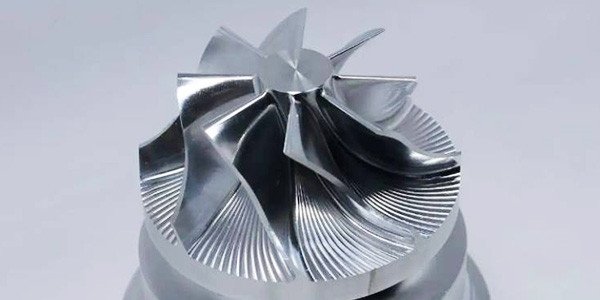
Real-world examples abound: Inconel parts for jet engine turbos or custom components showcase the precision achievable despite challenges.
 
Innovations like 5-axis CNC, advanced coatings, and hybrid processes (e.g., combining with EDM) continue to push boundaries, enabling more complex designs.In conclusion, CNC-machined superalloy parts are foundational to reliability in aerospace, power generation, medical, oil and gas, and defense sectors. Their ability to perform in unforgiving conditions drives technological progress, from more efficient engines to longer-lasting implants. As demands for higher temperatures and harsher environments grow, superalloys—and the precision machining that shapes them—will remain at the forefront of engineering innovation.

Future Trends

Emerging trends include advanced coatings for tools, AI-optimized parameters, and hybrid manufacturing combining CNC with additive methods. New superalloy compositions with enhanced machinability are in development, alongside sustainable practices like cryogenic machining. PECM may gain traction for cost-sensitive applications.

Conclusion

Superalloys revolutionize high-performance applications, but CNC machining them requires expertise to navigate challenges. By leveraging advanced techniques, manufacturers can unlock their full potential, driving innovation across industries.