
Types of Metals for CNC Machining Materials

CNC machined metals are widely used in every major industry from aerospace to medical. Listed below are the types of alloys that Gazfull offers for on-demand custom manufacturing.
Table of Contents
ToggleMetal Alloys Offered
The choice of material in CNC machining is one of the most important decisions in the manufacturing process of a CNC milled or turned component. It has far-reaching effects: It determines not only the functionality and performance, but also how efficiently and cost-effectively the component can be manufactured. An ideal-looking part in the CAD model may be uneconomical or even impossible to produce in reality if the material does not match the production parameters.
CNC metals can be used for a range of parts from prototypes to engineering models to production components. Some of the following materials are extremely durable and can withstand extremely harsh environments with temperatures up to 1668 °C, like titanium. Other metals are general-use materials that are highly machinable and therefore suitable for testing designs at a low cost, like aluminum. Depending on the nature of your project, machined metal alloys may the best material for your custom parts considering useful metal properties like high corrosion resistance, high heat deflection, and high impact resistance. Explore our materials in depth below:
Aluminum CNC Machining
Aluminum is a lightweight metal with an excellent strength-to-weight ratio, making it ideal for applications in which metallic-level strength is required, but mass is still a concern. There are various alloys for aluminum, each denoted by the first number in their classification. The number indicates the main alloying element(s).

Aluminum is one of the most common materials used in the aerospace, medical, and automotive industries. This is due to its excellent strength-to-weight ratio, formability, and general versatility. Choose aluminum CNC machining in the Gazfull, please contact us right now.
Aluminum 2024-T3
This aluminum alloy resists fatigue well and is quite machinable, but exhibits poor weldability characteristics. It is not very resistant to corrosion, so it requires surface treatments if used in harsh environments. Aluminum 2024-T3 is typically used for bolts, aircraft fittings, and pistons.
| Tensile Strength, Yield (MPa) | Fatigue Strength (MPa) | Elongation at Break (%) | Hardness (Brinell) | Density (g/cm^3) |
|---|---|---|---|---|
345 | 138 | 18 | 120 | 2.78 |
* Generalized values. For reference only.
Aluminum 5052-H32
This aluminum alloy uses magnesium as its primary alloying element. It is very corrosion-resistant due to the lack of copper in its composition but it cannot be heat-treated. Aluminum 5052 is typically used in fuel tanks, sheet metal parts, and fuel/oil lines.
| Tensile Strength, Yield (MPa) | Fatigue Strength (MPa) | Elongation at Break (%) | Hardness (Brinell) | Density (g/cm^3) |
|---|---|---|---|---|
193 | 117 | 12 | 60 | 2.68 |
* Generalized values based upon Aluminum 5052-H32. For reference only.
Aluminum 6061
This grade of aluminum is considered a general-purpose alloy. It has excellent machinability characteristics and can be easily welded. The primary alloying elements are magnesium and silicon. This aluminum alloy is regularly used to make electrical fittings, brake pistons, and bike frames.
| Tensile Strength, Yield (MPa) | Fatigue Strength (MPa) | Elongation at Break (%) | Hardness (Brinell) | Density (g/cm^3) |
|---|---|---|---|---|
276 | 96.5 | 17 | 95 | 2.7 |
* Generalized values based upon 1/2″ Aluminum 6061-T6. For reference only.
Aluminum 6063
There is only a slight difference between the alloying elements in aluminum 6063 as compared to 6061. This aluminum alloy is not as strong but offers better formability. As a result, it’s well-suited for pipes, railings, and extrusions.
| Tensile Strength, Yield (MPa) | Fatigue Strength (MPa) | Elongation at Break (%) | Hardness (Brinell) | Density (g/cm^3) |
|---|---|---|---|---|
214 | 68.9 | 12 | 73 | 2.7 |
* Generalized values based upon 1/16″ Aluminum 6063-T6. For reference only.
Aluminum 7050
This aluminum alloy is one of the strongest available. Its main alloying element is zinc. Aluminum 7050 achieves its strength by sacrificing corrosion resistance; the inclusion of copper is the reason behind both effects. This alloy is also highly machinable. Its strength makes it ideally suited for aircraft structures.
| Tensile Strength, Yield (MPa) | Fatigue Strength (MPa) | Elongation at Break (%) | Hardness (Brinell) | Density (g/cm^3) |
|---|---|---|---|---|
490 | 160 | 11 | 147 | 2.83 |
* Generalized values based upon1/2″ Aluminum 7050-T7651. For reference only.
Aluminum 7075
This alloy is slightly stronger than 7050 aluminum and has very good fatigue resistance, making it ideal for applications that undergo cyclic loading. Its main alloying element is zinc and its typical applications include meter shafts and gears, aircraft fittings, and shaft keys.
| Tensile Strength, Yield (MPa) | Fatigue Strength (MPa) | Elongation at Break (%) | Hardness (Brinell) | Density (g/cm^3) |
|---|---|---|---|---|
503 | 159 | 11 | 150 | 2.81 |
* Generalized values based upon 1/2″ Aluminum 7075-T6. For reference only.
Aluminum MIC-6
This aluminum alloy is cast specifically for applications that require highly accurate components like assembly jigs, test structures, and fixture plates. It is well-suited to these applications because its crystal structure has no internal stresses. It also allows for high-speed machining without the significant distortion common in other aluminum alloys.
| Tensile Strength, Yield (MPa) | Fatigue Strength (MPa) | Elongation at Break (%) | Hardness (Brinell) | Density (g/cm^3) |
|---|---|---|---|---|
105 | N/A | 3 | 65 | 2.7 |
* Generalized values. For reference only.
Copper CNC Machining
Copper is listed as Cu (atomic number 29) on the periodic table and is an excellent conductor of electricity and heat, second only to silver. Commercially available copper is typically more than 99% pure. The remaining 1% is usually impurities such as oxygen, lead, or silver.
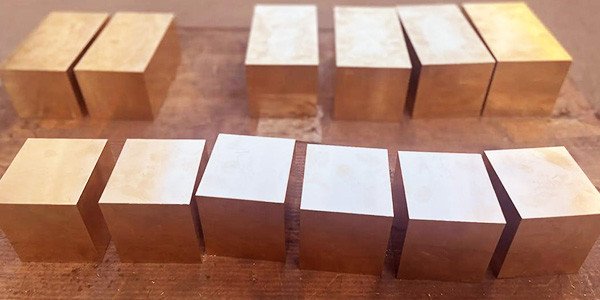
Copper is well known for its electrical and thermal conductivity. It is very resistant to corrosion and is also inherently antimicrobial. The power, automotive, medical, and aerospace industries make use of copper specifically for these properties. Select Copper CNC machining in the Gazfull, please contact us right now.
Copper 101
Copper C101, or oxygen-free copper, is the name to an extremely pure metal that comes in at about 99.99% Cu. This high purity level gives it exceptional conductivity, so it is often referred to as HC (high conductivity) copper. It also serves as the base material for brass and bronze alloys. Its high conductivity makes it ideal for busbars, waveguides, and coaxial cables.
| Tensile Strength, Yield (MPa) | Fatigue Strength (MPa) | Elongation at Break (%) | Hardness (Brinell) | Density (g/cm^3) |
|---|---|---|---|---|
69 to 365 | 76-90 | 5-55 | 65-90 | 8.89 to 8.94 |
* Generalized values. For reference only. Values vary greatly depending on tempering.
Copper C110
Copper C110, or Electrolytic Tough Pitch (ETP) Copper, is another highly pure option. It is not as pure as copper 101, however, instead weighing in at 99.90% Cu. It is the most widely used copper alloy because it is more cost-effective and suitable for most electrical applications. This grade is also easier to machine than copper 101.
| Tensile Strength, Yield (MPa) | Fatigue Strength (MPa) | Elongation at Break (%) | Hardness (Brinell) | Density (g/cm^3) |
|---|---|---|---|---|
69-365 | 76-90 | 5-50 | 65-90 | 8.89 |
* Generalized values. For reference only. Values vary greatly depending on tempering.
Bronze CNC Machining
Bronze is made by mixing copper with up to approximately 35% tin and up to 8% lead. The inclusion of lead alloy, which is a soft metal, is what makes it so machinable. Bronze is great for applications such as bearings as well as marine applications on pumps and fittings where corrosion resistance against seawater is required. This material’s mechanical properties don’t quite measure up to many other machinable metals, so it is best used on low-stress components made with CNC machining.
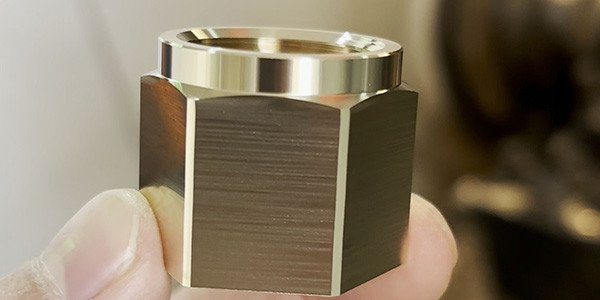
Bronze, brass, and other copper alloys have a range of important electrical, mechanical, and corrosion-resistant properties. Specifically, bronze has excellent machinability, with an index of 100%. It also has low friction properties that make it ideal for parts that undergo continuous frictional contact.
Copper 932
Copper 932 is also known as bearing bronze. This alloy has excellent anti-friction properties, making it ideal for bearings, bushings, wear strips, and other light-duty applications.
| Tensile Strength, Yield (MPa) | Fatigue Strength (MPa) | Elongation at Break (%) | Hardness (Brinell) | Density (g/cm^3) |
|---|---|---|---|---|
125 | 110 | 20 | 65 | 8.93 |
CNC Machining Brass
Brass is the name used for a wide range of copper-zinc alloys. These alloys vary by the amount of zinc as well as the inclusion of other alloying elements such as lead, aluminum, and iron. Brass is thermally and electrically conductive thanks to its copper content. It also has good wear resistance. The inclusion of lead improves machinability, making brass the most machinable of all the copper alloys. Choose Brass CNC machining in the Gazfull, please contact us right now.
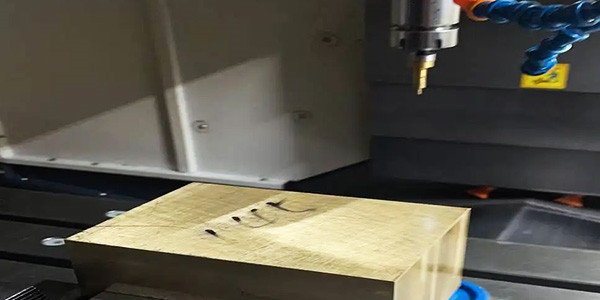
Brass is a versatile copper alloy that retains some of the benefits of copper but also improves on some of its attributes. Brass is a mechanically stronger and lower-friction metal, and offers better corrosion and wear resistance than basic copper. These properties make CNC machining brass ideal for mechanical applications that also require corrosion resistance such as those encountered in the marine industry.
Cartridge Brass (Copper C260)
Copper C260 is a zinc-alloyed formulation with approximately 30% zinc with less than 1% lead and iron. This grade is sometimes referred to as cartridge brass thanks to its history of use in ammunition cartridges. Other common applications include rivets, hinges, and radiator cores.
| Tensile Strength, Yield (MPa) | Fatigue Strength (MPa) | Elongation at Break (%) | Hardness (Brinell) | Density (g/cm^3) |
|---|---|---|---|---|
95 | 90 | 65 | 54 | 8.53 |
* Generalized values. For reference only.
Free-Cutting Brass (Copper C360)
Copper C360, also referred to as free-cutting brass, is highly machinable due to the relatively high amount of lead in the alloy. Typical applications include gears, screw machine parts, and valve components.
| Tensile Strength, Yield (MPa) | Fatigue Strength (MPa) | Elongation at Break (%) | Hardness (Brinell) | Density (g/cm^3) |
|---|---|---|---|---|
124 to 310 | 138 | 53 | 63 to 130 | 8.49 |
* Generalized values. For reference only. Values vary greatly depending on temper.
Stainless Steel CNC Machining
Stainless steel is a ubiquitous metal critical to a myriad of industries from medical to power generation. Its value lies in its strength, heat resistance, and exceptional corrosion resistance. Indeed, the ability to resist corrosion is the primary thing that distinguishes stainless steel from regular steel. Choose from a wide selection of stainless steel materials for CNC machining in the Gazfull, please contact us right now.
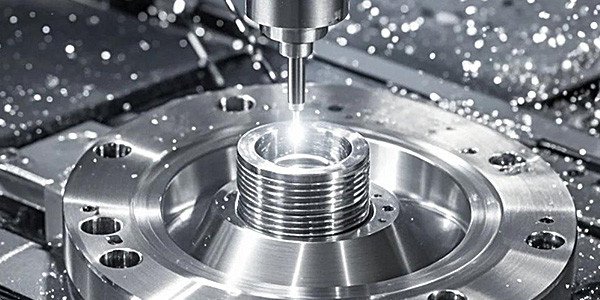
About Stainless Steel for CNC Machining
What sets stainless steel apart from normal steel is the inclusion of chromium in its alloys. All stainless steel chemical compositions contain at least 10.5% chromium. The inclusion of chromium makes these steels more corrosion resistant. The different grades of this material have various alloying elements that serve to further improve corrosion resistance, heat treatability, and machinability. It should be noted that heat treatment can significantly affect the metal’s mechanical properties.
Stainless steels can be classified based on their crystalline structure. This includes Austenitic, ferritic, martensitic, and duplex:
- Austenitic stainless steel, such as 300- and 200-series stainless, are highly formable and do not work harden. They are also non-magnetic in an annealed condition.
- Ferritic stainless steels are magnetic and offer better thermal conductivity than austenitic stainless. They cannot be hardened by heat treatment.
- Martensitic stainless steel such as grade 416 and 420 can be hardened through multiple methods of aging or heat treatments.
- Duplex stainless steel, also known as austenitic-ferritic, are grades of stainless that are highly specialized for improved corrosion resistance. Duplex steels are typical in industrial and architectural structuring.
Given its versatility, some form of stainless steel is prevalent in every industry.
Stainless Steel 15-5
Stainless Steel 15-5 is a precipitation-hardened (PH) metal. The process gives it excellent toughness, strength, and corrosion resistance. Mechanical properties are enhanced by low-temperature heat treatment, making this material ideal for aerospace and nuclear applications.
| Tensile Strength, Yield (MPa) | Shear Modulus (GPa) | Elongation at Break (%) | Hardness (Brinell) | Density (g/cm^3) |
|---|---|---|---|---|
1280 | 77 | 10 | 388 | 7.80 |
* Generalized values based on H900 condition. For reference only.
Stainless Steel 17-4
This precipitation-hardened (PH) steel grade has better corrosion-resistant properties at high temperatures when compared to 15-5 stainless steel. It achieves this increased corrosion resistance by sacrificing mechanical strength. This is also one of the more widely used grades of PH stainless steel. Applications include chemical processing parts and gas turbines.
| Tensile Strength, Yield (MPa) | Shear Modulus (GPa) | Elongation at Break (%) | Hardness (Brinell) | Density (g/cm^3) |
|---|---|---|---|---|
1379 | 77.4 | 7 | 419 | 7.80 |
* Generalized values based on H900 condition. For reference only.
Stainless Steel 18-8
This grade of stainless steel has an austenitic crystal structure and is one of the most widely used grades. 18-8 is often referred to as 304 stainless steel or SS304, and Gazfull quotes 18-8 as SS304, but the two have slight differences in some alloying elements. 18-8 has good corrosion resistance characteristics and is regularly used to create fasteners and pressure piping.
| Tensile Strength, Yield (MPa) | Shear Modulus (GPa) | Elongation at Break (%) | Hardness (Brinell) | Density (g/cm^3) |
|---|---|---|---|---|
215 | 77 | 70 | 123 | 8.00 |
* Generalized values. For reference only.
Stainless Steel 303
This grade of austenitic stainless steel was formulated to be easier to machine than SS304 by including sulfur among the alloying elements. This addition, however, makes the alloy less corrosion resistant than SS304. It is ideal for items that require heavy machining like gears and shafts.
| Tensile Strength, Yield (MPa) | Shear Modulus (GPa) | Elongation at Break (%) | Hardness (Brinell) | Density (g/cm^3) |
|---|---|---|---|---|
240 | 77.2 | 50 | 160 | 8.00 |
* Generalized values based on annealed condition. For reference only.
Stainless Steel 304
This grade of austenitic stainless steel has good corrosion resistance properties and is used extensively for fasteners. It is often seen as a low-cost alternative to SS316 while not having the same corrosion resistance. This alloy is very similar to grade 18-8 stainless steel as it has the same amount of chrome and nickel, however, it has improved strength due to a higher level of carbon in the alloy.
| Tensile Strength, Yield (MPa) | Shear Modulus (GPa) | Elongation at Break (%) | Hardness (Brinell) | Density (g/cm^3) |
|---|---|---|---|---|
215 | 77 | 70 | 123 | 8.00 |
* Generalized values. For reference only.
Stainless Steel 316
This austenitic grade of stainless steel contains molybdenum which gives it excellent corrosion resistance. In addition to this, it is highly formable and weldable. Applications include chemical tanks and boat fittings. The low carbon version, 316L, is more resistant to chlorides than the basic formulation.
| Tensile Strength, Yield (MPa) | Shear Modulus (GPa) | Elongation at Break (%) | Hardness (Brinell) | Density (g/cm^3) |
|---|---|---|---|---|
205 | 74 | 40 | 187 | 8.03 |
* Generalized values. For reference only.
Stainless Steel 416
Stainless steel 416 is one of the most machinable stainless steels available. As with other alloys, this improved machinability comes at the cost of corrosion resistance, so it generally rusts easier than its other stainless steel counterparts. Applications include motor shafts and gears. The raw material is typically available in a soft, easy-to-machine annealed condition (see properties below) and can be heat-treated for increased hardness and strength.
| Tensile Strength, Yield (MPa) | Shear Modulus (GPa) | Elongation at Break (%) | Hardness (Brinell) | Density (g/cm^3) |
|---|---|---|---|---|
275 | 83 | 30 | 156 | 7.80 |
* Generalized values based on annealed condition. For reference only.
Stainless Steel 420
This martensitic stainless steel has a higher carbon content and lower chromium content than the other steels mentioned previously. Due to its lower chromium content, it has only mild corrosion resistance but makes up for that with improved mechanical properties in its annealed state.
| Tensile Strength, Yield (MPa) | Shear Modulus (GPa) | Elongation at Break (%) | Hardness (Brinell) | Density (g/cm^3) |
|---|---|---|---|---|
345 | 80.7 | 25 | 195 | 7.80 |
* Generalized values based on annealed condition. For reference only.
Stainless Steel 440C
Stainless steel 440C has the highest carbon content of the 400 series. This means that 440C has only mild corrosion resistance. However, it has excellent hardness characteristics (which can be further increased with heat treatment) and mechanical strength. Typical applications include bearing housings and surgical instruments.
| Tensile Strength, Yield (MPa) | Shear Modulus (GPa) | Elongation at Break (%) | Hardness (Brinell) | Density (g/cm^3) |
|---|---|---|---|---|
445 | 83.9 | 14 | 223 | 7.80 |
* Generalized values based on non-treated condition. For reference only.
Stainless Steel 410
Stainless steel 410 is the most general-purpose steel among the 400 series. It has a low carbon content that gives it improved corrosion resistance. Like other martensitic steels, 410 can be hardened to achieve impressive mechanical strength. 410 stainless steel is typically used for cutlery, fasteners, and machinery parts.
| Tensile Strength, Yield (MPa) | Shear Modulus (GPa) | Elongation at Break (%) | Hardness (Brinell) | Density (g/cm^3) |
|---|---|---|---|---|
310 | 73 | 25 | 147 | 7.74 |
* Generalized values based on annealed condition. For reference only.
Steel CNC Machining
Steel is an alloy of iron with approximately 1% carbon. Small amounts of other alloying elements like molybdenum and chromium may be added to improve its properties. Steel offers a great balance between cost and functionality since it is easy to machine and weld. It will, however, oxidize over time and therefore needs surface treatments for protection.
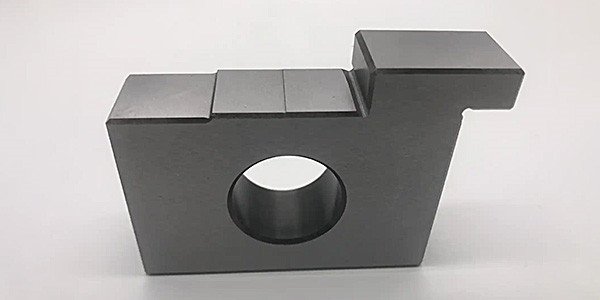
Steel is one of the most widely used manufacturing materials and is used in every major industry from construction to automotive. Its cost-effectiveness coupled with some very useful properties makes it a versatile material. Listed below are some of the mild steel variants and high-strength steel variants Gazfull offers in CNC machining.
Steel 1018
Generally referred to as mild steel, 1018 is highly weldable and well suited to surface hardening processes such as carburizing. Once carburized, this material is typically used for gears, worms, and mold components.
| Tensile Strength, Yield (MPa) | Shear Modulus (GPa) | Elongation at Break (%) | Hardness (Brinell) | Density (g/cm^3) |
|---|---|---|---|---|
370 | 78 | 15 | 126 | 7.87 |
* Generalized values based on cold-drawn material. For reference only.
Steel 4130
This type is often known as alloy steel due to its increased levels of alloying elements when compared to normal mild steel. This alloy contains chromium and molybdenum as strengthening elements. These elements significantly improve its mechanical properties. Applications can include taps, drills, and aircraft engine mountings.
| Tensile Strength, Yield (MPa) | Shear Modulus (GPa) | Elongation at Break (%) | Hardness (Brinell) | Density (g/cm^3) |
|---|---|---|---|---|
435 | 80 | 25.5 | 197 | 7.85 |
* Generalized values based on normalized, air-cooled material. For reference only.
Steel 4140
Steel 4140 is very similar to 4130 but has an increased carbon content. The bonus carbon improves its strength and allows for better hardening properties. Extra chromium is also added for corrosion resistance. Applications can include thin-walled pressure vessels, spindles, and high-strength bolts.
| Tensile Strength, Yield (MPa) | Shear Modulus (GPa) | Elongation at Break (%) | Hardness (Brinell) | Density (g/cm^3) |
|---|---|---|---|---|
675 | 80 | 17.8 | 302 | 7.85 |
* Generalized values based on normalized, air-cooled material. For reference only.
Steel 4140 PH
This grade of steel is a pre-hardened version of standard 4140 steel that exhibits excellent mechanical strength and hardness properties. Its pre-hardening eliminates the need for heat treatment after machining. This is ideal if the heat treatment will cause unacceptable distortion in the finished part. Typical applications include shafts, arbors, and molds.
| Tensile Strength, Yield (MPa) | Shear Modulus (GPa) | Elongation at Break (%) | Hardness (Brinell) | Density (g/cm^3) |
|---|---|---|---|---|
685-896 | 80 | 14-19.2 | 271-301 | 7.85 |
* Generalized values. For reference only.
Steel A36
This grade of steel is inexpensive and easy to weld, so it is a very common grade of low carbon steel. It is generally used in fabrication applications and structural supports.
| Tensile Strength, Yield (MPa) | Shear Modulus (GPa) | Elongation at Break (%) | Hardness (Brinell) | Density (g/cm^3) |
|---|---|---|---|---|
250 | 79.3 | 20 | 119 | 7.85 |
* Generalized values. For reference only.
Steel 1215
This grade of steel is considered a free machining steel due to its high sulfur content. However, the weldability of this material is poor. Typical applications can include studs, screws, pins, and, in general, components that require large amounts of machining.
| Tensile Strength, Yield (MPa) | Shear Modulus (GPa) | Elongation at Break (%) | Hardness (Brinell) | Density (g/cm^3) |
|---|---|---|---|---|
415 | 80 | 10 | 167 | 7.87 |
* Generalized values based on cold-drawn material. For reference only.
Steel 4340
This steel is a high-strength, low-alloy metal. It exhibits impressive toughness and strength and maintains these properties at relatively high temperatures. Typical applications can include gears, shafts, and other structural parts.
| Tensile Strength, Yield (MPa) | Shear Modulus (GPa) | Elongation at Break (%) | Hardness (Brinell) | Density (g/cm^3) |
|---|---|---|---|---|
470 | 74 | 22 | 217 | 7.85 |
* Generalized values based on annealed condition. For reference only.
A2 Tool Steel
A2 steel is a type of air-hardening, cold-working steel. It has good wear resistance and experiences minimal distortion during heat treatment or hardening processes. Compared to other types of tool steel, A2 steel is relatively easy to machine. It is one of the most commonly used steel grades for making tools such as punches, trimming and forming dies, sheering blades, and molds.
| Tensile Strength, Yield (MPa) | Shear Modulus (GPa) | Elongation at Break (%) | Hardness (Rockwell C) After Heat Treating | Density (g/cm^3) |
|---|---|---|---|---|
1275-1585 | 78 | 1-5 | 57-62 HRC | 7.86 |
* Generalized values based on air-hardened condition. For reference only.
O1 Tool Steel
O1 steel is an oil-hardening, cold-working steel. It is characterized by it’s strong wear resistance and ability to retain sharp edges. It is used in creating punching, cutting, and stamping tools, as well as in blades and other cutting tools.
| Tensile Strength, Yield (MPa) | Shear Modulus (GPa) | Elongation at Break (%) | Hardness (Rockwell C) After Heat Treating | Density (g/cm^3) |
|---|---|---|---|---|
400 | 72 | 20% | 63-65 HRC | 7.83 |
* Generalized values based on annealed condition. For reference only.
Titanium CNC Machining
Titanium (or Ti on the periodic table) is a lightweight metal with a wide range of useful properties from corrosion resistance to strength retention at extreme temperatures. You can purchase it both in pure and alloyed form. Note that even pure titanium has some (less than 1%) iron and oxygen content. More advanced alloys significantly improve the overall strength of titanium.
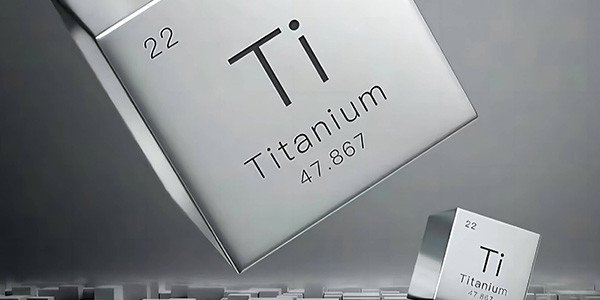
Titanium is an advanced material with excellent corrosion resistance, biocompatibility, and strength-to-weight characteristics. This unique range of properties makes it an ideal choice for many of the engineering challenges faced by the medical, energy, chemical processing, and aerospace industries. Select Titanium CNC machining in the Gazfull, please contact us right now.
Titanium (Grade 2)
This grade is essentially a pure (99%) form of unalloyed titanium. It has excellent corrosion resistance characteristics and is easier to machine than other titanium alloys. Grade 2 is typically the best option when aqueous corrosion resistance is desired. Desalination components and medical implants are some of its applications.
| Tensile Strength, Yield (MPa) | Fatigue Strength (MPa) | Elongation at Break (%) | Hardness (Brinell) | Density (g/cm^3) |
|---|---|---|---|---|
340 | 240 | 28 | 200 | 4.51 |
* Generalized values based on annealed condition. For reference only.
Titanium (Grade 5)
Titanium Grade 5 or Ti 6Al-4V is the most popular alloy of titanium. Its primary alloying elements are aluminum and vanadium. It also contains a small amount of nickel, palladium, and ruthenium that improve its corrosion resistance far above that of standard titanium. This alloy is significantly stronger than Grade 2 and retains its corrosion-resistant properties at a wide temperature range. Grade 5 is a common choice for engine components and aircraft airframes.
| Tensile Strength, Yield (MPa) | Fatigue Strength (MPa) | Elongation at Break (%) | Hardness (Brinell) | Density (g/cm^3) |
|---|---|---|---|---|
880 | 240 | 14 | 334 | 4.43 |
* Generalized values based on annealed condition. For reference only.
Zinc CNC Machining
Zinc (denoted as Zn on the periodic table) is a relatively common non-magnetic metal. It is typically alloyed with aluminum, magnesium, and copper. This class of zinc alloy is referred to by the name Zamak (the term originated as an acronym for the element names in German: “Zink, Aluminium, Magnesium, and Kupfer”). These alloys are usually supplied in the form of ingots due to their extensive use in die-casting applications. Zinc has excellent damping capacity; it is highly ductile and exhibits long-term dimensional stability. Die-cast Zamak alloys maintain high levels of precision and therefore require less machining to bring the part into the required tolerances.
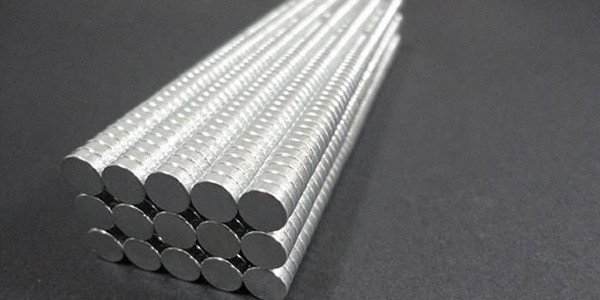
Zinc alloy metal is some of the cheapest materials available. Despite a low price point, they have good mechanical strength, are easily machined, and resist mechanical shocks well. Complex components are often initially die-cast and then have critical features machined into them, reducing overall CNC machining time and cost. The automotive industry makes extensive use of CNC machined zinc alloys.
Zamak 3 (Zinc alloy 3)
The Zamak 3 alloy contains 4% aluminum while less than 1% is composed of copper and magnesium. Zamak Zinc alloys exhibit similar machinability to copper but are less abrasive to tooling. Automotive part shells and small electric motor casings are typical applications for this type of zinc.
| Tensile Strength, Yield (MPa) | Fatigue Strength (MPa) | Elongation at Break (%) | Hardness (Brinell) | Density (g/cm^3) |
|---|---|---|---|---|
208 | 48 | 10 | 82 | 6.60 |
* Generalized values. For reference only.